This rare and never edited on CD album, produced by GusDudgeon, is
a spoken word record of Taupin reading his poems over a variety of
musical backings (among the others Shawn Phillips...). The string arrangiaments are by the famous Robert Kirby (Nick Drake, Al Stewart...).
A short comment by TEB fan (& musician) Sedayne, that tracked down the link:
"The first of the two Coff tracks ["Sisters of the Cross", 2.39] features subdued
droning viola which could, in all honesty, be anyone. The second ["Le petite Marionette", 1.33] is
pure Coff - featuring multi-tracked pizzicato & bowed violin very
reminiscent of the A&H soundtrack. Well worth a listen I'd say!".
One of the best interview ever made it's that Nigel Cross had with Glen Sweeney for the English fanzine called "Unhinged". Published in Spring 1990, now out of print, it's a very long, deep excursion through the TEB glorious epic, with some interesting revelations about facts and people involved (& funny anedocts), that inspired my little book on the band titled "Necromancers of the drifting West", printed in 1997. (Just a recommendation: not all the things Glen says are true or totally true, but it's all part of the TEB Glorious Epic...)
the well-known “third eye” philosophy to a “third ear” dimension to listen particular kind of sounds… But it can be interesting to know that the origin of that expression it’s due to German philosopher Friedrich Nietzsche (1844-1900) that used it in his famous “Beyond of Good and Evil” (1886, paragraph n. 246) about the reading of books written in German:
"What a torture are books written in German to reader who has a THIRD ear!".
Friedrich Nietzsche
Later, the same expression was adopted by psychoanalists as Erich Fromm, Enid Balint and, above all, Theodor Reik, author of a book titled “Listening with the third ear. The inner experience of a Psychoanalyst” (The Noonday Press, New York 1948-1991).
Reik (1888-1969), Freud's pupil and friend, writing about the silence in anlysis, alludes to the “active power of silence” inside the relation between psychoanalist and patient.
Theodor Reik
In the history of humankind culture, usually the word is equivalent to life and silence is equivalent to death, thus silence is considered a problem. But - as Reik maintains - if the analyst isn't afraid of the silence, he can penetrate the “silence areas” using his “third ear” and get all the patient’s psycologic stuff removed. He explained that “to truly begin a framework in which to conceive of another's subconscience, we must begin with an experience of shock and surprise. From there, to incorporate an understanding through the third ear, is to understand musical time by making comments with tact, as in a moment of analagous musical pause, or between measures.
Often to say the right thing is to speak at the right moment. Nietzsche describes the third ear in Beyond Good and Evil, where the analyst exists in a subjective state of psychological timing, and it is to this cadence between himself and subject that he listens. In the detection of unspoken emotional significance, what is unconscious is hidden by language and revealed in silence. In other words, a true emotional drive is often under what is not said, rather than what is said. And the tone of speaking tells us about the speaker emotionally more so than the words themselves. For example, a low speaker can develop in reaction-formation against loud parents”.
“Often there is more to hear than what you normally hear”, writes James E. Miller in his “The Art of Listening in a Healing Way” (Willowgreen Publishing, UK 2007). “Your two ears can take in only so much. They can be attuned only to certain wavelengths. After that, your third ear may be the one that hears best. (…) Listening with your third ear is never an attempt to psychoanalyze someone, nor is it an effort to come up with a solution for another’s problem. It is simply your openness to be sensitive to those messages that may not have been uttered but have been nonetheless sent”.
Also an Italian book tries to investigate the nature and the power of that "third ear". In their "Il terzo orecchio. Dalle forme dell'ascolto alla musicoterapia" - "The third ear. From the ways of listening to the musictheraphy" (Soleverde, Torino 1991), Mario Delli Ponti and Boris Luban-Plozza state that the "third ear" is "the capability of mind to place sonic material in an artistic space, let it live on a rich personal involvement, getting hidden meanings".
In their fascinating excursus, the authors drive us through the rich and complex relation between music and mind, proposing the use of sound as a strong medication for mind.
It’s
quite suggestive to try to do some correlations between TEB music and the idea of a “third ear” that can access to obscure areas
of our mind and get subliminal sounds...
Steve Pank informs me Bristolian radio BCFM will dedicate a one-day programme to the memory of the great John Peel on next October 11th, the date of his last broadcast in 2004.
Words, music & memories about the late great American DJ who changed the way to tell rock music, with a quotation of his involvement with the TEB. "We will be providing a varied and in depth look through at the life and times of John Peel" - explains at the radio - "playing some of his famous ‘peel sessions’ as well as a lot of the groups and musicians he has championed throughout his career and also keeping with the Peel ethos we will be playing other music that perhaps doesn’t get as much airplay as it should - hopefully introducing you to some new and old tracks that you might just fall in love with".
Because they didn't know it and don't have a copy of it (!), Steve asked me to send him a copy of "Area Three" to broadcast it - the track on TEB's "Alchemy" where Peel played a jew's harp...
Thanks to great TEB fan and musician Sedayne, we have now another old rare TEB radio recording available from BBC "Sound of the Seventies", played on June 18th, 1970 by the glorious, incomparable line-up with Sweeney, Minns, Coff and Smith.
The "Melody Maker" ad designed by Glen Sweeney for the 'forthcoming' "The Dragon Wakes".
"Ghoo", abbreviation of "Genetic Octopogillar Goo", was the new title for that known "Eternity in D" played live at a BBC "John Peel's Session" one month before (January 7th, 1971).
Listening this rough recording (3.59) - taken by my Panasonic RQ-L30 mini cassette recorder from a DenimBridges MySpace private audition I was lucky to listen to - it's an intriguing example of the great interplay of the four musicians, clearly conditioned by Miles Davis' "Bitches Brew".
I admit to have been really torn to publish this track in so poor quality, but I hope TEB fans can appreciate it anyway as a nugget from that obscure past.
Who knows if Mr. Bridges, apparently the sole owner of the six tracks left from Balham, will decide now to publish a proper album.
On last September 11th Italian radio radiorock.to has dedicated the second of two episodes to the Third Ear Band story with original music from "Alchemy" ("Stone Circle") and "Elements" (all the four tracks).
Introduced by Fulvio Savagnone, the music was spaced out by brief excerpts of the band's biography with few and superficial analysis of the musical structures and instruments ("which kind of drums played Glen Sweeney?", asked the journalist...). As often it happens in this our poor country, the truth of facts it's just partial & altered: who made the reunion of the band in the Eighties? For Savagnone, just Materiali Sonori...
As the great TEB expert Sedayne writes in a recent post "the July 1969 Session you can download from Amazon is just a rip of
stuff you get free elsewhere - the quality is no better & you don't
get part two of Ghetto Raga!".
Thanks to Steve Pank, original TEB promoter and driver, and Ursula Smith's husband, we're trying to investigate with the BBC Radio if old TEB live radio recordings are still available.
Steve contacted Eleanor Fleetham of BBC Written Archives Centre and got this kind answer:
"Dear Mr Pank,
thank you for your call earlier regarding your wife's contribution to
the John Peel Show as part of the Third Ear Band.
Because we are the Written Archives Centre we don't have audio or
video copies of programmes (we have all the written material).
As Ursula Smith was a contributor to the show she would be able to
apply for copies of the broadcast via the contributor access
application process (I expect this was the form you mentioned).
You can also contact the Contributor Access Team via mail at BBC
Information, Contributor Access Service, PO Box 1922, Glasgow, G2 3WT
or alternatively you can telephone them at 0370 333 8998. Please bear
in mind there is likely to be a charge for copies of the programme.
I hope that helps, please let me know should you have any other queries.
Kind Regards,
Eleanor".
The great John Peel.
Because it's clear that the broadcasts are available for original TEB members or their families only, I've asked Steve what Ursula intends to do. He has explained me that "Ursula has no immediate plans to buy the archive recordings, I used
her name to get the information
about applying for archive material. As you see, if they still have
the tapes, the charge is around £60 per programme".
Anyway, even if Ursula would decide to get them, all the broadcasts would be under the BBC copyright. So we couldn't edit them through the Net... but it would be important to know which TEB's recordings are still in BBC vaults: as reported in another file of this archive the sessions known (informations based on Ken Garner's "The Peel Sessions" book, edited by BBC in 2001)are:
-January 1st, 1969 - "Night Ride"
TEB (Sweeney, Minns, Coff, Cartland) played "The Grove", "Stones Circle", "Egyptian Bookof the Dead", "Pierrot"
-July 27th, 1969 - "Top Gear"
TEB (Sweeney, Minns, Coff, Smith) played "Hyde Park Raga", "Druid", "Ghetto Raga"
(Note: this session is available in the Net by free non-official download)
-June 12th, 1970 - "Black"
"Earth", "Downbone Raga","Water (& Festival)"
-June 20th, 1970 - "Top Gear"
TEB (Sweeney, Minns, Coff, Smith) played "Downbone Raga", "Feel Your Head", "Hyde Park Raga"
-February 11th, 1972 - "Peel Session"
TEB (Bridges, Pavli, Marchant, House) played "Air" and "I The Key"
- March 21th, 1972 - "Drummond"
TEB played "Groan's Dance", "Fleance's Song", "Hierophant"
- May 18th, 1973 - "Sequence"
TEB played "I The Key", "The Magus", "Ten Dimensional Landscape"
From some sources (first of all the Paul Minns' diary) we know also TEB recorded live in other BBC radio programs:
After Stone Breath's cover and I Monster's remix, also a band from Bristol (UK) has recently recorded a cover version of "Fleance", the controversial song sung by Keith Chegwin and included on the "Macbeth" film soundtrack.
Even if I don't like the track (the same Glen Sweeney considered it just a colossal crap...), I have to admit Hi-Fiction Science's version is quite good and catchy(you can listen it at http://www.myspace.com/hifictionscience).
Anyway, it's been the occasion to ask guitarist James McKeown and singer Maria Charles some questions about it...
How did you become aware of
TEB’s music?
James: "I personally
became aware of them in the same way that I became acquainted with much of the
Psychedelic and Progressive music of the late 60’s and early ‘70’s in the
‘pre-Wikipedia’ days – through Vernon Joynson’s ‘Tapestry of Delights’, an
excellent resource of information for these genres. So I was aware of the name.
I then heard their music after discussing them with a good friend of mine,
John, who is closer to my parents’ age and had actually seen them perform,
along with Donovan, in Hyde Park supporting Blind Faith in 1969. He leant me a
copy of the "Elements" album, which I enjoyed and found very hypnotic, I then
purchased the Macbeth soundtrack and worked backwards". Maria: "I was introduced to TEB's "The Magus" by friend and fellow musician Lord Gammonshire, "I the key", being my favourite track due to it's hypnotic repetitive drumming, in combination with the heady swirling medieval psych qualities. This would be my second choice if we decided to cover another of TEB's tracks, as both the vocal and lyrics are enchanting but with a dark pagan edge".
Why did you decide
to make a cover just of “Fleance”, a track Sweeney and Minns (and many fans)
didn’t love at all?
James: "As a band we are
influenced and informed by many areas of culture – obviously music, but also
areas such as film, art, architecture, literature etc. We were discussing Roman
Polanski’s "Macbeth" and Maria (Charles – vocals) was enthusiastic about "Fleance" and said that it had an interesting melody and melancholic edge and would be an
original track to cover. After checking it out myself I worked out a rough arrangement
of the chords, not that different to the original, but when we tried this as a
band it felt somewhat lacking and slightly too ‘folky’. Eventually and after
much experimentation and practice we arrived at the version we are releasing
which retains the minimalism of the original and the strong original vocal
melody, but adds some of our own style, in terms of the melody and structure.
As a band we are
also musically influenced by Krautrock and Post-Punk - in particular bands such
as CAN and P.I.L. - so it was a really interesting surprise to find out that John
Lydon had been involved in a Capital Radio show broadcast in 1977 playing his
favourite music and songs that had influenced him. "Fleance" was featured as were
CAN! This was a nice synergy between our music, influences and direction".
Hi-Fiction Science (2010).
Maria: "My love for "Fleance" as a track stemmed from many a hazy Sunday mornings being drawn into the other-worldliness of Polanski's “Macbeth”. When I heard “Fleance" in it's entirity, i fell in love with it. It was the vocal melody, and lyrics adapted from Chaucer, "Merciles Beaute" - "A Triple Roundel" [read the lyrics at http://art-bin.com/art/obeaute.html], that really attracted me. The words have been adapted perfectly to fit into the song, and the line 'Oh your two eyes will slay me suddenly', and it's repetitiveness within the track is beautifully contageous".
What do you think
about the TEB music, above all about the first two albums?
James: "The debut album,
"Alchemy" and also it’s following release – self titled or "Elements" - for me both
have a mystical and almost primal quality. The rich harmonic layering of
woodwinds, strings and percussion range from pastoral to almost free-jazz,
which even during that time of rich creativity and innovation was certainly
very unique in the broader context of ‘rock’ music.
Interesting ideas
in the music are the drones, the pagan darkness, a primal simplicity and the way
that a parallel could be drawn between their music and some modern classical
music that uses minimalism, repetition and drones – such as Terry Riley or
Steve Reich. Yet also John Cale’s sawing viola playing in The Velvet
Underground or the cyclical percussion of Moondog which all adds up to a
timeless, ethereal quality to the music".
What about your
experience in music (your story)?
James: "Hi-Fiction Science
came about when Jeff Green (bass) and I (James McKeown – guitar) met through a
mutual friend, Ralph Joseph (guitar). They had both previously played in
Bristol based psychedelic dronesters Suncoil Sect.
Initially we were
a very loose jam based band playing quite heavy, extended psychedelic
instrumental pieces. Our original drummer Jack Stanbury left to emigrate before
we had a chance to play any gigs as did Ralph, to concentrate on another band
he was in at the time.
Jeff and I had to
rethink our game plan and, after attending a small gig by Michael Rother and
Mobius (Harmonia), we thought about taking our music in that direction. More
minimal and electronic and layered and textural.
At Jeff’s
suggestion we brought in his colleague Matt Rich (Laptop, Keyboards) to help
trigger samples and provide textural drones and beats. The need for beats was
hastily sidelined with the arrival of Aidan Searle (drums) who responded to an
ad we had placed and sited his influences as being Kraftwerk, CAN, P.I.L. and
Dub. This made an interesting compliment to us and our combination of styles
gelled in quite a unique sound. We gigged in this vein for a year or so before
enlisting Maria Charles as a vocalist through fellow Bristolian
experimentalists Fuzz Against Junk. It was at this point that we began
to structure our material whilst attempting to hold on to our Krautrock
inspired roots and accommodating the 'folk' element introduced by Maria
vocals. We hence began work on tracks for our debut album in 2009".
What can you tell
me about your forthcoming album?
James: "Our debut album is
entirely self funded and is taking shape in Toybox Studios in Bristol – Toybox
has a great pedigree and we are fortunate to be working closely with producer/engineer Ali Chant who has worked with PJ Harvey, Jon Parish, WARP and All Tomorrows Parties to name check a few eclectic artists and
labels.
The final track
listing is yet to be decided; indeed we are still working on the last few
tracks. It is a fairly longwinded process, due to the fact that we are not full
time musicians and have a limited budget.
The finished album
will be a cohesive and confident debut from a band building on a rich musical
heritage, both in terms of the city in which we are based, Bristol, and our
varied influences.
Ahead of the album "Fleance" is being released as a limited vinyl run on the Fruits De Mer record
label (http://www.fruitsdemerrecords.com/). Updates, progress,
details of purchasing our music and live dates can be found at our myspace
site: www.myspace.com/hifictionscience".
Infact, the month after, TEB (Sweeney on drums, Paul Minns on oboe, Denim Bridges on electric guitar and Paul Buckmaster on violin/cello) retired to a studio in Balham for three weeks to rehearse the tracks of the third album, already announced on August 1970 by "Melody Maker" as "The Dragon Wakes".
TEB 1971 line-up.
Roy Hollingworth, sent by "Melody Maker" to 'drive out' the band, wrote on those days he had heard the musicians play a new electric version of "Druid". In the short interview, Sweeney explained: "The line-up now seems more viable. I got sick of saying that the old band, with violins and things, had no right to be in the pop business. Now we look like a pop group, but it's still Third music". As to the title of the new record: "There are two sets - order and chaos. Order may go, but out of the chaos comes the dragon. Maybe we will kid everyone now that we are high powered and progressive".
The new album will be never published. A caustic Paul Minns remembered in 1996: "Heavily influenced by "Bitches Brew" by Miles Davis (an album I hated for its aggression), Paul Buckmaster drove some tracks manically from the bass and flipped during the session. On acid he ran out in the street screaming about the Gurjeffian Eye and I believe stripping off his clothes. He was never the same person afterwards and the recordings went no further". [Note: in confirmation of the Davis' influences on the band, you can compare the electric bass lines at the beginning of "Eternity in D" with Miles Davis' ""Bitches Brew", from 2.53, just from the same album...]
"The Dragon Wakes" ad on "Melody Maker".
Different opinion by Denim Bridges, from some e-mails he sent to me on December 2009:"Paul Buckmaster was my room-mate on the road and a great inspiration musically in the band. I won't say anything bad about him. I remember an accident similar to the one you wrote about [Minns said] but it was nothing like as out-of-control as your version. I have worked with Paul in the studio with huge orchestras since TEB many times and he handled the responsability of those efficiently and professionally. His musical compositions and arrangements have been inspired. Lastly what happenend was before the "Macbeth" sessions and Paul was very involved with that project".
From the Balham sessions a copy on reel of one track was taken for years by Paul Minns ("Raga n.1"), before he gave it to me in 1997, and six by Denim Bridges ("Air", "Mini Mac", "Ghoo", "Game Six", "Discrimination" and "Fire"). Another track, "Mistress of Sun", was recorded in the same sessions for a planned single, but never published. It is still in the EMI's vaults (read at http://ghettoraga.blogspot.com/2009/12/how-many-teb-unrealized-tracks-left.html).
About the matter of TEB tracks' titles, Bridges did write that "the problem with much of our discussion is that sometimes the same (or very similar) piece of music had different titles. The piece "Eternity in D" was called "Genetic Octopogillar Goo", which was also used, at one time, for "The discrimination against Runny Custard", which I call "Custard" for short but "Discrimination" is a more appropriate title. "Discrimination" is now the title, ok? "Eternity in D" musically had nothing to do with the poem of the same title on your archive. Another example of using the same title for different things. To the converse the same (or very similar) piece had the same title...".
Anyway, here you have now the unique opportunity to listen/download "Raga 1" (taken from a copy of the original reel), 8.31 minutes long, and verify the great interplay between the musicians, really better than that bad "The Magus" recorded by Ron Cort one year later... So we can only hope one day to have a 'new' TEB album in our cd player...
The main aim of this archive is to offer first-hand informations about the Third Ear Band, a group on whom music magazines, biographies, essays usually have written few things, most just commonplaces.
The critical dimension on the TEB is marked by a very common fate to others: apart very rare cases, generally rock/pop journalists use to repeat the same old informations, sometimes with very creative and funny inventions: for example, just recently on a Web site (http://www.progarchives.com/artist.asp?id=1745) French journalist Philippe Blache writes that "Third Ear Band originated from Canterbury", forcing an improbable relation with the so-called "Canterbury Sound" (Caravan, Soft Machine...) - but everyone knows TEB was born in London, in the Grove!
Even here, in Italy, for many years the few knowledges about the group was limited to the Rolf-Urlich Kaiser's 1969 book on the pop music (read in this archive at http://ghettoraga.blogspot.com/2010/06/one-of-first-quotations-on-book-about.html) or, during the Seventies of past century, to some little quotations on good magazines as "Gong" or "Muzak".
For the few Italian fans of that time, better made a seminal book about "Rock-Progressive Music in Europe" printed at the beginning of 1980 (authors: Luca Mayer and Al Aprile, edited by Gammalibri of Milan) with a page dedicated to the band with a smart analysis of his music ended with the line: "(...) A tale at the edges of fantasy, maybe, just listened by few (the Bruce Palmer of Alpha, Omega, Apocalypse?), but also a story with no stains and negotation with business. Without compromises".
First retrospective articles appeared just in that years and at the end of the decade, when I was so lucky to convince Glen Sweeney to reform the group: touring in Italy, TEB was involved in various interesting interviews, also revealing for the first time unknown facts from the past...
One of the best interview ever appeared in UK (and in the world), edited by Nigel Cross, was published only in 1990 by "Unhinged" fanzine (soon available in this archive). In 1997 Italian home publishing Stampa Alternativa printed my little book "Necromancers of the drifting West", with the first serious attempt to reconstruction of the band's history, thanks some interviews with band members and above all Paul Minns' personal diary.
Even now it's still so fascinating to investigate on TEB's experience and discover so many brand new things, while traditional rock/pop music subculture (press, radios, TVs...) and the Net are repeating the same old obvious things, feeding accidentally that fake aura of mistery surrounding the group...
It is possible also to listen a brief sample of each tracks: the sound's quality seems better than all the versions circulating in these years amid the fans...
Product Details (from Amazon.com Web site) Original Release Date: August 16, 2010 Release Date: August 31, 2010 Label: CAR W.S. NEW RELEASE Copyright: (C) 2010 EMI Records Ltd This label copy information is the subject of copyright protection. All rights reserved. (C) 2010 EMI Records Ltd Total Length: 19:57 Genres: Rock/General ASIN: B003YNDS8G
I asked to Leslie Woodhead, the filmaker of the famous "Stones in the park", if he filmed also the Third Ear Band that day (July 5th, 1969), considering they was the opening act.
Here's his kind answer:
"Dear Luca, we did film some other bands ahead of the Stones in Hyde Park - I remember particularly King Crimson. But I can't recall if we filmed anything of the Third Ear Band. I think that - sadly - it's not likely that the Granada TV Library would have kept anything other than Stones offcuts. I suggest you might contact the current archive manager for Granada material Beatrice Okoro. I hope you find something. All the best, Leslie Woodhead".
So I've written to Mrs Okoro and she've answered so:
"Hi Luca,
thanks for your e-mail. Is this the programme you require?
King regards, Beatrice.
ROLLING STONES HYDE PARK
Clip ID: 242793 Gm library type: GRA OTHER CLIPS TX date: 1969-09-02 Approx TX date: R RX date: 1969-09-02 Running time - minutes: 13 Running time - seconds: 20 Administrator: GRANADA TELEVISION Production area: FACTUAL PROGRAMMES Clip title: ROLLING STONES, HYDE PARK Clip type: STOCKSHOT Historic programme title: Exploit Issues: ISSUES WITH RE-USE/SALE OF EXTRACTS, Restriction, Clip Sales, All Media, All Territories, All Languages Synopsis text: Blow up from sections of 'Stones in the Park'. Colour section indicates high quality available from 16mm col neg. Stones performing in Hyde Park. Zoom in and out from concert platform, crowd scenes, riding and boating in park etc. Shot timecode in: Shot descriptions: Source: Credits text
"Someone else who posted here said they've learntmore about TEB in a fewhours here than in 30 years. I'd agree with that except inmy case it would be 44 years. An excellent archive for TEB fans and historians of the era. Thank you!" RACHAEL TYRELL
A TEB BOOK...
CLICK ON THE PICTURE TO BUY THE BOOK.
NEW TEB 3CDs BOX OUT NOW!
Click on the picture to get a copy.
"ALCHEMY" REMASTERED EDITION OUT NOW!
Click on the picture for buying the album.
WRITE TO GHETTORAGA
Search This Archive
New TEB remastered CD on sale!
Click on the picture to purchase the record.
NEW THIRD EAR BAND REMASTERED CD EDITION ON SALE!
Click on the picture to buy the record
Translate
Third Ear Band 1969: Paul Minns, Glen Sweeney and Richard Coff (photo: Ray Stevenson).
Luca Chino Ferrari (b. 1963) is an Italian music writer. Since 1985 he has written and translated books about folk and rock musicians as Third Ear Band, Robyn Hitchcock, Captain Beefheart, Tim Buckley, Nick Drake, Syd Barrett & the Pink Floyd for the main Italian publishers. He met Syd Barrett in 1986 and did contribute to the reunion of the Third Ear Band during the '80s. His latest books was published in 2020 for English ReR November Books, as a collection of stuff about the Third Ear Band, and in 2024 as a collection of writings about Syd Barrett (in Italian). He runs a personal Web site (in Italian/English) at https://chino6339.wixsite.com/gelatoaicorvi
TEB recording at Abbey Road Sudios in February 1971
Click on the picture to watch the video!
"Third Ear Band music is a reflection of the universe as magic play illusion simply because it could not possibly be anything else. Words cannot describe this ecstatic dance of sound, or explain the alchemical repetiton seeking and sometimes finding archetypal formes, elements and rhythms...".
(Glen Sweeney on "Alchemy", Harvest Records 1969)
Paul Buckmaster at Hyde Park (June 7th, 1969).
Total Pageviews
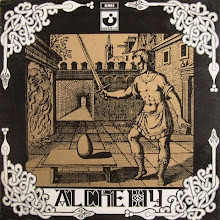
"ALCHEMY"
"Alchemy" (Harvest 1969)
Third Ear Band live at Hyde Park (June 7th,1969)
Click on the picture to watch the video!
Read "Necromancers of the drifting West"!!!
A book on the Third Ear Band edited by Luca Ferrari (published by Stampa Alternativa, Rome 1997). WITH THE FIRST ORIGINAL VERSION OF "ABELARD & HELOISE" SOUNDTRACK!
Third Ear Band at the Roundhouse (London, May 30th 1969).
As alike or unlike as blades of grass or clouds...
"The music is the music of the Druids, released from the unconscious by the alchemical process, orgasmic in its otherness, religious in its oneness communicating beauty and magic via abstract sounds whilst playing without ego enables the musicians to reach a trance-like stage, a "high" in which the music produces itself. Each piece is as alike or unalike as blades of grass or clouds".
(From the 1969 Isle of Wight concert programme)
TEB - "THE LOST BROADCASTS" DVD (Gonzo Multimedia, UK 2011)
Richard Coff at Isle of Wight Festival, August 1969 (photo: Barry Plummer).
Pseudo-mystical...
“The trouble is that you can't be mystical without being called pseudo-mystical, and it's the fault of our previous education. I'm at Glastonbury most of the time, but we're all completely honest about it. We'll even use it honestly to make money, because the ancient Egyptians who were into it all said that you had to be rich because only then can you resist temptation”.
(Glen Sweeney to Richard Williams, “Melody Maker” June 1970)
"Macbeth" by Roman Polanski (Playboy Production, UK 1971)
“I've always felt that music should be pure. If you have lyrics, you are preaching in a way. Somehow words are a block to communication. It's almost impossible for me to explain exactly how I feel about this, that's why I'm a musician. The only way to really understand what I mean, is to firstly listen to a pop group and then listen to us, and then I hope you will know what we're trying to say."
(Glen Sweeney to Muz Murray, 1969)
A Third Ear Band tribute
Roberto Musci - "Mosaic. A tribute to Third Ear Band" (CD - Gonzo Multimedia HST411, 2016)
TEB 1971: Sweeney, Minns, Bridges and Buckmaster (photo: Blackhill Enterprises).
NOTES FROM OVERGROUND
“No announcements, numbers lasting 15 to 20 minutes, art form or con?
This might be valid criticism of (A) Thunderstorm (B) a cricket (C) Third Ear Band.
Their approach to music is different because there is no duality, no conflict between the natural element of chance and the human element of control, did the moon ask to be reflected in the water? If it wasn’t for the trees would the wind know when it was blowing? Paul Minns says there are some very beautiful forests in Hyde Park, trying to put titles to music is rather like trying to answer the question where does my hand when it becomes my fist”.
(From the Al Stewart-Third Ear Band 1970 tour programme)
TEB 1970: Sweeney, Minns, Coff & Smith (photo: Blackhill Enterprises).
"The Centipede was happy, quite, until a Toad in fun said: "Pray, which leg goes after which?". This worked his mind to such a pitch, he lay distracted in a ditch considering how to run". (Third Ear Band, 1970)
TEB at Isle of Wight Festival, August 1969 (photo: Barry Plummer).
"Music from Macbeth" (Harvest 1972)
Third Ear Band - "Experiences" (Harvest 1976)
WEIRD SCENES
“We'd rather people called us a pop group. We do ragas, that aren't really ragas at all, and unless we get a turned on promoter, we get into some weird scenes. At Norwich once, when the promoter saw the audience sitting down and closing their eyes to our music, he accused us of putting them to sleep! Complete paranoia. So I imagine we wouldn't do too well on the Pop Proms”.
(Glen Sweeney interviewed by Chris Welch - “Melody Maker” July 12th, 1969)
Third Ear Band - "Fleance" (Odeon 1972) Japan single edition
Third Ear Band - "Live Ghosts" (Materiali Sonori 1988)
VERY MUCH UNDERGROUND
“It's just a question of advertising. We've stayed very much Underground - no photos - and I think this was necessary so people wouldn't put us in a bag. We'd rather the just came up and heard us without ANY preconceived ideas. I suppose it is a bit shattering to see violins and cellos”.
(Glen Sweeney interviewed by Chris Welch - “Melody Maker” July 12th, 1969)
Third Ear Band at a Druids ceremony in Glastonbury Tor (April 15th, 1970).
OTHER TEB RELEASES/APPEARANCES
"Picnic. A breath of fresh air" (2LPs - Harvest SHSS 1/2, UK 1970) various Harvest artists anthology
"Harvest Heritage. 20 Great" (LP - Harvest , UK 1977) various Harvest artists anthology
"The Harvest Story Vol. 1" (LP - Harvest EG 260097 1, UK 1984) various Harvest artists anthology
"All frontiers" (CD - Materiali Sonori MASO CD 90026, ITA 1991) various artists live compilation
"Sonora 2/91" (CD - Materiali Sonori, ITA 1991) various Materiali Sonori artists compilation
"Radio Session" (CD - Voiceprint VPR017, UK 1994) live album
"Materiali Sonori" (CD - Olis OM 0021, ITA 1996) various Materiali Sonori artists compilation
"Live" (CD - Voiceprint VP157CD, UK 1996) live album
Third Ear Band - "New Forecasts from the Third Ear Almanac" (ADN Records 1989)
90% improvisation...
"I'd say ninety per cent of our music is improvisation. It's not really Indian music, although we use a drone instead of the usual bass line riffs. The music draws from everywhere.
"I think our appeal is that audiences can draw their own thing from us. We make no announcements and none of the numbers have titles. People in colleges we play come up after and say they can get fantastic images in their mind when they listen. We can offer a complete dream. The old Celtic bards used to have the same ability".
(Glen Sweeney interviewed by Chris Welch - “Melody Maker” July 12th, 1969)
“Third Ear Band’s new album “Magic Music” isabout music as pure vibrations, as such it can be linked with colour because colour is vibration. It can even be linked to the music ofthe spheres which states that the vibrations of the planets can be heard with the third ear (silence). The free ragas that we play are modal, each note can be heard as a sound-colour that produces its own mood.Our rhythms come from all overthe world, and we use these ideasand many others to try to make a new world music”.
(Glen Sweeney, notes on the “Magic Music” inner cover, 1990)
SOLOS DISCOGRAPHIES
- GLEN SWEENEY -
Various Artists - "The greetings compact vol. 2" (CD - Materiali Sonori, 1990)
Rolling Stones - "Sticky fingers" (LP/CD - Rolling Stones Records, 1971)
Carly Simon - "Hotcakes" (LP/CD - Elektra, 1974)
Elton John - "Single man" (LP/CD - Rocket, 1978)
- NEIL BLACK (selection) -
UB40 - "Present Arms" (LP/CD - DEP, 1981)
Joan Armatrading - ""Track Record" (LP/CD - A&M, 1983)
Third Ear Band 1969: Minns, Sweeney and Coff at the Kensal Green Cemetery of London (photo: Ray Stevenson).
Third Ear Band - "Brain Waves" (Materiali Sonori 1993)
Eight drunk rugby players
"We once had eight drunk rugby players yelling dirty songs at us. We played quieter and quieter. In the end they seemed ashamed and shut up. But I still don't think they dug the music!".
(Glen Sweeney interviewed by Chris Welch - “Melody Maker” July 12th, 1969)
Third Ear Band, Vinci 1989: Allen, Sweeney, Dobson and Carter (photo: Lucia Baldini).
QUOTATIONS, COVERS, REMIXES, MANIPULATIONS OF THIRD EAR BAND MUSIC
Stone Breath - "A silver thread weave the seasons" (2CDs - Hand/Eye, USA 2008). A 'cover' of "Fleance".
Marco Lucchi - "Baby a" (ITA 1982). A composition with a sampler of "Stone Circle".
Radio Noisz Ensemble - "Yniverze" (CD - Garden of Delights 1982/2009). A 'folky' quotation of "Water".
Fabio Zuffanti - "Third Ear Band demixed" (CD-r - Spirals Records, ITA 2000). The four elements electronically manipulated.
Algarnas Tradgard - "Delayed" (CD - Silence Records, UK 2001). A quotations of "Water" recorded in 1973-1974 (!).
Lady Husk & The Good Ship Neotropic - "A monstrous psychedelic bubble exploding in your mind" (file MP3 - The New Worck, NL 2007). A remake of "No title" (?!).
I Monster - "The Art of Chill vol. 6 - Mixed by I Monster" (2CDs Platipus, UK 2009). A remix of "Fleance".
Vibes and Stuff - guest mix Coby Sey (MP3 - UK, 2010). A remix of "Water".
AA.VV. - "The Fruits de Mer Annual for 2011" (2x7" - Fruits de Mer Records, UK 2011). A cover of "Fleance" by the HI-Fiction Science.
 "The first of the two Coff tracks ["Sisters of the Cross", 2.39] features subdued
droning viola which could, in all honesty, be anyone. The second ["Le petite Marionette", 1.33] is
pure Coff - featuring multi-tracked pizzicato & bowed violin very
reminiscent of the A&H soundtrack. Well worth a listen I'd say!".
"The first of the two Coff tracks ["Sisters of the Cross", 2.39] features subdued
droning viola which could, in all honesty, be anyone. The second ["Le petite Marionette", 1.33] is
pure Coff - featuring multi-tracked pizzicato & bowed violin very
reminiscent of the A&H soundtrack. Well worth a listen I'd say!".