November 06, 2011

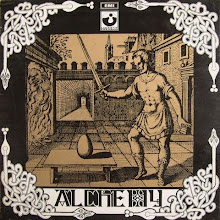
"Fleance" and Chaucer's "Merciless Beauty".


The music of  "Fleance" - track included on "Music from Macbeth" - was composed by Denim Bridges during the sessions for the album.
Despite the fans' appreciation, as the same Bridges admitted on an e-mail sent to me on May 2011, "Glen and Paul hated that track because it didn't fit in with TEB concept". For myself, they was right...

Anyway the track, as we know, was sung by a very young Keith Chegwin with the lyrics based on a rondel poem written by the famous English poet Geoffrey Chaucer (1343-1400, a bio from Encyclopaedia Britannica at http://www.biography.com/people/geoffrey-chaucer-9245691?page=1) - titled "Merciless Beauty".
These are the track's lyrics:

"Oh your two eyes will slay me suddenly
I may the beauty of them not sustain
so pierced is throughout my heart keen
unless your words will heal me hastily
my heart's wound while that it is green
oh your two eyes will slay me suddenly
upon my troth I tell you faithfully
that you are of my Life and Death the Queen
and with my Death the Truth be seen
oh your two eyes will slay me suddenly
I may the beauty of them not sustain
so pierced is throughout my heart keen
so hath your beauty from my heart chased
Pity that it avails not to complain
for Pride doth hold your Mercy in its chain
guiltless my death hath ye purchased
I say you sooth there is no need to feign
so hath your beauty from my heart chased
alas that Nature hath in your embrace
beauty so great that no man may attain
to Mercy though he starve for pain". 

Of course, this version is just a modern English adaptation of the original Middle Age one, that was this (note that the section used by Bridges for the track, probably provided to him by filmaker Polanski, is highlighted in red):

MERCILES BEAUTE

1. CAPTIVITY

"Your eyen two wol slee me sodenly,
I may the beaute of hem not sustene,
So woundeth hit through-out my herte kene.

And but your word wol helen hastily
My hertes wounde, whyl that hit is grene,
Your eyen two wol slee me sodenly,
I may the beaute of hem not sustene.

Upon my trouthe I sey yow feithfully,
That ye ben of my lyf and deeth the quene;
For with my deeth the trouthe shal be sene.
Your eyen two wol slee me sodenly,
I may the beaute of hem not sustene,
So woundeth hit through-out my herte kene.

2. REJECTION

So hath your beaute fro your herte chaced
Pitee, that me ne availeth not to pleyne;
For Daunger halt your mercy in his cheyne.

Giltles my deeth thus han ye me purchaced;
I sey yow sooth, me nedeth not to feyne;
So hath your beaute fro your herte chaced
Pitee, that me ne availeth not to pleyne.

Allas! that nature hath in yow compassed
So greet beaute, that no man may atteyne
To mercy, though he sterve for the peyne.
So hath your beaute fro your herte chaced
Pitee, that me ne availeth not to pleyne;
For Daunger halt your mercy in his cheyne.

3. ESCAPE

Sin I fro Love escaped am so fat,
I never thenk to ben in his prison lene;
Sin I am free, I counte him not a bene.

He may answere, and seye this or that;
I do no fors, I speke right as I mene.
Sin I fro Love escaped am so fat,
I never thenk to ben in his prison lene.

Love hath my name y-strike out of his sclat,
And he is strike out of my bokes clene
For ever-mo; ther is non other mene.
Sin I fro Love escaped am so fat,
I never thenk to ben in his prison lene;
Sin I am free, I counte him not a bene".


There're no proofs that the band played the song at live concerts, but a radio broadcast is documented on March 21th, 1972 during the radio programme "Drummond" (titled "Fleance's Song"): the TEB line-up was probably the same of the album...

The band appearance on the Polanski's movie (photo c0urtesy of TEB Facebook fan page): (L-R) Minns, Coff, Sweeney, Buckmaster and Bridges.
Just two anedocts to end: "Fleance", the only track with lyrics in the TEB first phase, was one of the Sex Pistols' John Lydon favourite as declared during a 1977 interview with Tommy Vance (read at http://ghettoraga.blogspot.com/2010/03/johnny-rotten-selected-third-ear-bands.html). Just recently, reader Timothy Sommer has confirmed me by e-mail: "During the 1990s, I was friends with John Lydon... He made a point of buying me some TEB albums, and explaining to me that it was one of his favorite bands and a huge influence on him...". A quite incredible thing, you know, considering how much distant is the (great) Sex Pistols music from the TEB's one...

About Keith Chegwin (his personal Web site at http://www.keithchegwin.com/), at that time 14, I've discovered in the Net that he told about the "Macbeth" recording sessions during an interview:

How the hell as a 14-year old from Bootle do you end up in a Roman Polanski Shakespeare production?
"Well it was weird; I mean, to go back even further, as a rough synopsis, I used – when I was eight years of age – to be a great fan of Des O’Connor. And I used to emulate him by coming out from behind the sofa singing Des O’Connor songs".

And what was it like working with Polanski?

"Well, Roman Polanski, great film director, they’d say “He not turn up today”. That’s all we ever heard. I was booked to work on it for six weeks, and ended up working on it for six months!".

Just because he didn’t turn up?

"Just because he didn’t turn up. Or he’d turn up and go “I feel ill, I go home”".

Were you paid per day?
 
"Yes, paid per day! The Evening Standard wrote an article, I’ll always remember, called The Gobstopper Millionaire, because of the money in those days…".
 

                             "Fleance" by the Third Ear Band (1972)

Apart "Fleance", a real hit song in TEB repertoire,  for myself the "Macbeth" soundtrack is a really treasure of sounds and moods, a spectacular pagan mass of blood, death and sublime...
no©2011 Luca Ferrari (unless you intend to make a profit. In which case, ask first)

October 29, 2011

Revealed who is the conga player playing in TEB TV German appearance! (UPDATED)


Thanks TEB fan Mirco Delfino (follow his interesting TEB Facebook's fans page at http://www.facebook.com/pages/Third-Ear-Band/156660855584?sk=wall) at last we have the right identity of the mysterious conga player who played at that TEB TV appearance on German music programme "Beat Club", recently published on an official DVD.
According a redear of that page, his name is Gasper Lawal, and all the clues are absolutely reliable.


From the notes of one of his solo 1980 album "Ajomase" we learn that "Gasper-Lawal, African percussionist extraordinary, is the son of Herbalist Asorono-Akejiwori Lawal. Born in Ijebu-Ode, Nigeria, Gasper came to England in the sixties and gigged with numerous African bands before deciding to involve himself with session work, as a means of expanding his musical horizons. He worked with Ginger Baker’s Airforce, Steve Stills, the Rolling Stones, Funkadelic, Joni Haastrup, Sonny Okosun, Barbra Streisand and many other names before joining Clancy in 1975. In 1977 Gasper returned to Nigeria for a while, returning to England to record ‘AJOMASE’ – which means “we all have to do it together”.

Gasper Lawal from the TEB 1972 "Beat Club" DVD.

Other infos come from another source (http://www.centrohd.com/biogra/l1/gaspar_lawal_b.htm):"Gaspar Lawal b. 23 September 1948, Ijebu-Ode, Nigeria. A percussionist and bandleader, Lawal left Nigeria to settle in the UK in the mid-60s. Basing himself in London, he became rapidly established in the session scene, and over the next ten years recorded with a large number of local and visiting musicians, covering a wide variety of styles, including Ginger Baker's Airforce, Stephen Stills, the The Rolling Stones, George Clinton's Funkadelic and Barbra Streisand. In 1975, he joined London-based rock band Clancy, leaving in 1977 to return to Nigeria. Moving back to London in 1978, Lawal formed his own group, Afriki Sound (later renamed the Drum Oro Band), creating a highly individual style which succeeded in marrying traditional West African roots music and instrumentation with elements of experimental rock and jazz. A fervent believer in the value of traditional African music, Lawal was also convinced that it needed to develop and could benefit from the incorporation of certain western ideas and influences. With Afriki Sound he released two superb albums on his own Cap label, "Ajomase" (which in Yoruba means ‘We all have to do it together’), which spawned two dancefloor hit singles in Kita Kita and Oromoro, and "Abiosunni" (Yoruba for ‘Are you sleeping or what?!’). Both albums featured the cream of expatriate African musicians living in London, notably Olalekan Babolola (percussion), Tunji Omoshebi (trumpet), Abdul Salongo (guitar), Don Amaechi (guitar/percussion/kora/keyboards), Ray Allen (saxophones) and Osibisa's Mac Tontoh (trumpet). In the mid-80s, Lawal was a founder member of Britain's Black Music Association, a pressure group which worked to achieve greater exposure and better working conditions for black musicians".  

From a blog called Permanent Condition (http://permanentcondition.blogspot.com/2007/01/gasper-lawal-ajomas-abiosunni.html) we learn also that Lawal played on important underground albums as Graham Bond's "Magick" and Vivian Stanshall's first solo...
You can find him/his music also on You Tube: 


A Gasper Lawal solo discography:  
Ajomase (LP - Cap Records, UK 1980) 
Abiosunni (LP - UK, 1985) 
Kokoroko (LP - Hot Records, UK 1986)
Kadara (CD - Globe Style, UK 1991)


Main collaborations:
Alexis Korner - "Alexis Korner 1961-1972" 
(Castle Communications, UK 1986)
Funkadelic - "Funkadelic" 
(Westbound Records, USA 1970)
Graham Bond -"We put our magick on you" 
(Vertigo, UK 1971)
Stephen Stills - "Stephen Stills 2" 
(Atlantic, USA 1971)
Vinegar Joe - "Vinerar Joe" 
(Island Records, UK 1972) 
Graham Bell - "Graham Bell" 
(Charisma, UK 1972)
Babe Ruth -"First Base" 
(Gramophone, UK 1973)
Vivian Stanshall - "Men opening umbrellas ahead" (Warner Bros, UK 1974)
Carol Grimes - "Warm Blood" 
(Caroline, UK 1974)
Decameron - "Mammoth Special... plus" 
(Mooncrest, UK 1974)
Babe Ruth - "Amar Caballero" 
(Harvest, UK 1974)
Clancy - "Seriously Speaking" 
(Warner Bros, USA 1975) 
Joan Armatrading - "Back to the Night" 
(A&M, UK 1975)
Clancy - "Everyday"
(Warner Bros, USA 1976)
Eddy Grant - "My turn to love you"
(EPIC, UK 1980)
Wishbone Ash - "Number the Brave" 
(MCA Records, 1981) 
Camel - "Nude" 
(Cherry Red, UK 1981)
Hugh Masekela - "Techno-Bush" 
(Jiva Afrika, UK 1985)
The Associates - "Perhaps"
(WEA, UK 1986) 
3 Mustaphas 3 - "Heart of Uncle" 
(Phonogram, UK 1989)
The Pogues - "Peace and Love"
(Island  Records, UK 1989)


no©2011 Luca Ferrari (unless you intend to make a profit. In which case, ask first)

(file updated on October 30th, 2011)

October 25, 2011

Third Ear Band music on You Tube: the perfect soundtrack of creativity!


You Tube is not just the slavish useless revival of the TEB's tracks right taken from the original albums, but it's  most of all the place where TEB wonderful music can meet the Arts, becoming a very suggestive soundtrack of pictures, homemade videos, paintings, drawings... ideas.
Here is a list of videos where TEB music shows its brilliant vocation to become the perfect soundtrack!

            "The Cat's Eyes" by Moebius-Jodorowsky ("Ghetto Raga").

          "Totentanz" by Dino Battaglia ("Abelard & Heloise" pt. 6).


"A Midsummer's Night Dream" by W. Shakespeare. Drawings by Cristina Breccia, words by Norberto Buscaglia. Music by The Third Ear Band ("Abelard & Heloise" pt. 2 & 3).

        Homemade video with TEB's "Eternity in D" as a soundtrack.

"An attempt to put images to a track by my all time favourite band". An homemade video by TEB fan Will Hulbert with TEB's "Mosaic".

Another homemade psychedelic video by Will Hulbert with a rare radio version of "Water". 

A monologue talked in Italian based on a poem titled "Ho perso la testa per Salomè" ("I've lost my head for Salomè") written by S. Giovanni Battista on 32 A.C. The music is "Earth" by the Third Ear Band.

Illustrations from the rare "Mutus Liber" edited on 1677 by such Altus. The TEB track used for this video is "The Cauldron" from "Music from Macbeth".

"Les Songes Drolatiques de Pantagruel" painted in 1973 by Salvator Dalì. Music from TEB's first album ("Dragon Lines").

               "The Mantegna's Tarots" with TEB's "Groom's Dances".

"The Magic Calendar", lithographs by Manuel Orazi printed in 1896. The soundtrack is the wonderful "Druid One".

"Waldkammer", the art of Madeline Von Foerster. The music here is "Abelard & Heloise" part 2.

"The Garden of Earthly Delights" by 'psychedelic' doped Dutch painter Hieronymus Bosch. With the music of the Third Ear Band as a perfect soundtrack (excerpts from "Macbeth").

"Lark Rise" played by the Thirds as a musical comment for "Alchimie des Philosophes" painted by Salvador Dalì.

The incredible Hopi Dolls painted in 1969 by American Homer H. Boelter with the beautiful TEB's "Stone Circle".

A tribute to Don Cherry, Michael Hurley and the Third Ear Band (some quotations of "Eternity in D"...) by the genial post-folk-warrior Sedayne with references to the great Snock (the title of this track is infact "Snock Mandala").

no©2011 Luca Ferrari (unless you intend to make a profit. In which case, ask first)

October 20, 2011

Italian harpist VINCENZO ZITELLO tells his fascination for the Third Ear Band music...


Vincenzo Zitello (http://www.vincenzozitello.it) is a very famous Italian harpist. Composer and concert artist, he started studying music at a very early age, playing the transverse flute and the viola. The first person to spread and pioneer the Celtic harp in Italy, from 1976, he dedicates himself to his musical studies, taking part in Breton cultural and musical seminars held at the “Ti Kendalc'h” with Dominig Bouchaud and Mariannig Larc’hantec. In 1978 he forms the harp and oboe duet with Roberto Mazza, author on 1991 of the wonderful
TEBish private cassette  titled "Scoprire le orme". On 1980 he specialised in the bardic harp and Celtic singing with the monster Alan Stivell. From 1986 he has recorded eight albums and had important collaborations with some of the most known popular music (Ivano Fossati, Pooh, Alice...) and folk Italian artists (Peppe Barra, Lou Dalfin, La Sedon Salvadie...).


Just this year he has recorded a brand new record, "Talismano" [Talisman], another important work about the Holy Land of the Harp.
Among his records, "Atlas", recorded in 2007, is directly inspired by the Third Ear Band's music, one of the favourite band ever of Zitello. You can listen some tracks of it on Zitello's Myspace at http://www.myspace.com/zitellovincenzo or buy the album on Itunes.
Starting from this evidence, I've asked him some questions about his connections with the Third Ear...


How did you compose "Atlas", the record you've admitted it's been inspired by the TEB's music?
“I’ve composed "Atlas" between 2006 and 2007. It’s a work I’ve thought about since the Seventies. On 1973, when I discovered the Third Ear Band, my music wasn‘t the same anymore, also the way to conceive it. For years I’ve considered them my masters of sound perception.

With the musician with whom I was playing at the time [Roberto Mazza], I was really conditioned by them – both of us we loved really much their style and in some ways we imited them or, better, we was on the same track, for us they was an huge benchmark. 


"At that time I wasn’t playing harp, I played the violin, and listening to a band like them that was handling classical music in a contemporary creative way – but with such out of the way improvisational freedom, at the same time extremely alchemical and magic – where so many memories was converging, for myself it was a really innovative philosophical state of music. Most of all, it was completely out of the usual Rock soppiness of that time: it seemed to me something that aim to our soul, a dream...  

"On that days I was listening to very few music, I just consumed all the TEB’s records. Of course now I’ve got all their CD’s.
Then the time brings you to other countries, but at that time I was so young, just 18, and very hardliner and obviously naïve about things. Now I’m 55 but I’ve never forgotten them…
So all these impressions was the fuel to compose “Atlas”, a comeback to my origins in a more conscious way.
For years I was thinking of doing a record inspired by the Third Ear Band's music, I wanted to do it in a contemporary and personal way, I’ve always looking in my composing spirit their magic, their colours. The instruments I use to play lend myself to it, and the peculiar mutation of the TEB music... Their track titles struck me. In my opinion they was an extraordinary thing, then and now...".

Which tracks composed by you are inspired by the TEB's music?
"It's more easy for me to tell you which tracks aren’t inspired by the Third Ear Band. No one!!!"

When have you met the Band?
"The person who let me know the TEB was Roberto Mazza. A great oboe player, with a wonderful sound. I suggest to  music fans to listen to all his works. I think he’s the player who better has got the Paul Minns’ inheritance. We’ve played together for many years, until 1982."
 
Which are the main elements you've taken from their experience for putting in your music?
"Their sound becoming, the continuous mutations, the full and the melody that opens constantly to deep images, also their way to use strings and most of all their spirit: while I was composing some orchestrations I was thinking about that TEB music aura...".


                                                                           Vincenzo Zitello - "Celtic Raga".
 
Do you think they are still up-to-date? Why?
"I think their spirit is very relevant, indeed not much it's been done to spread them. Contemporary music needs new perspectives, in some way TEB music has been out of styles and fashions, but it contains a view that music needs. After rock, jazz and folk we need now a brand new music away from the trite styles, and I found in the TEB music excellent and still authoritative culture and inspiration for the present time, at least until the album titled "Prophecies"...".


Are you still listening to their records?
“Yes, of course. I prefer most of all “Third Ear Band”, but “Alchemy” is that enraptures me”.


How would you describe the TEB's music?

"I would describe it as a sound intuition, something that expands counsciousness in a magical way, and in the same time it is perfectly rooted in the European cultural memory. Eastern contaminations are the same of Western medieval music... TEB music has a wonder one can found in the Reinassance alchemical experimentations; a research that collect the collective memory of an organic freedom almost lost in Europe. Their sounds are real, they haven't temporal masks as like their perceptions that communicate. You can love it or you can detest it, because you don't understand it...".

Which is your favourite TEB's tracks? Why?
“My favourites are “Air”, “Water”, “Fire”, “Earth”, really amazing. Then “Ghetto Raga”, “Druid One” and “Stone Circle”.


no©2011 Luca Ferrari (unless you intend to make a profit. In which case, ask first)

October 15, 2011

New Third Ear Band DVD update.


About the new TEB DVD titled "The Lost Broadcasts" recently announced at the page http://ghettoraga.blogspot.com/2011/09/lost-teb-video-brodcasts-out-in-october.html you can contact GONZO MULTIMEDIA (http://www.gonzomultimedia.co.uk)
at the address below:

by e-mail: 
customerservicesgonzo@gmail.com (for all queries about products and ordering)
info@gonzomultimedia.co.uk (for general non-order related enquiries)

by post:

Gonzo Distribution Ltd.
c/o Brooks City,
6th Floor New Baltic House
65 Fenchurch Street,
London EC3M 4BE

Fax: +44 (0)191 5121104
Tel: +44 (0) 191 5849144

International Numbers:
Germany:
Freephone 08000 825 699

USA:

Freephone 18666 747 289

English Gonzo Multimedia has in its catalogue many other interesting videos with rare broadcasts of Incredible String Band, David Allen & Gong, The Byrds, Edgar Broughton Band, Hawkwind...

no©2011 Luca Ferrari (unless you intend to make a profit. In which case, ask first)

October 10, 2011

TEB quoted on the wonderful Rob Young's essay on English folk 'visionary' music.


On the wonderful monumental "Electric Eden. Unearthing Britain's visionary music" (Faber & Faber, London 2010), an essay on folk music written by Rob Young, editor of famous English magazine "The Wire", a little place is dedicated to the Third Ear Band (with a generous quotation of this archive).

Here's the excerpt:
"(...) Harvest was also the home to the Third Ear Band, who pursued a rarefied version of Pink Floyd's abstract music of this period. They were a loose conglomerate of occult-minded instrumentalists that had its origins in The Giant Sun  Trolley, one of the many acts  appearing at the  14 Hour Technicolour Dream. Percussionist Glen Sweeney, the group's one constant member, began his career by seizing the bandstand in London's Hyde Park with several freaky friends, and playing even after the police informed  them that music was banned from the park. (They politely asked wheather  the rule applied to the birds.) After Sweeney and oboist Paul Minns took part in a December 1968 multimedia event  at the Royal Albert Hall called The Alchemical Wedding - at which John Lennon and Yoko Ono conducted a forty-five minutes bag in - The Third Ear Band sculpted an esoteric chamber music from acoustic elements; their first album was duly  titled Alchemy.  With track titles such as 'Druid One', "Stone Circle', 'Dragon Lines' and 'Egyptian Book of the Dead', these were incantational songs-without-words, a ritualistic consort music whose atonal tinctures sometimes recalled the European  folk-chamber music of Béla Bartok and the terse reductionism of Anton Webern, sometimes the free play of John Steven's Spontaneous Music Ensemble.  John Peel even turned up  to play Jew's harp on 'Area Three'. 'I call the music alchemical  because it was produced by repetition', explained Sweeney, whose muted battery of hand drums shaped hypnotic hymns to the fearful symmetry of the elements and the heavenly rotations. This was not cultish window dressing, though: the group made connections with Druid orders and accompanied their dawn solstice ceremonies.  Third Ear Band (1970), often referred to as Elements because its four lenghty improvisations 'Air', 'Earth', 'Fire' and 'Water', found the group - now a quartet with the addition of Ursula Smith (cello) and Richard Coff (violin, viola) - propagating a fungal acoustic music with spores of pan-European folk, Early Music and oriental drone dynamics. Their meditational medievalism found its way  into two film soundtracks they created in 1970 and 1971: for a German television  film about Abelard and Heloise, and for Roman Polanski's dark-age rendering of Macbeth. The  Third Ear Band's arcane, absorbing music stands as one of several unexplored lanes leading away from the psychedelic garden that remains neglected and 0vergrown".
(Rob Young, "Electric Garden", pages 472-473)

Read the synopsis of the book at the Faber & Faber Web site:
http://www.faber.co.uk/work/electric-eden/9780571237524/
Visit Rob Young's  blog on folk music at http://www.electriceden.net

 no©2011 Luca Ferrari (unless you intend to make a profit. In which case, ask first)

October 04, 2011

Maybe an interview with Chief Druid David Loxley?


Just in  the first days of October, Steve Pank has sent me the photo below, portraying David Loxley (Chief Druid) during the druid ceremony of the Spring equinox in Tower Hill (London) on 2010. Just behind him Carolyn Looker, Glen Sweeney's missus.
As you know, David Loxley was very close to the TEB from the beginning, involved with Druids and drawing TEB's first concert posters.

Thank to Steve, maybe one day we'll have an interview with him about that years and the band's connections with the Druids...

                                                                                                                                            Steve Pank ©2010 

 no©2011 Luca Ferrari (unless you intend to make a profit. In which case, ask first)

October 03, 2011

Third Ear Band being almost reincarnated...


ChrispH, musician of Norwegian avant-garde band Famlende Forsok, has answered me about the file  published  in this archive some weeks ago at the page http://ghettoraga.blogspot.com/2011/08/norwegian-band-famlende-forsok-quoted.html

"Hi,
I think maybe even our latest project also has references to TEB. We are about to finish an album as a result of three concerts we held during the last three years loosely based on drones/electronics/acoustics/poetry. I think this live piece also proves this to be a bit influenced to TEB in bringing "the oriental" into experimental western (unscholared "rock") music. http://www.youtube.com/watch?v=klf-x0X745w Sound quality is a bit poor. Plain old video recorder I guess. ChrispH (playing that lously Akai pseudo-shenai)".

Watch and listen to the track below: after three minutes of  electronic carpet, infact, TEB seems almost to be reincarnated here & now!

                                           Famlende Forsok live October 1oth, 2009

no©2011 Luca Ferrari (unless you intend to make a profit. In which case, ask first)

September 28, 2011

"The apprentice and the sorcerer" (part two). An old Italian article on the Third Ear Band.


Here's the second part  of the rare Italian stuff on the Thirds written by journalist Maurizio Baiata  and published on "Ciao 2001" magazine on December 24th, 1973.
Thanx researcher Daniele Briganti (read him at http://stampamusicale.altervista.org/) we can read what one of the best (at that time) underground Italian music magazine wrote about the band, with common places, gross infos, cheap philosophy and some brilliant insights...

"(...) Black misterious pages, a draw full of strange  and gelid signs, a music as a viaticum to the acoustic Hell: this is the Third Ear Band of "Alchemy", first record experience, first album thrown out in whirpools of the unknown in music, nothing of "dark" or the classic gastronomic flavour as like as Black Sabbath or Black Widow: strange stories of past and cruel times open in the grooves, collocation of historical order let you know how the group mainly persue a right rediscovery of the English and Scottish black folk music, with temporal movements limited to XI and XII century, with the rhythmic outstretched to rediscovery of cults dear to Ossian, then sung by William Blake and the other sepulcher poets. But there's a background mood that seem to miss: with the coldness of music contents something of indefinable is leaping in front of eyes, maybe that love for nature, that frantic order that rules human things.


"Alchemy" is a complex and difficult work, complete. (...) The basic sound has its rise in a monodic pulse most of the time created by the percussions, then it enriches with the strings and oboe, both  played on patterns of an haunting and perfect iteration of rhythms: the picture will seem more clear if compared to Terry Riley's compositions, where the sound carpet, build with one or more incessantly repeated notes, is coloured with continuous superimpositions of synth and organ...

After some very strong (and sharable) observations about the Italian music at that time, Baiata analyzes TEB's second album, described as "the high point of their melodic and modal issue... obsessive, vitalistic, the sublimation of static and monodic music thrown on the lines of highest multiformity, the more charming and medieval rhythmic arcaism ever listened to.
For the author, "Earth" is "the mythical canto of joy, of creation's beauty, of human beasts and not, of the horse that neigh, of the rhythm of flower's growth, so misterious, and we have, with the Third Ear Band, an interpretation,  an all European translation in harmonic terms - easy, linear, very sweet. 
Among group's writings, these are the best lines, an absolutely supernatural composition, where also Riley bows...".


 About "Macbeth", Baiata states that "it's not the work of ripeness, it's not the logical end of contacts with the  band's extrasensorial music, but another little step along the road gotten to exceed the pattern of normal tonality, to destroy criteria of symmetry and geometry in force in England since the age of the Beatles ".
He claims the record, born under the soundtrack ambiguity, "has many static moments, even if played by first order musicians".
On the band's split, "happened just after "Macbeth" (but we know Sweeney and Minns played until 1975...), Baiata says "Third Ear Band's music existed just time before to be created, it was on the air, into the dreams of who came before, into the nightmares of every clever man, on the artistic measure of Self and on his power of theatrical performance of life's things".

Note for the Italian readers:
if you're interested to read the original Italian article please contact me through my e-mail dopachino@tiscali.it to receive a copy in PDF format.

no©2011 Luca Ferrari (unless you intend to make a profit. In which case, ask first)

September 22, 2011

THANKS! THANKS! THANKS! THANKS! THANKS!


Just yesterday this archive, born by chance on December 1st, 2009, has reached
50.000 pages  
opened!

Thanks to all the readers during these two years have contacted  
GHETTO RAGA!

September 18, 2011

Lost TEB video broadcasts out in October!


Lost Third Ear Band video broadcasts from 1970 will be distributed on DVD next October 3rd. The only one known circulating in those years was "Hyde Park Raga", included on a "Beat Club" compilation (read at http://ghettoraga.blogspot.com/2009/12/hyde-park-third-ear-band-tv-video_09.html).
Titled "Third Ear Band. The Lost Broadcasts" is produced by Gonzo (catalogue number  HST069DVD) and it will cost around ten pounds (11-12 euros)...
 

This is the commercial published on some Web sites:
"The Lost Broadcasts are a series of DVDs featuring performances that have rarely been seen since the original transmission on German television, in some cases more than forty years ago. Some of the artists featured within the series are legendary and these “Lost” performances will be a fine addition to any music fans collection. The series covers a number of styles and genres however all of the performances are of a high calibre. (...)

At the time of these performances which were recorded from September 1970, the band consisted of Glen Sweeney, Paul Minns, Denim Bridges and Paul Buckmaster, who would go onto work with Elton John amongst many other high profile artists. Three pieces were filmed on the 11th of September including the unreleased ‘Hyde Park’. The other two tracks were ‘David Grocking’ and ‘In D’, which is thought to be ‘Raga in D’. ‘Druid Grocking’ was played during a John Peel Top Gear session in the summer of 1969 and is an extended workout of the song ‘Druid One’ from the ‘Alchemy’ album. ‘In D’ is a piece originally recorded at the sessions for the debut album ‘Alchemy’.

The band returned to the studio to film once more on the 26th of September and this time performed another slightly shorter version of ‘Hyde Park’. Third Ear Band would go on to record a very famous soundtrack in 1972 for the Roman Polanski film ‘Macbeth’...".

Just a doubt about this project is related to the TEB line-up, because we know that on "Hyde Park Raga" ("Beat Club" TV programme) was involved also Benjamin Cartland...
But anyway we will see...

[Thanx for this signalling to Ed P.]

no©2011 Luca Ferrari (unless you intend to make a profit. In which case, ask first)

September 17, 2011

"The apprentice and the sorcerer" (part one). An old Italian article on the Third Ear Band.


Thanks to the Italian researcher Daniele Briganti (read him at http://stampamusicale.altervista.org/) we have here a very rare article on the Third Ear Band published on the Italian magazine "Ciao 2001" issue 51 in late 1973 (December 24th). 
Titled "L'apprendista e lo stregone" ["The apprentice and the sorcerer"] and written by Maurizio Baiata, it feels the effect of the times and the lack of informations press had in those days - between myth and fantasies... but with some brilliant insights.
This is the part one of a two-parts file.


For Baiata Third Ear Band's music is "greatly interior", a music that "finds a bigger reason to be in Eastern land, the world of notes and harmonies, and colours, and breaths, and delirious, all Western things that are simply the epidermic semplification of an inconscious  and forgotten reality kept in life by the impenetrable Eastern world. But Third Ear Band doesn't play music as like as Quintessence or the Mahavishnu. We are here on a totally different level: where it does exist a preconceived and gratified harmony by epidermic European and American canons, the group reaches to dissolve it in virtue of an approach to that measures of preconceived music in the natural order of life's animated things - plants, men, thoughts or trees".

"The third ear
About the categorization of human psychic opportunities, Western culture shows very far from that Eastern's one: where medical, psychological and introspective techniques can define just a little portion of a very huge and mysterious area of knowledge, Chineses, Japanes, Indians show exactly (with cryptic ways) the contact points with the Known and the Unknown.
The five senses find a total universalization, signification deeply linked with the mind, with religion, with the man's intrinsic spirituality; and spatial and time dimensions loose their basic incomprehensibility connected  to the scientifically correct study of nature. In the meanwhile the development and evolution of the Eastern sound tecniques show us clearly the opportunity of an interpenetration of art and spirit...(...)"

"First complete example of externalization of these principles about musical studies made in Europe is the Third Ear Band, where the etymology of "third ear" goes to discover an absolutely unknown sound dimension - interior and occult - filtered through the study of the human and the sound expression.
Of course the third ear is that unseen, hidden who knows where, but real and present in us: it is the organ with that we perceive sound vibration, we enjoy the music, we get it, we get inside it, we totally penetrate it; for this reason band's music leaves very few to spectacular and epidermic side, it unrelentingly get inside to meanders of "unknown in music", touching so the vertex of a sound great gestures...".

"(...) Third Ear Band is a group "sui generis" at all. It's beyond comparision, even if related to the English folk revival - an extraordinary brainchild...". 

At this point the author analizes  TEB records (talking about "Egyptian tablas" about Sweeney's instrument...), quoting the "Alchemy" album notes, and reporting a statement of Paul Buckmaster (with no quotation of the source): "When the band was formed, I was following some specific forms of contemporary music very near to the electro-acoustic TEB's line-up was doing, but at the end I joined the band just as a friend of Sweeney because I didn't like some their things. Music was origined from occult pratices, nowdays very popular in England: of course they wasn't black masses or other kind of oddities, just a deep study of the esoteric and fantastic history of the world, something of serious, almost religious and scientific that the musicians of the band was living in their lifes and into the music, but that I wasn't involved into: most of all I was interested to the monstrous technique of the guys, their furious eagerness of research and experiment, their courage, while to live they was forced to teach and to play often in tiny clubs and for audience full of freaks, spiritualists, disciples of various philosophy of occult".
(end of part one)

Note for the Italian readers:
if you're interested to read the original Italian article please contact me through my e-mail dopachino@tiscali.it to receive a copy in PDF format.

 no©2011 Luca Ferrari