TEB fan Detlef wrote about the interview with Denny Bridges: "Hi and thanks for the interesting interview! I always loved the track "Hyde Park" that the TEB performed for German Beat Club TV programme in 1970. It is listed as a Denim Bridges original and I always wondered why it was never recorded in the studio. Any info on that?"
I've asked Denny. Today he replies: "Internal band politics. Glen went cool on adding vocals to the repertoire. I believe Paul Minns went along with that opinion at the time. Glen told me at the time "If I wanted to play folk songs I should be in another band". Ironic that we should have to later provide "Fleance's Song" for Macbeth. I really suspect it was a reaction to the opinion of some of the band that we maybe should add a rock drummer. Glen's compromise was to try adding the congas. That didn't last long. Then Macbeth happened and... back to basics. I have been over that before."
News from our friend Denny Bridges, the guitar player of TEB on "Macbeth" and for "The Dragon Wakes" sessions, now coming back to live in Somerset, England.
Discussing again the idea to release the unrealised tracks recorded at Balham in February 1971, he writes to me about the three unrealised tracks the TEB recorded at the Trident Studios on December 5th, 1970, months before the beginning of the recordings at the Air Studios for the Polanski's soundtrack.
With his proverbial precision and clearness, he reveals:
Polanski shooting the movie
"The tracks "Court Dance", "Groom's Dance" and "Fleance" needed to be recorded in advance of the filming of Macbeth. The dances needed to be choreographed and taught to the actors. Also, the role of Fleance was decided, at least in part, by how well the boy sang the song. Well done young Keith Chegwin!
A departure from the way TEB functioned of course; the song I wrote and I presented the defined melody and chords to the band so that was all set in stone. Its not surprising that all and any takes of the song sound the same although probably, after some run-throughs, there was just the one take. As for the dances, in advance of the recording date, we improvised at the rehearsal studio in Balham until we came up with a framework that fitted the description of the dances. We then went into the studio and, as per usual, improvised the pieces afresh using the framework we had from the rehearsals until we got the best take. So that's what the Trident recordings probably are - us trying different approaches. All three pieces are used in the movie and on the album."
On March 29th, 2019 a 3CDs anthology boxset of British folk will be published by Cherry Red records/Grapefruit. Titled "STRANGERS IN THE ROOM ~ A JOURNEY THROUGH THE BRITISH FOLK ROCK SCENE 1967-73", a pre-order is available at the label Website here.
Among great musicians and bands as Michael Chapman, Pentangle, Trees, Fairport Convention, Steeleye Span, Dando Shaft, C.O.B., Strawbs, Heron, Bridget St. John, on disc 2 also the Third Ear Band with "Fleance".
Here's the press release: "It's now half-a-century since British folk rock became A Thing, with the early practitioners breaking new ground and inspiring an entire scene that peaked in the late Sixties/early Seventies.
Earnest young post-Dylan singer/songwriters moved away from the intimacy of the folk clubs in favour of the nascent college/university circuit. Countercultural iconoclasts The Incredible String Band became a seismic influence on a whole raft of bands now categorised as acid-folk, Pentangle's use of acoustic instrumentation within a nominally rock framework attracted many emulators (though arguably no real equals), while Fairport Convention graduated from their initial American West Coast-indebted sound to explore their own country's musical heritage, thus establishing the concept of indigenous English folk rock (a baton that would be picked up by the likes of Ashley Hutchings' post-Fairport venture Steeleye Span and many others).
By the early Seventies, British folk rock had become an extremely marketable commodity. In addition to the aforementioned brand leaders transcending the determinedly parochial folk pages of the UK music weeklies to score Top Ten albums, a second raft of acts - including Alan Hull's Lindisfarne, The Strawbs, the post-Humblebums Gerry Rafferty, Ralph McTell and another Fairport refugee, Iain Matthews - registered huge hit singles.
"Film director Roman Polanski worked through the pain of the Manson Family murders in a most unique manner: making a film. Not just any film, though; he took on William Shakespeare’s Macbeth, one of the greatest tragedies of all time. Released in 1972, Macbeth is a naturally dark and disturbing production made all the more thought-provoking through subtle and not-so-subtle allusions to the murders. A dark production requires an equally dark score, and British progressive collective third ear band were selected to do the job. Esoteric’s recent reissue of the score indicates Polanski made the right choice. Third Ear Band came to be in the late 1960s and made a name for themselves as a top notch live act known for blending classical and medieval instrumentation with modern rock sounds and improvisation. Prior to being recruited by Polanski, the troupe had seen some success for their score of the 1970 score of the film Abelard and Heloise, so the group was eager for more soundtrack work. Seeing the opportunity to experiment, they approached Polanski with a request: they wanted to record a live, improvised score as opposed to a preplanned composition. Such a move was bold for a big budget production, but one that the filmmakers accepted. Polanski, however, took an active role in this soundtrack, attending sessions and making sure the band had to visual stimulation needed. Music From Macbeth is a dark, dreary, and disturbing album, one that perfectly fit the soundtrack. Consisting of sixteen pieces, the album ebbs and flows as one continuous whole, and with many of the pieces being less than two minutes long, it’s not an album to be taken piecemeal. At times the music is so dissonant and harsh—the mixture of medieval instruments and modern technology when together like oil and water—listening can be difficult. Music From Macbeth’s overture sets that standard from the get-go, but yet the cacophony can be oddly appealing, such as on “The Banquet” and “Court Dance.” Then there’s “Fleance,” which is sung by the actor Keith Chegwin, and is based on a poem by Chaucer. It’s a beautiful ballad, and though it breaks up the flow of the atmospherics, it feels oddly out of place; unsurprisingly, the band did not care for it, as it felt disjointed from the rest of the album. Macbeth was a flop, but it remains a fascinating and difficult work of art. Its soundtrack is no different; it is a complex, dense work of dark and foreboding compositions that can try the patience of even the most steadfast listener. Still, approached as a wholeMusic From Macbeth is nothing less than an interesting and compelling musical artifact."
Probably the most rare TEB's item is this only one single known, the Japan edition of "Fleance Macbeth" (Odeon EOR10140, 1972), from the "Macbeth" original soundtrack (on the B side "Overture"). No value estimated.
Here you can see the front cover and the inner sleeve with photos, notes and the original lyrics of "Fleance".
The Market tries desperately to sell his by now Jurassic punched disks. The last attempt to save itself from the forthcoming crash is this useless 5-CDs E.M.I. box sampler about the so-called "Progressive Rock" titled "Prog Rocks!" (very pristine title!).
Published on last March, we have 5 CDs with tracks taken from glorious 70's English labels as Harvest, Liberty, Charisma, Virgin and from InsideOut.
The little surprise is that on volume 1 there's also a track played by our Third Ear Band, the omnipresent "Fleance".
But is it so essential to have "five discs celebrating five legendary progressive rock labels" as the title states?
TEB UBER ALLES!, dear maniacal alchemical fans! TEB is alive and well and on last April 30th, 2013 French Web radio Robotouffe aired the infamous "Fleance".
Dave Harrieswas the sound engineer of TEB's "Macbeth" soundtrack recorded at George Martin's Air Studios (London) in the second half of 1971. Quite accidentally, surfin' on the waves of the Web I've been so lucky to meet him, he's been so kind to accept a short interview about his past... Here's this Special Thing.
Dave Harries on December 19, 2011 (photo by David McSherry)
Describing the Macbeth's soundtrack project to the press ("Sounds" magazine) in 1972 Glen Sweeney said: "We originally were going to use a small dubbing theatre at Air and we thought we would rehearse the film score, but on the first few clips - they only sent the movie on a clip at the time, you see - things went to well that we eventually sent the dubbing theatre up and plugged it into an eight-track and it became the original film soundtrack, part from overdubbing... (...) The way we did it mainly was by viewing the clip that they needed music for and them maybe somebody would have musical idea which we would try out, and if nobody had any ideas then we would hope for the best and try again. And it worked nearly one hundred per cent. I mean, the ideal way would have been to get someone to write the whole score and hire a bunch of studio musicians to play it". Is this description correct?
"Yes, they did view the clip and then compose the music on the spot to go with each scene. We did it one clip at a time so at times to me the music can seem a bit disjointed. Roman Polanski used to come in and review the work. We sent the music mixes to Shepperton Studios to lay them up with the film as we completed them. Often Shepperton would label them wrongly so we would sometimes show scenes with the wrong music as a result. Very confusing. Roman Polanski used to get annoyed about this! We worked in Studio 4 which was designed as a dubbing theatre with film projection facilities. This notably was one of the first movies to use Dolby on the soundtrack". How did you meet the band? Did you know them before to start the recording sessions? "I first met the band because they started the project with our film recording engineer Jack Clegg but he didn't like working with multitrack recording so he asked me to take over the recording along with assistant Bill Barringer".
Can you tell us your career at that point? "I started work at EMI Studios in 1964 as a technical engineer staying there for 6 years and working with all the famous bands of the era including The Beatles, Pink Floyd, The Hollies, Beach Boys and many more. I left in 1970 to join George Martin helping to set up the new Air Studios in Oxford Circus".
One of the rare photo taken at the Macbeth recording sessions.
Which was your exact role in the recording process at Air Studios? "I was the recording engineer responsible for the sound and the organisation of the sessions. I recorded the band to multitrack locked to the picture and mixed the music down to two track magnetic.Also I mixed and edited the soundtrack album".
Do you remember which was the equipment you used for recording the music? "I was speaking with Bill Barringer yesterday about the equipment. We
think we used a Studer A80 8 track machine the a 50Hz pulse on track 8
to synchronise with the film. We mixed down to stereo or maybe three track to an Albrecht film recorder. The projectors in that room were Phillips. Microphones mostly would have been Neumann U87 or U67, maybe an STC 4038 on drums.The whole track was Dolbied and we had regular visits from Elner Stetter of Dolby throughout the recordings".
What can you tell about the condition of the band in the studio (I mean if they were competent about playing and recording, if they used to get drugs, if they were serious worker...)?
The TEB appearing on the movie...
"The band worked very well in the studio and were very creative and constructive in forming the musical passages to accompany the film. Don't remember any drugs. At the time they weren't tolerated in the studios". In a recent interview with myself, Paul Buckmaster stated: "Glen, Paul, Richard and Denny trusting me with my suggestions. For example, I actually wrote the dreary "Witches Song", which we played, and sang. The singing was done by the five of us; Roman wanted it to be "kind of disgusting"… We did a certain amount of overdubbing, to create a more dense texture in places, with me and Richard making clustery string harmonies… I think the End Titles is one of the better pieces in the score; Denny contributed a lot to that, and a great driving pulse from Glen! I believe Denny composed "Fleance's Song" with Paul… but we're all credited as co-writers, which was Glen's democratic, egalitarian virtue". Was the role of Buckmaster so decisive into the composing and recording process? "Paul Buckmaster was an integral part of the band, particularly contributing to the more modern sounding pieces which were almost becoming classical musically".
What do you remember about the recording of the "Fleance's Song", probably the most known track of the soundtrack? I know that Glen and Paul hated it and it is confirmed by Denim Bridges that recently revealed me: "Glen and Paul hated that track because it didn't fit in with TEB concept. It was composed for the movie and it was composed by me alone. The words were provided to me so I, of course, just wrote the melody and chords. The turn around where I repeat the line as a sort of refrain was my trick that I often use(d) and using the minor chord was cool I think. The rest of the band improvised the arrangement in TEB style as best we could within the ridged structure. Anyway that song was the start of my demise with TEB as that's the way I wanted TEB to go". "Fleance's Song was recorded by Jack Clegg and Bill in Studio 2 at Oxford Circus. I mixed it with Bill in Studio 4 along with everythingelse. It was so good and very commercial that at the time we all agreed that it should be released by EMI as a single but the record company didn't agree".
Which was the real contribution in the studio work of George Martin? "To my knowledge George didn't have anything to do with the recording of "Macbeth"".
Had you been involved with the film premiere in London? Do you recall something? "Didn't get an invitation to the premiere".
Have you got any stuff, photos or something else about that experience that you wish to share with the Archive's readers? "Unfortunately I don't have any pictures or anything. I will do some research however.I hope that the above is of help. All the best,Dave Harries".
Dave Harries (on left), after receiving his Lifetime Contribution Award in 2009 from Sir George Martin and Ken Townsend (on right)
"Hello Luca, I still truly like the term 'fascinatingly old-fashioned' [note: I used this expression in one of my last e-mails to him to define his music...]. Next CD maybe.
The days and then the years pass by so quickly. I have intended to do much and regretfully have achieved less than that intended.
I look at the Archive from time to time. I saw (how would you describe what I saw?) references to "Fleance"'s Song. I' m not sure that these new folks have recorded a version but I wish I could hear it if they did. I did hear what the band from Bristol did some time ago. I tried to contact them through Reverbnation (I think) but no response.
You may be interested to know that last night Paul Buckmaster and I spoke, by telephone, for 3 hours catching up on all things. Who knows what may develop.
I am still working on locating enough material for a decent length CD. It must be somewhere.
I regret that the 2011 Renaissance tour was limited to USA which seems to be what will happen this year. We can live in hope for Europe - one day.
So, just to keep you a little informed but it is, regretfully, it is very little - for now.
Finally, it's Denny not Danny (bottom if "Fleance" page). That is the scourge of my life. In America they always get it wrong.
Anyway during an interview about the TEB's track the band says:
“It’s like a medieval Velvet Underground song!
I first came across this song on a psychedelic compilation album put together by Amorphous Androgynous and was instantly smitten! The open line “oh your two eyes will slay me suddenly” had me hooked. Anyone that has been besotted by someone before will know the power of this line. I must have listened to the song about 50 times on repeat when I first got it."
"Its very simple, only about 4 chords with an acoustic guitar, violin, hand drum and a meandering seemingly improvised flute line. It really, really reminds me of The Velvet Underground. It’s a drone, almost a dirge and I can totally imagine Moe Tucker singing it.
Hyde & Beast by Ian West
The lyrics are actually taken from a Chaucer poem: “Merciless beauty” and “Oh your two eyes will slay me suddenly, I may the beauty of them not sustain, so pierceth it throughout my heart keen” – just amazing! One night after a few too many gins I attempted to write a song using medieval language. I failed. Perhaps if I had been drinking mead I may have had a greater success."
A couple of very strange facts about this song: it’s actually sung by a very young Keith Chegwin! WHAT? Yup, it’s true, this fact put me off the song for about a day but then I crumbled and started listening again. The song was written for the soundtrack for Roman Polanski’s film version of Macbeth and the character who plays Fleance in the film was a young Cheggers who also sang this song.
Also strangely Johnny Rotten picked this song as a favourite of his when he appeared on a Capitol radio show in 1977. Its a funny old world isn’t it?". (the quotation is taken from “The line of best it” at http://www.thelineofbestfit.com/2011/08/reference-points-hyde-beast/)
The music of "Fleance" - track included on "Music from Macbeth" - was composed by Denim Bridges during the sessions for the album.
Despite the fans' appreciation, as the same Bridges admitted on an e-mail sent to me on May 2011, "Glen and Paul hated that track because it didn't fit in with TEB concept". For myself, they was right...
Anyway the track, as we know, was sung by a very young Keith Chegwin with the lyrics based on a rondel poem written by the famous English poet GeoffreyChaucer (1343-1400, a bio from Encyclopaedia Britannica at http://www.biography.com/people/geoffrey-chaucer-9245691?page=1) - titled "Merciless Beauty".
These are the track's lyrics:
"Oh your two eyes will slay me suddenly I may the beauty of them not sustain so pierced is throughout my heart keen unless your words will heal me hastily my heart's wound while that it is green oh your two eyes will slay me suddenly upon my troth I tell you faithfully that you are of my Life and Death the Queen and with my Death the Truth be seen oh your two eyes will slay me suddenly I may the beauty of them not sustain so pierced is throughout my heart keen so hath your beauty from my heart chased Pity that it avails not to complain for Pride doth hold your Mercy in its chain guiltless my death hath ye purchased I say you sooth there is no need to feign so hath your beauty from my heart chased alas that Nature hath in your embrace beauty so great that no man may attain to Mercy though he starve for pain".
Of course, this version is just a modern English adaptation of the original Middle Age one, that was this (note that the section used by Bridges for the track, probably provided to him by filmaker Polanski, is highlighted in
red):
MERCILES BEAUTE
1. CAPTIVITY
"Your eyen two wol slee me sodenly,
I may the beaute of hem not sustene,
So woundeth hit through-out my herte kene.
And but your word wol helen hastily
My hertes wounde, whyl that hit is grene,
Your eyen two wol slee me sodenly,
I may the beaute of hem not sustene.
Upon my trouthe I sey yow feithfully,
That ye ben of my lyf and deeth the quene;
For with my deeth the trouthe shal be sene.
Your eyen two wol slee me sodenly,
I may the beaute of hem not sustene,
So woundeth hit through-out my herte kene.
2. REJECTION
So hath your beaute fro your herte chaced
Pitee, that me ne availeth not to pleyne;
For Daunger halt your mercy in his cheyne.
Giltles my deeth thus han ye me purchaced;
I sey yow sooth, me nedeth not to feyne;
So hath your beaute fro your herte chaced
Pitee, that me ne availeth not to pleyne.
Allas! that nature hath in yow compassed
So greet beaute, that no man may atteyne
To mercy, though he sterve for the peyne.
So hath your beaute fro your herte chaced
Pitee, that me ne availeth not to pleyne;
For Daunger halt your mercy in his cheyne.
3. ESCAPE
Sin I fro Love escaped am so fat,
I never thenk to ben in his prison lene;
Sin I am free, I counte him not a bene.
He may answere, and seye this or that;
I do no fors, I speke right as I mene.
Sin I fro Love escaped am so fat,
I never thenk to ben in his prison lene.
Love hath my name y-strike out of his sclat,
And he is strike out of my bokes clene
For ever-mo; ther is non other mene.
Sin I fro Love escaped am so fat,
I never thenk to ben in his prison lene;
Sin I am free, I counte him not a bene".
There're no proofs that the band played the song at live concerts, but a radio broadcast is documented on March 21th, 1972 during the radio programme "Drummond" (titled "Fleance's Song"): the TEB line-up was probably the same of the album...
The band appearance on the Polanski's movie (photo c0urtesy of TEB Facebook fan page): (L-R) Minns, Coff, Sweeney, Buckmaster and Bridges.
Just two anedocts to end: "Fleance", the only track with lyrics in the TEB first phase, was one of the Sex Pistols' John Lydonfavourite as declared during a 1977 interview with Tommy Vance (read at http://ghettoraga.blogspot.com/2010/03/johnny-rotten-selected-third-ear-bands.html). Just recently, reader Timothy Sommer has confirmed me by e-mail: "During the 1990s, I was friends with John Lydon... He made a point of buying me some TEB albums, and explaining to me that it was one of his favorite bands and a huge influence on him...". A quite incredible thing, you know, considering how much distant is the (great) Sex Pistols music from the TEB's one...
About Keith Chegwin (his personal Web site at http://www.keithchegwin.com/), at that time 14, I've discovered in the Net that he told about the "Macbeth" recording sessions during an interview:
How the hell as a 14-year old from Bootle do you end up in a Roman Polanski Shakespeare production? "Well it was weird; I mean, to go back even further, as a rough synopsis, I used – when I was eight years of age – to be a great fan of Des O’Connor. And I used to emulate him by coming out from behind the sofa singing Des O’Connor songs". And what was it like working with Polanski? "Well, Roman Polanski, great film director, they’d say “He not turn up today”. That’s all we ever heard. I was booked to work on it for six weeks, and ended up working on it for six months!". Just because he didn’t turn up? "Just because he didn’t turn up. Or he’d turn up and go “I feel ill, I go home”". Were you paid per day? "Yes, paid per day! The Evening Standard wrote an article, I’ll always remember, called The Gobstopper Millionaire, because of the money in those days…".
"Fleance" by the Third Ear Band (1972)
Apart "Fleance", a real hit song in TEB repertoire, for myself the "Macbeth" soundtrack is a really treasure of sounds and moods, a spectacular pagan mass of blood, death and sublime...
Asking by mail to Denim Bridges about some news on the projected new TEB album with the tracks from the Balham sessions (February 1971), this is his kind (& very interesting) answer:
"Hi Luca, good to hear from you. I regret I have not been able to spend anytime on TEB. I have needed to concentrate on recording CDs for Fiona Frensche and promoting my album ("Go For Gold" by The Bevans) through iTunes, Amazon and Zunes:
The samples are shortened versions of the whole song not just the first 30 secs.
I am going to be touring as the sound engineer for Renaissance this summer. There is talk of a tour of Italy next year. I hope to get time to dedicate to TEB in the autumn/ fall.
I saw about the cover of "Fleance"'s song. I'd like to hear it. Glen and Paul hated that track because it didn't fit in with TEB concept. It was composed for the movie and it was composed by me alone. The words were provided to me so I, of course, just wrote the melody and chords. The turn around where I repeat the line as a sort of refrain was my trick that I often use(d) and using the minor chord was cool I think. The rest of the band improvised the arrangement in TEB style as best we could within the ridged structure. Anyway that song was the start of my demise with TEB as that's the way I wanted TEB to go.Finally a spelling correction - it's "Groom's Dance" not "Groam's Dance".
My memory is going. As I said I was the 'songwriter' in TEB and we have ascertained the "Mistress To The Sun" had been lost. I am also confused regarding "I The Key". For me to have played it on Peel's show I must have written it but I don't remember it. But, I didn't remember the song from Hamburg until you showed me the video. When I get to a computer instead of my iPhone I might be able to access some links.
"Someone else who posted here said they've learntmore about TEB in a fewhours here than in 30 years. I'd agree with that except inmy case it would be 44 years. An excellent archive for TEB fans and historians of the era. Thank you!" RACHAEL TYRELL
A TEB BOOK...
CLICK ON THE PICTURE TO BUY THE BOOK.
NEW TEB 3CDs BOX OUT NOW!
Click on the picture to get a copy.
"ALCHEMY" REMASTERED EDITION OUT NOW!
Click on the picture for buying the album.
WRITE TO GHETTORAGA
Search This Archive
New TEB remastered CD on sale!
Click on the picture to purchase the record.
NEW THIRD EAR BAND REMASTERED CD EDITION ON SALE!
Click on the picture to buy the record
Translate
Third Ear Band 1969: Paul Minns, Glen Sweeney and Richard Coff (photo: Ray Stevenson).
Luca Chino Ferrari (b. 1963) is an Italian music writer. Since 1985 he has written and translated books about folk and rock musicians as Third Ear Band, Robyn Hitchcock, Captain Beefheart, Tim Buckley, Nick Drake, Syd Barrett & the Pink Floyd for the main Italian publishers. He met Syd Barrett in 1986 and did contribute to the reunion of the Third Ear Band during the '80s. His latest books was published in 2020 for English ReR November Books, as a collection of stuff about the Third Ear Band, and in 2024 as a collection of writings about Syd Barrett (in Italian). He runs a personal Web site (in Italian/English) at https://chino6339.wixsite.com/gelatoaicorvi
TEB recording at Abbey Road Sudios in February 1971
Click on the picture to watch the video!
"Third Ear Band music is a reflection of the universe as magic play illusion simply because it could not possibly be anything else. Words cannot describe this ecstatic dance of sound, or explain the alchemical repetiton seeking and sometimes finding archetypal formes, elements and rhythms...".
(Glen Sweeney on "Alchemy", Harvest Records 1969)
Paul Buckmaster at Hyde Park (June 7th, 1969).
Total Pageviews
"ALCHEMY"
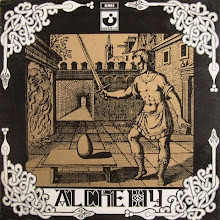
"Alchemy" (Harvest 1969)
Third Ear Band live at Hyde Park (June 7th,1969)
Click on the picture to watch the video!
Read "Necromancers of the drifting West"!!!
A book on the Third Ear Band edited by Luca Ferrari (published by Stampa Alternativa, Rome 1997). WITH THE FIRST ORIGINAL VERSION OF "ABELARD & HELOISE" SOUNDTRACK!
Third Ear Band at the Roundhouse (London, May 30th 1969).
As alike or unlike as blades of grass or clouds...
"The music is the music of the Druids, released from the unconscious by the alchemical process, orgasmic in its otherness, religious in its oneness communicating beauty and magic via abstract sounds whilst playing without ego enables the musicians to reach a trance-like stage, a "high" in which the music produces itself. Each piece is as alike or unalike as blades of grass or clouds".
(From the 1969 Isle of Wight concert programme)
TEB - "THE LOST BROADCASTS" DVD (Gonzo Multimedia, UK 2011)
Richard Coff at Isle of Wight Festival, August 1969 (photo: Barry Plummer).
Pseudo-mystical...
“The trouble is that you can't be mystical without being called pseudo-mystical, and it's the fault of our previous education. I'm at Glastonbury most of the time, but we're all completely honest about it. We'll even use it honestly to make money, because the ancient Egyptians who were into it all said that you had to be rich because only then can you resist temptation”.
(Glen Sweeney to Richard Williams, “Melody Maker” June 1970)
"Macbeth" by Roman Polanski (Playboy Production, UK 1971)
“I've always felt that music should be pure. If you have lyrics, you are preaching in a way. Somehow words are a block to communication. It's almost impossible for me to explain exactly how I feel about this, that's why I'm a musician. The only way to really understand what I mean, is to firstly listen to a pop group and then listen to us, and then I hope you will know what we're trying to say."
(Glen Sweeney to Muz Murray, 1969)
A Third Ear Band tribute
Roberto Musci - "Mosaic. A tribute to Third Ear Band" (CD - Gonzo Multimedia HST411, 2016)
TEB 1971: Sweeney, Minns, Bridges and Buckmaster (photo: Blackhill Enterprises).
NOTES FROM OVERGROUND
“No announcements, numbers lasting 15 to 20 minutes, art form or con?
This might be valid criticism of (A) Thunderstorm (B) a cricket (C) Third Ear Band.
Their approach to music is different because there is no duality, no conflict between the natural element of chance and the human element of control, did the moon ask to be reflected in the water? If it wasn’t for the trees would the wind know when it was blowing? Paul Minns says there are some very beautiful forests in Hyde Park, trying to put titles to music is rather like trying to answer the question where does my hand when it becomes my fist”.
(From the Al Stewart-Third Ear Band 1970 tour programme)
TEB 1970: Sweeney, Minns, Coff & Smith (photo: Blackhill Enterprises).
"The Centipede was happy, quite, until a Toad in fun said: "Pray, which leg goes after which?". This worked his mind to such a pitch, he lay distracted in a ditch considering how to run". (Third Ear Band, 1970)
TEB at Isle of Wight Festival, August 1969 (photo: Barry Plummer).
"Music from Macbeth" (Harvest 1972)
Third Ear Band - "Experiences" (Harvest 1976)
WEIRD SCENES
“We'd rather people called us a pop group. We do ragas, that aren't really ragas at all, and unless we get a turned on promoter, we get into some weird scenes. At Norwich once, when the promoter saw the audience sitting down and closing their eyes to our music, he accused us of putting them to sleep! Complete paranoia. So I imagine we wouldn't do too well on the Pop Proms”.
(Glen Sweeney interviewed by Chris Welch - “Melody Maker” July 12th, 1969)
Third Ear Band - "Fleance" (Odeon 1972) Japan single edition
Third Ear Band - "Live Ghosts" (Materiali Sonori 1988)
VERY MUCH UNDERGROUND
“It's just a question of advertising. We've stayed very much Underground - no photos - and I think this was necessary so people wouldn't put us in a bag. We'd rather the just came up and heard us without ANY preconceived ideas. I suppose it is a bit shattering to see violins and cellos”.
(Glen Sweeney interviewed by Chris Welch - “Melody Maker” July 12th, 1969)
Third Ear Band at a Druids ceremony in Glastonbury Tor (April 15th, 1970).
OTHER TEB RELEASES/APPEARANCES
"Picnic. A breath of fresh air" (2LPs - Harvest SHSS 1/2, UK 1970) various Harvest artists anthology
"Harvest Heritage. 20 Great" (LP - Harvest , UK 1977) various Harvest artists anthology
"The Harvest Story Vol. 1" (LP - Harvest EG 260097 1, UK 1984) various Harvest artists anthology
"All frontiers" (CD - Materiali Sonori MASO CD 90026, ITA 1991) various artists live compilation
"Sonora 2/91" (CD - Materiali Sonori, ITA 1991) various Materiali Sonori artists compilation
"Radio Session" (CD - Voiceprint VPR017, UK 1994) live album
"Materiali Sonori" (CD - Olis OM 0021, ITA 1996) various Materiali Sonori artists compilation
"Live" (CD - Voiceprint VP157CD, UK 1996) live album
Third Ear Band - "New Forecasts from the Third Ear Almanac" (ADN Records 1989)
90% improvisation...
"I'd say ninety per cent of our music is improvisation. It's not really Indian music, although we use a drone instead of the usual bass line riffs. The music draws from everywhere.
"I think our appeal is that audiences can draw their own thing from us. We make no announcements and none of the numbers have titles. People in colleges we play come up after and say they can get fantastic images in their mind when they listen. We can offer a complete dream. The old Celtic bards used to have the same ability".
(Glen Sweeney interviewed by Chris Welch - “Melody Maker” July 12th, 1969)
“Third Ear Band’s new album “Magic Music” isabout music as pure vibrations, as such it can be linked with colour because colour is vibration. It can even be linked to the music ofthe spheres which states that the vibrations of the planets can be heard with the third ear (silence). The free ragas that we play are modal, each note can be heard as a sound-colour that produces its own mood.Our rhythms come from all overthe world, and we use these ideasand many others to try to make a new world music”.
(Glen Sweeney, notes on the “Magic Music” inner cover, 1990)
SOLOS DISCOGRAPHIES
- GLEN SWEENEY -
Various Artists - "The greetings compact vol. 2" (CD - Materiali Sonori, 1990)
Rolling Stones - "Sticky fingers" (LP/CD - Rolling Stones Records, 1971)
Carly Simon - "Hotcakes" (LP/CD - Elektra, 1974)
Elton John - "Single man" (LP/CD - Rocket, 1978)
- NEIL BLACK (selection) -
UB40 - "Present Arms" (LP/CD - DEP, 1981)
Joan Armatrading - ""Track Record" (LP/CD - A&M, 1983)
Third Ear Band 1969: Minns, Sweeney and Coff at the Kensal Green Cemetery of London (photo: Ray Stevenson).
Third Ear Band - "Brain Waves" (Materiali Sonori 1993)
Eight drunk rugby players
"We once had eight drunk rugby players yelling dirty songs at us. We played quieter and quieter. In the end they seemed ashamed and shut up. But I still don't think they dug the music!".
(Glen Sweeney interviewed by Chris Welch - “Melody Maker” July 12th, 1969)
Third Ear Band, Vinci 1989: Allen, Sweeney, Dobson and Carter (photo: Lucia Baldini).
QUOTATIONS, COVERS, REMIXES, MANIPULATIONS OF THIRD EAR BAND MUSIC
Stone Breath - "A silver thread weave the seasons" (2CDs - Hand/Eye, USA 2008). A 'cover' of "Fleance".
Marco Lucchi - "Baby a" (ITA 1982). A composition with a sampler of "Stone Circle".
Radio Noisz Ensemble - "Yniverze" (CD - Garden of Delights 1982/2009). A 'folky' quotation of "Water".
Fabio Zuffanti - "Third Ear Band demixed" (CD-r - Spirals Records, ITA 2000). The four elements electronically manipulated.
Algarnas Tradgard - "Delayed" (CD - Silence Records, UK 2001). A quotations of "Water" recorded in 1973-1974 (!).
Lady Husk & The Good Ship Neotropic - "A monstrous psychedelic bubble exploding in your mind" (file MP3 - The New Worck, NL 2007). A remake of "No title" (?!).
I Monster - "The Art of Chill vol. 6 - Mixed by I Monster" (2CDs Platipus, UK 2009). A remix of "Fleance".
Vibes and Stuff - guest mix Coby Sey (MP3 - UK, 2010). A remix of "Water".
AA.VV. - "The Fruits de Mer Annual for 2011" (2x7" - Fruits de Mer Records, UK 2011). A cover of "Fleance" by the HI-Fiction Science.