On last issue 6 (Winter 2018/2019) of the great psychedelic English magazine "MOOF" (https://moofmag.com/) edited by MelanieXulu a review about "Elements 1970-1971" by Ben Finley... On the magazine also a very interesting piece about Muz Murray's "Gandalf's Gardens" and a review of the 3CDs anthology "Strangers in the room"...
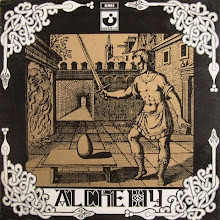
After his very good review on "Elements 1970-1971" (read here), Dave Thompson reviews also "Alchemy" on "Goldmine".
Here's his writing:
Dave Thompson March 21, 2019
"Continuing the long- awaited exhumation of the Third Ear vault, but moving backwards in time from last time out’s Elements, this was their 1969 debut album – the one that hit the music press with such force that it’s still hard to believe we’re talking about a barely-remembered cult. In certain circles, they should have been enormous, as Melody Maker’s review made plain. “The three-eared men are a Godsend for lovers of mysticism, Stonehenge and the cosmic force lines. Absorbing, almost hypnotic… [and] 90 per cent improvisation.”
What more could one ask for?
As before, the original album is expanded to encompass all of the band’s doings around the time it was recorded – there’s a Peel session that includes a celebration of the group’s biggest gig so far, opening for the Stones at the Hyde Park free concert, and no less than eight unreleased studio tracks. These in themselves are worth the purchase price. We begin with a 1968 session with producer Ron Geesin, destined for an album of library music a couple of years later (they appear under the name of the National Balkan Ensemble). Next up is a couple of songs taped early on in the sessions for Alchemy, on the eve of one of the band’s regular personnel shifts; and, finally, the first steps towards its follow up are here, including another version of “Hyde Park Raga.” Although this being the Third Ear Band, the title is the most familiar part of it.
In truth, the Third Ear Band are an acquired taste, a time-and-place-y experience that can demand more attention than a lot of ears are willing to give. The eastern elements certainly overwhelm anything that can even be loosely described as rock, and a good case can be made for expunging them from pop history altogether, and planting them instead within the realms of modern classical. Or, maybe, even folk. Sharp-eyed connoisseurs will spot them lurking within the Strangers in the Room collection mentioned above.
That, however, would be to deny the impact that they did make on the age. The Stones gig, after all, was just one of the festivals they played; they were also on the bill at the Isle of Wight that same summer, a few names down from the headlining Dylan. They shared management with Tyrannousaurus Rex (with whom they also gigged), Roy Harper and the Edgar Broughton Band; and a label with Pink Floyd, Deep Purple and Barclay James Harvest. They haunted the same arts labs that David Bowie frequented; and though they drew little influence from their stablemates, the same thing cannot always be said the other way around. There’s a lot to listen out for in Alchemy, then, and a lot of great music as well."
(Read the digital version here. Thanks to Dave Thompson for warning me about it)
Lush.com launchs a series of video interviews about English elders. First interview (11:16 long) is with 'our' Dave Tomlin, founder of Giant Sun Trolley and friend of Glen Sweeney, poet, writer, iconoclast. This very interesting video interview is available HERE.
Radical Elders: Dave Tomlin.
"This new series provides a missing platform for our elders to share their experiences and knowledge with those younger than themselves. Instead of simply celebrating the youthful lives of our Radical Elders, we want to know what they have learned as older people and discover more about their experiences as an older person who lives and has lived, differently. Our first subject is Dave Tomlin: a pioneering squatter, musician, author and counterculture activist. Along with our other subjects, who will be introduced over the coming months, Dave continues to engage with the world and remains inflamed by the spirit of inquiry, the desire to learn and to share his experience and knowledge with the rest of us. There is so much that the young can learn from their elders, and there are so many ways our elders' horizons can continue to be expanded by younger people. We hope that you, your elders, and your ‘youngers’, will join the conversation." (Lush.com press release)
Dave presenting his book "Tales from the Embassy".
Dave at the Embassy, years ago. Note in front violinist Allen Samuel.
TEB fan Detlef wrote about the interview with Denny Bridges: "Hi and thanks for the interesting interview! I always loved the track "Hyde Park" that the TEB performed for German Beat Club TV programme in 1970. It is listed as a Denim Bridges original and I always wondered why it was never recorded in the studio. Any info on that?"
I've asked Denny. Today he replies: "Internal band politics. Glen went cool on adding vocals to the repertoire. I believe Paul Minns went along with that opinion at the time. Glen told me at the time "If I wanted to play folk songs I should be in another band". Ironic that we should have to later provide "Fleance's Song" for Macbeth. I really suspect it was a reaction to the opinion of some of the band that we maybe should add a rock drummer. Glen's compromise was to try adding the congas. That didn't last long. Then Macbeth happened and... back to basics. I have been over that before."
An electric double-neck guitar player of the band in the period 1970-1972, Denim Bridges was an important member of the TEB for his big contribution to the electric changes in the music. He was involved in the recordings of "Macbeth" soundtrack and he recorded tracks in the studio for the announced and never realised "The Dragon Wakes" record as recently documented with "Elements 1970-1971" Esoteric's triple CD.
Through the years he gave a great contribution to this Archive in order to offer a correct reconstruction of historical facts.
Being in touch with him again, I realised I never had a proper interview about his involvement in the TEB's story. This is a preview of the interview will be published on the TEB's exclusive book available soon just through Ghettoraga Archive.
How did you meet Glen and Paul joining the band? "I answered an advertisement for 'Musicians to join recording band' (words to that effect). I believe it was in Melody Maker but it could have been one of the others. I was asked to audition at the band's base in Balham, South London. It must have gone well as I was asked to join. I knew of the band as I had been at the Blind Faith and Rolling Stones concerts in Hyde Park. I was very intrigued with the band's music as it then existed but I was even more intrigued by what the band wanted to do with additional musicians and 'going electric' instrumentally. I think the fact that I had a custom built double-neck electric guitar helped me to be noticed."
What you were doing in that period? Did you play with other bands before to meet the TEB? "I was just playing occasionally in amateur bands and open mics at folk clubs. I wanted to join The Byrds."
Which was your equipment when you met the band? How much your different approach to the music, based on different previous experiences, conditioned the new course of the TEB music from a technical point of view? "My guitar amplifier was the Vox AC50 an amplifier developed specifically for George Harrison and John Lennon. Where The Beatles went so did I (Haha!). I had my double neck guitar custom built by John Bailey made famous by the lie of Glen Sweeney that one neck didn't work. The top neck was 12 strings and the lower neck 6 strings. I can be seen (and heard) playing both necks on The Lost Broadcasts DVD - so there! I think someone else should answer the second part of your question. I think I was a 'blank page' at that time. "
Denny in these days with his Ibanez.
Have you still your legendary double-neck electric guitar Glen mocked about? "My double-neck didn't survive the ravaged of New Jersey climate (hot and humid in the summer or freezing and dry in the winter) and, in 2001, the 12 string neck irreparably split along the grain of the wood. So it seems Glen was quite prophetic about one neck not working."
About the composition of 'new' electric TEB music, who was/were the main musicians to be involved as a leader? "Each member of the band would offer either fully developed compositions (as would be the case for my songs) or partially developed ideas for the band to develop at rehearsals."
Which was the modus operandi of the band on composing tunes? "These ideas could be musical modes or scales inspired by music from abroad or from early forms of music. As the new guy with the electric guitar I was, of course, always pushing for my ideas, with a rock sensibility, to be considered."
About "Macbeth"'s soundtrack: can you tell us which was your main musical influences? "In reference to the music for Macbeth; as in every aspect of the band's music, we were influenced by many, many composers, musicians and musical forms from exotic parts of the world and from the ancient past too. We applied many of those influences to Macbeth but some scenes of the movie did dictate that we had to be traditional. I took the melody and chords for "Fleance's Song" from a song I had composed before I joined the band. I used just a small part of that song because the stanzas we had been given to work with were very short. I used the line "Oh your two eyes will slay me suddenly" to repeat at the end of the 'verse' as a sort of refrain. Could anything be more contrived? The Groom's Dance was based around a riff on electric 12 string guitar I had (heavily influenced by The Byrds) but with the rhythm of a jig imposed upon it. I suppose it's just a matter of opinion for that to be dismissed as just medieval. For the incidental music for the film, of course, we could be much freer."
And what about your approach to the tunes recording "Macbeth"? "It is very difficult, if not impossible, to answer that question. For "Macbeth" each scene required a different approach. Lady Macbeth's theme required at first a 'traditional' melody which then had to get darker and threatening as the piece progressed. To that purpose, I suppose we applied the influences of, for example, Schoenberg as you suggest. The witches theme is inspired by a scale of notes fewer than modern western music typical of eastern or ancient cultures. This could be a real scale or one that we imagined but, hopefully, should portray weirdness and evil to the listener. We were sharing between us and listening to a lot of music all the time. Absorbing those influence just by osmosis would have flavoured what we did for Macbeth and all our other music. I can't be more specific than that."
Denny playing for German TV in October 1970.
Did you see Macbeth movie? What do you think about it? "I watched Macbeth again only a few weeks ago. It is Shakespeare's dialogue and the acting by the best of Britain's acting elite is of the highest calibre. In my humble opinion there are a few clunky bits but I would rather take from the following story. In the mid-1990s I was at a gathering of friends in Montclair, New Jersey, USA, and we were going to see Shakespeare In The Park. One of the people there was a English teacher at the local high school who in the general conversation said that Polanski's Macbeth was the 'go to' version for his pupils. I think there are sequences of the movie that don't have music that would benefit from it and a few of our bits work less well than I would like."
Which was the mood when you played on stage with the band? How did you feel with this? "I have never suffered from stage fright or any nervousness on stage. I'm aware of what Paul said about skating on thin ice, or words to that effect, and I can relate to that, but I always believed the performance would come together - eventually. Sometimes it would take an interminable amount of time to prompt some members to start to play (as evidenced by "Druid Grocking" on The Lost Broadcasts DVD) and to (loosely) quote a band friend "it always seemed to be grinding to a halt" but most performances ended in elation. Most times our performances worked well - sometimes not so much. Could we then be described as 'thrill seekers'?"
Which gigs do you remember more?
"I remember many shows by who we opened for; The Rolling Stones at The Roundhouse, Cat Stevens at Sheffield University and Love Sculpture at Swansea University. The stage experiences I actually remember most are the ones that were very much out of the norm; like the time Richard Hopkins (from the band Blond on Blond) deputized for the departed Paul Buckmaster. That was a rocking gig. We played at a university in the east midlands and the next day Essex University in Colchester in the open with Roy Harper. Another 'aberration' was at The Alhambra, Bordeaux with Centipede when Glen said "Thank you very much" and walked off stage after 20 minutes or so of us playing. He claimed he thought we had played a full set. Oops! I unfortunately also remember one of our road managers behaving rather badly behind the amps at The Paradiso in Amsterdam at one of the shows we opened for Pink Floyd. Somethings just can't be erased from the memory. Oh well."
Bridges' hands on his double-neck at Abbey Road in February 1971.
Do you remember what's happened after "Macbeth"? Why everything faded away...? "Although being engaged to provide the music for Macbeth was a great opportunity and a fantastic experience in so many ways it did make the band do a U-turn musically, reverting back to pre-electric Third Ear Band and away from The Electric Ear Band Glen had announced in the press earlier - before getting the Macbeth job I assume.
This is my read of what happened. I think Glen and Paul Minns decided that TEB should not go electric after all but build on the direction that TEB went with Macbeth. Paul Buckmaster, because of the commitment demanded by his arranging work, decided he could not continue in TEB and his departure was a factor in the bigger picture. Glen had brought in a young chap (I'm embarrassed to tell you I don't remember his name) who played acoustic guitar to fill Paul's position and I wasn't convinced that not replacing the electric bass and adding the acoustic guitar was a good decision. I felt the proposed new line-up and the new (old) musical direction wasn't as inspiring to me as when I joined the band and also wasn't exploiting me as a musician. I was also informed that the recordings we made with the electric band would not be released as TEB were out of contract with EMI. Although I wasn't party to the details I assume that meant the Macbeth album fulfilled TEB's obligations to EMI. So I left. I didn't quit as there was nothing to quit at that time."
Buckmaster, Bridges and Minns playing for German TV (1970).
What have you taken from the experience with the Third Ear Band? "When we went into Air Studios' to record the incidental music for Macbeth we used the film dubbing studio (#4) and improvised our music watching the sequences of film that required music. That all went quite well but when we came to be in the control room, for example, to edit or mix the music, we were like the vultures in Disney's Dumbo, a little uncertain and undecided. That's when I stepped forward and that's when George Martin noticed me. I also followed through the recording process by attending Shepperton Studios and supervising the laying of the music into the movie. Soon after I was engaged by Air Studios as a recording engineer and developed later to produce records as an independent Producer/Engineer. That is the big take for me from the Macbeth experience."
How can you describe the emotion to play improvitional music, that magic (or tragic) interplay musicians can live on stage? "The feeling I had walking out on stage with The Third Ear Band was always a reflection of the last performance. When we had really gelled together, and the pieces worked as well as they sometimes could, I remember very well the excitement I felt and the anticipation of building on what the band had played the show before. When I was in the band, though we improvised a lot of our performances, we had 'islands in the potentially stormy sea' (a mode, a figure or a riff) that we could jump on when things got scary."
Which is your favourite TEB track? And why? "I would rather use the term 'piece' of music rather than track as until the "Elements 1970-1971" CD became available the piece was unreleased. "Tellus" had a short life in the recording studio as "Ghoo" but as per "Elements 1970-1971" has been renamed "Eternity in D" by John Peel at a live show out of BBC's Lower Regent Street studios. I'm sure the title would then have been provided by Glen probably under duress. Anyway, the 'track' that is now available is a live version. I don't know why the studio version hasn't turned up. I like this piece because it has strong riffs in the bass and guitar that form a solid foundation for the oboe and violin to improvise over. It's hypnotic. So, did The Third Ear Band invent 'Trance'? Maybe. Haha!"
What are you doing right now, apart from working on the tracks recorded by the TEB for "The Dragon Wakes"?
"I consider myself retired having ceased performing for the retirement homes, condominium associations and beach bars in Florida. That is 2 years ago now. I spend my days working around the homestead, on the vegetable garden, the orchard and generally fixing things. I occasionally play, I played a wedding last year, and get together with old friends to play a 60s night. I, also, volunteer at a Performing Arts Center sometimes mixing sound or just stewarding. That allows me to see and hear a lot of music from a wide variety of bands and solo artists."
This is the ad Martin Cook designed last year for promoting Gonzo's TEB three CDs on some magazines. Martin is the designer who is editing the book on the band (written by LCF in Winter 2016 and ready in March 2017 for being published) soon out in the bookshops...
On the last issue of "The Wire" (# 422, April 2019), one of the few interesting music magazines around, Edwin Pouncey reviews TEB's Esoteric "Elements 1970-1971" with accurate claims about the music and the underground status of the band.
Here's the text: "Third Ear Band, "Music From Macbeth" (Esoteric/Cherry Red) - This challenging outfit were one of the more cerebral signings to EMI's prog-rock imprint, Harvest Records, when it began operations in 1969, and this absorbing package focusses attention on the music that they created for the soundtrack of Roman Polanski's typically controversial adaptation of Shakespeare's tragedy "Macbeth" three years later. The evocative and eerie contents draw on elements of Indian music, early electronic fare and jazz, expanded here with the welcome addition of four hitherto unreleased tracks recorded by the band during the early seventies."
Kendra Preston Leonard is the author of an old essay titled "Shakespeare, Madness, and Music. Scoring Insanity in Cinematic Adaptations", published in 2009 by the Scarecrow Press Inc.
At page 84 she writes: "Polanski's employment of the Third Ear Band - an innovative London-based collective that drew from numerous traditions, including Renaissance forms and instrumentation, Indian ragas, and electric strings - led to the development of a soundtrack that included reasonably accurate attempts at period-appropriate accompaniments for the film. Julie Sanders asserts that this period-approximate music is used to "lull audiences into a false position of comfort [which collapses] as the camera pans out to the hostile environment in which the film is set, but this is not the only reading of the use of this music. Indeed, the relationship between the music, the settings in which it is used, and its link to Lady Macbeth create a framework around her in which she is a highly sympathetic character."
Polanski with Francesca Annis (Lady Macbeth).
"Strings, both plucked and bowed, recorders, oboes, drums, and folklike vocals not only place the film in time and location but also address the scale of the events and characters involved in them: there are no sweeping orchestral motifs or twentieth-century dissonances here to indicate the morality or lack thereof of the Macbeths, but instead a soundscape that reminds the audience of the brutality and still-developing cultural and ethical codes and expectations of a pre- or early-Christian Scotland. The script indicates that Polanski and his co-author, cultural critic Kenneth Tynan, put considerable thought into the use of music and musical style in the film. Their cues marking the entrance and exit of music - even noting the duration of the music - are explicit and deliberate. Polanski and Tynan write music cues for Lady Macbeth more than any other single character; music serves as a prologue and postlude to her texts above all other speeches and scenes, with one remarkable exception: her sleepwalking scene."
William Shakespeare
And later (page 85): "(...) During Macbeth's journey to Duncan's chamber (2.1.44) in which he imagines or hallucinates a dagger pointing the way, the music provided by the Third Ear Band has little in common with the earlier lute and drum dances; instead, it is reminiscent of Gyorgy Ligeti's chamber music. Using tremolo strings in high registers, sharp accent at seemingly random intervals, repeated phrases, the accompaniment for this scene "squeaks and gibbers", buzzing as Macbeth tried to steel himself for the task ahead. As he actually commits the murder, the same music is used again, but integrated with period instruments and percussions to create an atmosphere of adrenaline-filled terror and expectation. Lack of a tonal centre or an easily understood structure makes the music anaural counterpart to Macbeth's uncertain actions and emotions."
Macbeth (Jon Finch) and Lady Macbeth (Francesca Annis).
This is an interesting statement because usually, we read about TEB's Macbeth soundtrack that it is "medieval music" or, as Polanski's biographer Christopher Sandford wrote: "(...) the music of Third Ear Band, in the words of the press release 'achieving a degree of ethnic fusion of Indian, medieval, gypsy, Middle Eastern, electronic, jazz, trance and folk' (if not all in the same song)..." ("Polanski", Century-London 2007); but I think it is a kind of avant-garde chamber music and the reference to Gyorgy Ligeti is very pertinent because some tracks of the TEB's soundtrack seem inspired by the German composer. Apart "Fleance", that Sweeney and Minns didn't like it, and some few dances ("Inverness: The Preparation", "The Banquet", "Court Dance", "Groom's Dance", "Bear Baiting") based on harmonic elements taken from (a revisited) ancient music, the most of the tracks are twentieth-century atonal compositions related to the tradition of composers as like Berg, Stravinsky, Bartok, Schoenberg, Ligeti; or to free jazz or to minimalist music.
"Macbeth"'s electric guitarist and composer Denny Bridges writes me that "in reference to the music for Macbeth; as in every aspect of the band's music, we were influenced by many, many composers, musicians and musical forms from exotic parts of the world and from the ancient past too. We applied many of those influences to Macbeth but some scenes of the movie did dictate that we had to be traditional. I took the melody and chords for "Fleance's Song" from a song I had composed before I joined the band. I used just a small part of that song because the stanzas we had been given to work with were very short. I used the line "Oh your two eyes will slay me suddenly" to repeat at the end of the 'verse' as a sort of refrain. Could anything be more contrived? The Groom's Dance was based around a riff on electric 12 string guitar I had (heavily influenced by The Byrds) but with the rhythm of a jig imposed upon it. I suppose it's just a matter of opinion for that to be dismissed as just medieval. For the incidental music for the film, of course, we could be much freer."
I asked him, can you be more specific about the sources the Band used to listen to and influenced the music in that period? "It is very difficult, if not impossible, to answer that question. For "Macbeth" each scene required a different approach. Further to my previous comments on the music for Macbeth; Lady Macbeth's theme required at first a 'traditional' melody which then had to get darker and threatening as the piece progressed. To that purpose, I suppose we applied the influences of, for example, Schoenberg as you suggest. The witches theme is inspired by a scale of notes fewer than modern western music typical of eastern or ancient cultures. This could be a real scale or one that we imagined but, hopefully, should portray weirdness and evil to the listener. We were sharing between us and listening to a lot of music all the time. Absorbing those influence just by osmosis would have flavoured what we did for Macbeth and all our other music. I can't be more specific than that..."
However, whatever can be said about the sources, for modus operandi and musical references, "Macbeth" soundtrack was an innovative record for that time, still so actual and vivid.
In 1990 and 1991 Italian photographer Luca Fiaccavento(http://www.lucafiaccavento.net/) recorded two full gigs of the Third Ear Band in Rome, the line-up consisting of Sweeney, Carter, Dobson and Black.
The first concert was recorded at Classico on February 4th, 1990, it was the first time ever the band played in Rome. The year after, on December 28th, 1991, Third Ear Band played live at the famous Piazza Navona, one of the most beautiful square in Italy.
Just a few days ago he contacted Ghettoraga Archive to send me the full recordings of the two concerts!
The recordings was made with a Walkman professional Sony WM-D6C (the gig at Classico) and a Casio DAT DA-7 (the gig at piazza Navona) and the quality of sound is really good, so I will try to convince Cherry Red Records or Gonzo Multimedia to make some CDs from them...
"Someone else who posted here said they've learntmore about TEB in a fewhours here than in 30 years. I'd agree with that except inmy case it would be 44 years. An excellent archive for TEB fans and historians of the era. Thank you!" RACHAEL TYRELL
A TEB BOOK...
CLICK ON THE PICTURE TO BUY THE BOOK.
NEW TEB 3CDs BOX OUT NOW!
Click on the picture to get a copy.
"ALCHEMY" REMASTERED EDITION OUT NOW!
Click on the picture for buying the album.
WRITE TO GHETTORAGA
Search This Archive
New TEB remastered CD on sale!
Click on the picture to purchase the record.
NEW THIRD EAR BAND REMASTERED CD EDITION ON SALE!
Click on the picture to buy the record
Translate
Third Ear Band 1969: Paul Minns, Glen Sweeney and Richard Coff (photo: Ray Stevenson).
Luca Chino Ferrari (b. 1963) is an Italian music writer. Since 1985 he has written and translated books about folk and rock musicians as Third Ear Band, Robyn Hitchcock, Captain Beefheart, Tim Buckley, Nick Drake, Syd Barrett & the Pink Floyd for the main Italian publishers. He met Syd Barrett in 1986 and did contribute to the reunion of the Third Ear Band during the '80s. His latest books was published in 2020 for English ReR November Books, as a collection of stuff about the Third Ear Band, and in 2024 as a collection of writings about Syd Barrett (in Italian). He runs a personal Web site (in Italian/English) at https://chino6339.wixsite.com/gelatoaicorvi
TEB recording at Abbey Road Sudios in February 1971
Click on the picture to watch the video!
"Third Ear Band music is a reflection of the universe as magic play illusion simply because it could not possibly be anything else. Words cannot describe this ecstatic dance of sound, or explain the alchemical repetiton seeking and sometimes finding archetypal formes, elements and rhythms...".
(Glen Sweeney on "Alchemy", Harvest Records 1969)
Paul Buckmaster at Hyde Park (June 7th, 1969).
Total Pageviews
"ALCHEMY"
"Alchemy" (Harvest 1969)
Third Ear Band live at Hyde Park (June 7th,1969)
Click on the picture to watch the video!
Read "Necromancers of the drifting West"!!!
A book on the Third Ear Band edited by Luca Ferrari (published by Stampa Alternativa, Rome 1997). WITH THE FIRST ORIGINAL VERSION OF "ABELARD & HELOISE" SOUNDTRACK!
Third Ear Band at the Roundhouse (London, May 30th 1969).
As alike or unlike as blades of grass or clouds...
"The music is the music of the Druids, released from the unconscious by the alchemical process, orgasmic in its otherness, religious in its oneness communicating beauty and magic via abstract sounds whilst playing without ego enables the musicians to reach a trance-like stage, a "high" in which the music produces itself. Each piece is as alike or unalike as blades of grass or clouds".
(From the 1969 Isle of Wight concert programme)
TEB - "THE LOST BROADCASTS" DVD (Gonzo Multimedia, UK 2011)
Richard Coff at Isle of Wight Festival, August 1969 (photo: Barry Plummer).
Pseudo-mystical...
“The trouble is that you can't be mystical without being called pseudo-mystical, and it's the fault of our previous education. I'm at Glastonbury most of the time, but we're all completely honest about it. We'll even use it honestly to make money, because the ancient Egyptians who were into it all said that you had to be rich because only then can you resist temptation”.
(Glen Sweeney to Richard Williams, “Melody Maker” June 1970)
"Macbeth" by Roman Polanski (Playboy Production, UK 1971)
“I've always felt that music should be pure. If you have lyrics, you are preaching in a way. Somehow words are a block to communication. It's almost impossible for me to explain exactly how I feel about this, that's why I'm a musician. The only way to really understand what I mean, is to firstly listen to a pop group and then listen to us, and then I hope you will know what we're trying to say."
(Glen Sweeney to Muz Murray, 1969)
A Third Ear Band tribute
Roberto Musci - "Mosaic. A tribute to Third Ear Band" (CD - Gonzo Multimedia HST411, 2016)
TEB 1971: Sweeney, Minns, Bridges and Buckmaster (photo: Blackhill Enterprises).
NOTES FROM OVERGROUND
“No announcements, numbers lasting 15 to 20 minutes, art form or con?
This might be valid criticism of (A) Thunderstorm (B) a cricket (C) Third Ear Band.
Their approach to music is different because there is no duality, no conflict between the natural element of chance and the human element of control, did the moon ask to be reflected in the water? If it wasn’t for the trees would the wind know when it was blowing? Paul Minns says there are some very beautiful forests in Hyde Park, trying to put titles to music is rather like trying to answer the question where does my hand when it becomes my fist”.
(From the Al Stewart-Third Ear Band 1970 tour programme)
TEB 1970: Sweeney, Minns, Coff & Smith (photo: Blackhill Enterprises).
"The Centipede was happy, quite, until a Toad in fun said: "Pray, which leg goes after which?". This worked his mind to such a pitch, he lay distracted in a ditch considering how to run". (Third Ear Band, 1970)
TEB at Isle of Wight Festival, August 1969 (photo: Barry Plummer).
"Music from Macbeth" (Harvest 1972)
Third Ear Band - "Experiences" (Harvest 1976)
WEIRD SCENES
“We'd rather people called us a pop group. We do ragas, that aren't really ragas at all, and unless we get a turned on promoter, we get into some weird scenes. At Norwich once, when the promoter saw the audience sitting down and closing their eyes to our music, he accused us of putting them to sleep! Complete paranoia. So I imagine we wouldn't do too well on the Pop Proms”.
(Glen Sweeney interviewed by Chris Welch - “Melody Maker” July 12th, 1969)
Third Ear Band - "Fleance" (Odeon 1972) Japan single edition
Third Ear Band - "Live Ghosts" (Materiali Sonori 1988)
VERY MUCH UNDERGROUND
“It's just a question of advertising. We've stayed very much Underground - no photos - and I think this was necessary so people wouldn't put us in a bag. We'd rather the just came up and heard us without ANY preconceived ideas. I suppose it is a bit shattering to see violins and cellos”.
(Glen Sweeney interviewed by Chris Welch - “Melody Maker” July 12th, 1969)
Third Ear Band at a Druids ceremony in Glastonbury Tor (April 15th, 1970).
OTHER TEB RELEASES/APPEARANCES
"Picnic. A breath of fresh air" (2LPs - Harvest SHSS 1/2, UK 1970) various Harvest artists anthology
"Harvest Heritage. 20 Great" (LP - Harvest , UK 1977) various Harvest artists anthology
"The Harvest Story Vol. 1" (LP - Harvest EG 260097 1, UK 1984) various Harvest artists anthology
"All frontiers" (CD - Materiali Sonori MASO CD 90026, ITA 1991) various artists live compilation
"Sonora 2/91" (CD - Materiali Sonori, ITA 1991) various Materiali Sonori artists compilation
"Radio Session" (CD - Voiceprint VPR017, UK 1994) live album
"Materiali Sonori" (CD - Olis OM 0021, ITA 1996) various Materiali Sonori artists compilation
"Live" (CD - Voiceprint VP157CD, UK 1996) live album
Third Ear Band - "New Forecasts from the Third Ear Almanac" (ADN Records 1989)
90% improvisation...
"I'd say ninety per cent of our music is improvisation. It's not really Indian music, although we use a drone instead of the usual bass line riffs. The music draws from everywhere.
"I think our appeal is that audiences can draw their own thing from us. We make no announcements and none of the numbers have titles. People in colleges we play come up after and say they can get fantastic images in their mind when they listen. We can offer a complete dream. The old Celtic bards used to have the same ability".
(Glen Sweeney interviewed by Chris Welch - “Melody Maker” July 12th, 1969)
“Third Ear Band’s new album “Magic Music” isabout music as pure vibrations, as such it can be linked with colour because colour is vibration. It can even be linked to the music ofthe spheres which states that the vibrations of the planets can be heard with the third ear (silence). The free ragas that we play are modal, each note can be heard as a sound-colour that produces its own mood.Our rhythms come from all overthe world, and we use these ideasand many others to try to make a new world music”.
(Glen Sweeney, notes on the “Magic Music” inner cover, 1990)
SOLOS DISCOGRAPHIES
- GLEN SWEENEY -
Various Artists - "The greetings compact vol. 2" (CD - Materiali Sonori, 1990)
Rolling Stones - "Sticky fingers" (LP/CD - Rolling Stones Records, 1971)
Carly Simon - "Hotcakes" (LP/CD - Elektra, 1974)
Elton John - "Single man" (LP/CD - Rocket, 1978)
- NEIL BLACK (selection) -
UB40 - "Present Arms" (LP/CD - DEP, 1981)
Joan Armatrading - ""Track Record" (LP/CD - A&M, 1983)
Third Ear Band 1969: Minns, Sweeney and Coff at the Kensal Green Cemetery of London (photo: Ray Stevenson).
Third Ear Band - "Brain Waves" (Materiali Sonori 1993)
Eight drunk rugby players
"We once had eight drunk rugby players yelling dirty songs at us. We played quieter and quieter. In the end they seemed ashamed and shut up. But I still don't think they dug the music!".
(Glen Sweeney interviewed by Chris Welch - “Melody Maker” July 12th, 1969)
Third Ear Band, Vinci 1989: Allen, Sweeney, Dobson and Carter (photo: Lucia Baldini).
QUOTATIONS, COVERS, REMIXES, MANIPULATIONS OF THIRD EAR BAND MUSIC
Stone Breath - "A silver thread weave the seasons" (2CDs - Hand/Eye, USA 2008). A 'cover' of "Fleance".
Marco Lucchi - "Baby a" (ITA 1982). A composition with a sampler of "Stone Circle".
Radio Noisz Ensemble - "Yniverze" (CD - Garden of Delights 1982/2009). A 'folky' quotation of "Water".
Fabio Zuffanti - "Third Ear Band demixed" (CD-r - Spirals Records, ITA 2000). The four elements electronically manipulated.
Algarnas Tradgard - "Delayed" (CD - Silence Records, UK 2001). A quotations of "Water" recorded in 1973-1974 (!).
Lady Husk & The Good Ship Neotropic - "A monstrous psychedelic bubble exploding in your mind" (file MP3 - The New Worck, NL 2007). A remake of "No title" (?!).
I Monster - "The Art of Chill vol. 6 - Mixed by I Monster" (2CDs Platipus, UK 2009). A remix of "Fleance".
Vibes and Stuff - guest mix Coby Sey (MP3 - UK, 2010). A remix of "Water".
AA.VV. - "The Fruits de Mer Annual for 2011" (2x7" - Fruits de Mer Records, UK 2011). A cover of "Fleance" by the HI-Fiction Science.