December 27, 2025

Was TEB music truly inspired by Terry Riley?

When analyzing the musical form of a band, the question of sources of inspiration, if not actual influences, is fundamental in order to even begin to understand it.

We have often discussed the sources that inspired the music of the Third Ear Band, and this archive is proof of that. By the musicians' own admission, Indian music, Vaughan Williams' pastoral compositions (which undoubtedly inspired Dave Tomlin in the composition of “Lark's Rise”), the works of modern classic musicians as Stravinsky or Penderecki, and the aleatoric music of John Cage were undoubtedly the basis of TEB musicians.

Wim Mertens, a Belgian composer, musicologist and pianist also known as Soft Verdict, in his fine 1983 essay dedicated to American Minimalism (“American Minimal Music,” published by Kahn and Averill) adds Terry Riley to the pantheon of composers who influenced TEB. He wrote:

"Riley’s music has influenced a number of American and European avant-garde composers and many jazz and pop musicians. The Soft Machine’s Moon in June is a clear example of this — in fact, the cofounder of this group, David Allen, was a good friend of Riley’s. The English group Third Ear Band also show their debt to Riley in their use of modal patterns on the principle of periodic progression."

Do you think this assertion has any basis?

From a historiographical point of view, I don't recall any admissions in this regard by members of the group, while in Paul Minns' memoirs, which I first published in my short essay “Necromancers of the Drifting West” in 1996, the vaste references include classical modern musicians as Stravinski, Malipiero, Ives and jazz giants as Miles Davis, Dolphy, Coltrane, Pharoah Sanders, Yusef Lateef;  but, most of all, Indian players as Dr. Jog, Bismillah Khan, sitarist Vilyat Khan and sarod master Sharon Rani.

In the same essay, guitar player Mick Carter, analyzing the structure of the tunes, refers exclusively to Indian modal music and the different modes/scales that inspired the last compositions of the 1980s and 1990s. 

There is no denying that Terry Riley has been a major influence on the music scene since the second half of the 1960s, especially thanks to his wonderful works “A Rainbow In Curved Air” (1968) and “In C” (1969), but, as far as I can tell, there is no evidence that it was a conscious source of inspiration for the TEB.

It seems to me that also Riley was influenced by Indian music, which plays a decisive role in the syncretism of TEB's work.

no©2025LucaChinoFerrari (unless you intend to make a profit. In which case, ask first).

December 13, 2025

Another unexpected discovery: a Third Ear Band's radio session in 1970!

Here is another miraculous discovery from the web, a new live radio set by TEB from February 15, 1970, taken from a John Peel's Sunday Show that seemed lost forever.

The episode (approximately 40 minutes long) featured performances by the Third Ear Band and the Edgar Broughton Band, both on the Blackhill and Harvest Records roster, who often performed together live.

The TEB played only two tracks: "Mosaic," from the first album, and "Water(here, unfortunately, incomplete), from the (forthcoming) second onewrongly announced by Peel as  "The Sea," displaying, as I have written countless times, a prodigious interplay.

It's interesting to note that, compared to the version later released on the second album, "Water" has a darker, more sinister feel, as if a threat were looming.

Detailed information about the track list for the episode, which was rebroadcast in September 6, 1970, can be found at  https://peel.fandom.com/wiki/15_February_1970


 no©2025LucaChinoFerrari (unless you intend to make a profit. In which case, ask first).

December 07, 2025

Carolyn says...

When my dearest friend Carolyn Looker, Glen's lifelong partner, sent me this stuff about the band (circa second half of 1970) where Sweeney announced to "Melody Maker" the TEB would have changed its skin with a new electric, raga-rock oriented sound, I asked her to comment this creative phase of the band. 

A rare shot of Glen playing live on 8/08/1970.
She replied me with her usual laconic and minimal style that "I can't think of anything positive to say regarding Glen's decision to change direction of TEB as l was not at all enthusiastic on the idea. For me the original acoustic group WAS alchemical and this got lost in electricity".

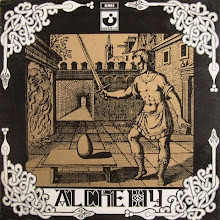
Even if I know many TEB fans love the electric music with Denim Bridges on double-neck guitar and Paul Buckmaster on the electric bass, I agree with Carolyn  because that magical, esoteric, alchemical mood was definitely lost.

So that's it.   

no©2025LucaChinoFerrari (unless you intend to make a profit. In which case, ask first).