When analyzing the musical form of a band, the question of sources of inspiration, if not actual influences, is fundamental in order to even begin to understand it.
We have often discussed the sources that inspired the music of the Third Ear Band, and this archive is proof of that. By the musicians' own admission, Indian music, Vaughan Williams' pastoral compositions (which undoubtedly inspired Dave Tomlin in the composition of “Lark's Rise”), the works of modern classic musicians as Stravinsky or Penderecki, and the aleatoric music of John Cage were undoubtedly the basis of TEB musicians.

"Riley’s music has influenced a number of American and European avant-garde composers and many jazz and pop musicians. The Soft Machine’s Moon in June is a clear example of this — in fact, the cofounder of this group, David Allen, was a good friend of Riley’s. The English group Third Ear Band also show their debt to Riley in their use of modal patterns on the principle of periodic progression."
Do you think this assertion has any basis?
From a historiographical point of view, I don't recall any admissions in this regard by members of the group, while in Paul Minns' memoirs, which I first published in my short essay “Necromancers of the Drifting West” in 1996, the vaste references include classical modern musicians as Stravinski, Malipiero, Ives and jazz giants as Miles Davis, Dolphy, Coltrane, Pharoah Sanders, Yusef Lateef; but, most of all, Indian players as Dr. Jog, Bismillah Khan, sitarist Vilyat Khan and sarod master Sharon Rani.
In the same essay, guitar player Mick Carter, analyzing the structure of the tunes, refers exclusively to Indian modal music and the different modes/scales that inspired the last compositions of the 1980s and 1990s.
There is no denying that Terry Riley has been a major influence on the music scene since the second half of the 1960s, especially thanks to his wonderful works “A Rainbow In Curved Air” (1968) and “In C” (1969), but, as far as I can tell, there is no evidence that it was a conscious source of inspiration for the TEB.
It seems to me that also Riley was influenced by Indian music, which plays a decisive role in the syncretism of TEB's work.
no©2025LucaChinoFerrari (unless you intend to make a profit. In which case, ask first).


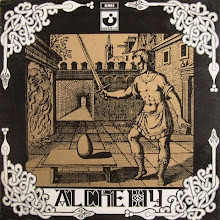


I never heard Riley in TEB. Although, maybe, there are echoes of TEB in his later 80's work Harp of New Albion? What I do experience sometimes is a shared 'flavour' of the drone work of the 'forgotten minimalist' Tony Conrad and I mean the Conrad of things like Four Violins and Ten Years on The Infinite Plain rather than the Outside The Dream Syndicate album he made in 1972/3 with members of Faust at Wümme - vital as that record is to music history. TEB - and I mean the acoustic Classic Sweeny Minns Coff and Smith line up - always explored a strand that was very much their own, it was totally unique with a strength all of its' own.
ReplyDelete