Thanks to Denim Bridges I've got a contact with musician/producer/arranger/sound engineer
Paul Buckmaster
in Los Angeles, former cellist/bassist of the Third Ear Band in 1969-1972 phase. A long career started in the early '60's and filled by important collaborations (Miles Davis, David Bowie, Elton John, Rolling Stones, Leonard Cohen...) and many hits (i.e. a Grammy Award in 2002) that is well summed up in an excellent 2009 interview by Christian Dueblinpublished in this archive at http://ghettoraga.blogspot.it/2011/12/interview-with-paul-buckmaster-from-net.html with a selected discography. Here I ask Paul to examine in depth his experience with the Third Ear Band, a dimension often strangely disregarded in his biography...
Paul in his L.A. studio on August 15th, 2011.
When did you meet Glen and join the Third Ear Band?
"Early 1969, at a music club in the Paddington/Westbourne Grove area of London. As I recall, it was David Bowie who took me there. Had my cello with me, and asked if I could sit in with the trio (Glen, Paul Minns, and Richard Coff). So I jammed with them, and it was exciting; I was playing some kinds of funky bass riffs in the groove with Glen. Really exciting. At the end, I was invited to join, by Glen and Paul, with Richard enthusiastic".
Which was your first impression about the group?
"Loved them and their music – everything about it".
I mean did you know them?
"Until that evening at the club, was only vaguely aware of them; saw the name on posters for UFO club, Tottenham Court Road, Thursday nights".
May 1969: one of the first live apparence of Paul with the TEB at Camden Fringe Festival (photo: Robert Ellis)
What did you think about their music at that time (I refer to the first two records)?
"Loved it!"
Do you remember where did you rehearsal with them? "Rehearsed (infrequently) at Glen's (or was it Paul's) place in South London, Battersea area, I think".
Which was your contribution to their music? I mean, all the tracks was usually "composed by TEB", but I know that your specific contribution regarded the composition and the music orchestration...
"There was no composition per se – i.e., nothing was written down, to my knowledge; I saw no scores, sketches or any kind of notations. It was all based around Glen's drum pulse/rhythms; Paul had certain motifs or themes, which were associated with certain titles – and codified as master recordings for the Harvest albums. Those titles would be played at concerts, but as far as I recall, we didn't have a set program. Mostly, it was Glen who started any particular piece, with me and Richard – or, later, Denny – joining in a little later, then Paul, who was the actual "lead" voice in the ensemble. Richard – and later Denny - were next accompaniment, with the cello – and later, bass guitar – holding the bottom end. I suppose we were all collectively "composing" with little being said beforehand – or after, for that matter! But even all that was not hard-set!".
Did you have contacts with the Blackhill management (Jenner and King): which is your opinion about it?
"As I recall, I had little or no opinion of them at the time: from what I could determine, they were professional and competent. I imagine that were Glen and Paul alive today, they would be able to far more precisely answer these questions. Have you contacted Richard and Denny? Certainly Richard would be able to answer better than me!".
I ask you that just because Glen and Paul told me it (and Richard didn't accept to have an interview for the archive...)... Can you confirm that EMI didn't understand the real meaning of TEB's
music and didn't give to the band the right support?
"No: I cannot, but then, few people in A&R are really competent in this particular area, unless they're of the "old school" in which nearly all were competent in music; for example, the people at Columbia (CBS) records, New York - Dr George Butler – head of A&R for the whole jazz sector - comes to mind, or Jay Landers. Can't recall who was at EMI Harvest at the time, but the chances are that there were still a few people of the serious "old school" there".
TEB at Hyde Park on June 7th, 1969 with Paul at cello.
What about the reactions of audience there? And generally which was the reactions of people at your concerts?
"I can't say what the reactions of the audience were, as I was – along with everybody else in the band up on the bandstand, playing our gig, and I could only see a small portion of them! However, from what I could sense, the audience was curious, wondering what the heck this music was we were playing. I suppose the audience were really there for the Stones, and "semi" couldn't care less for what we were doing. Of course they were enjoying a rare day of bright sunshine in a beautiful London park, and they were open to all kinds of different stuff; maybe some of them were even fans of the TEB!
I was told, later, that they (the Stones) had chosen us to open for them, because we were more likely to calm the crowd. You've got to remember that a large number of people were (stupidly) into drugs (mostly hashish and herb), me no less. So maybe that was a part of the audience … 40 percent or more? Who knows!
All four of us had spliffed up – a large six-Rizla-skin combo of tobacco, sensimilla, Moroccan kif, and heavy opiated Afghani hashish, with a concomitant thin cardboard roach – and were smoking it prior to going on stage. So you can imagine just how ripped we must have been. The music – whatever there is that remains from the gig – does not display any bravura or professionalism.
As for any other gigs, we were sometimes excellent – even transcendent to the Empyrean; that is what I and all the members lived for - and sometimes not quite so transcendent, and the Hyde Park gig was among those. The audience didn't notice anything, tho' - as far as I could tell".
Third Ear Band live at London Hyde Park (June 7th, 1969)
What do you remember about the period before "Macbeth", when the band tried to record a pop album at the London Balham Studios titled "The Dragon Wakes"?
"Don't recall any sessions at Balham Studios or the title. This may have been one of the periods I was not a member; this was one of the reasons I quit; I was an on-again-off-again member, which, as I say, was not fair on them".
I'm sure at that time you was in the band. You can listen here (https://rapidshare.com/#!download|452p1|407890537|_Raga_n.1_|8181|0|0) to an unrealised track taken from the Balham sessions in February 1971 titled "Raga n. 1" (Paul Minns discovered it on a reel in his attic). The line up included you and Bridges. There's a remote project of Bridges to realize a CD with that tracks, because he has all the original reels of it, but we're talking about it from 2010 and at the moment nothing happened... Anyway, can you comment it for us? "Amazing! Sounds really good; and as you say, shows the potential of what kinds of directions the music might have taken ... You know, I cannot recall the session, tho' I'm obviously playing on it, and cannot recall any "Balham Studios". Paul has clearly double-tracked - or even triple-tracked - himself, and altho' there's no violin, heard some brief phrases of a bowed instrument towards the end, which is probably me overdubbing some cello. I miss the sound and texture of a violin, and have some critical thoughts about the bass guitar, which are in any event irrelevant, since nothing can be done about it. What's wrong with the bass? a) rhythmically too "on" the beat; the bassist (me!) should have being playing a regular, repeated, tho' slightly syncopated riff, perhaps never changing at all, and perhaps staying only on one note. b) The problem here is that he (the bassist) is playing too many tonal phrases, even in the major mode! And is a bit scattered in the ideas. I could say more, but don't want to spoil the listening of the fans! Everybody else is playing great, altho' Denny has a slight tendency to rush … but I attribute that to us not playing together more frequently, and doing lots more gigs! Who knows where it would have gone, had the band stayed together and played at least four days a week … I'm sure somewhere really special and new, and strange and other-worldy – I mean in the science-fictional sense, not "supernatural" (whatever that means). The potential was vast".
Have you ever seen that1970 German TV broadcast recently issued on DVD? Which is your opinion about it? Are you proud of that season of your career? Do you remember who and how TEB involved conga player Gaspar Lawal?
"Is that the one with Denny's vocal? I think it's fine! Don't recall how Gaspar joined us for those TV – and some other – dates: No doubt, Glen and Paul were the deciders, and I'm glad of it: I loved the sound of the congas in the band's context at the time, with Glen on traps, Denny on electric guitars, and me on electric bass and electric cello. By the way, the roadie who drove us everywhere - whose name I can't immediately recall - and did the stage set-ups, was an expert maker of stuff (any stuff!); he built a damped metal pick-up bridge with dense rubber feet, for my cello, which was amplified (a few years later – 1972 – I bought a wood Barcus-Berry bridge, which had buried inside it a transducer, which could be plugged in … also had a wah–wah pedal!). I am probably the first cellist to go electric! (But there was a cellist in Holland whom I heard, a year later – maybe 1970-'71, who sounded like Hendrix – brilliant and highly skilled. I think he may have overdosed on heroin – at least that's what I heard.)".
TEB (L-R: Buckmaster, Bridges, Lawall and Minns) on stage for the German TV broadcast.
How do you react to the common idea about Miles Davis' "Bitches Brew" inspired 1971-1972 TEB's music?
"It's not accurate, except that – maybe – there's a bass riff for "Ecstasy in D" which recalls the bass riff under "Bitches Brew", but it's not anywhere as brilliant as the "Bitches Brew" riff, which is one of the many touches of genius in that incredible album of fierce beauty. What's amazingly excellent about that riff is the key-modulations it goes thru' over the two-measure duration: 2 beats of C major, two of B major, two of E major (but here you have an even greater touch of genius: the first 8th of the E major chord is in the first inversion – E over G# - classically written by Miles, with no doubling of the third - going to E major root position on the second 8th, as a syncopation), with the last two beats – anticipated in syncopation by an 8th – back to B major, with the last 8th being the perfect cadence (G-to-C) into the new two-measure cycle starting with C major!!!
Those of your readers who know a little proper classical harmony will know what I mean, but those who don't, can still enjoy the piece … Remember, as a student at Juilliard, and earlier, when he received private lessons, Miles had studied classical harmony and counterpoint".
A rare picture of the TEB in 1971.
What about the Macbeth period? Which was the mood in the band? What happenend in the George Martin's Air studios? "I had a little more say in the direction the music took for the movie score; Glen, Paul, Richard and Denny trusting me with my suggestions. For example, I actually wrote the dreary "Witches Song", which we played, and sang. The singing was done by the five of us; Roman wanted it to be "kind of disgusting" … We did a certain amount of overdubbing, to create a more dense texture in places, with me and Richard making clustery string harmonies … I think the End Titles is one of the better pieces in the score; Denny contributed a lot to that, and a great driving pulse from Glen! I believe Denny composed "Fleance"'s Song" with Paul … but we're all credited as co-writers, which was Glen's democratic, egalitarian virtue".
Infact in that period (January 16th, 1971) you sent a letter to Melody Maker explaining about the rules in the band (you wrote: "(...) If anybody thinks differently, thinks that the band "led" by one member (i.e. one person deciding the format, tempo, key or mode, changes etc. and imposing this on the others) then they have totally missed on the most important point, if not the most important point of the Third Ear Band. It's not I, it's we, and we're free".): why did you decide to write it?
"I don't even remember writing such a letter … wow!!! That is perfectly true".
About "Fleance"'s song, I know Glen and Paul didn't love it, Glen
considered it "rubbish". This is confirmed by Bridges in a recent
interview I had with him: which is your opinion about this track, not so
hortodox in the TEB's repertoire?
Paul in studio (February 2012).
"You're right: it certainly is not. Not at all typical of what one would expect from the TEB! My opinion: Roman Polanski was satisfied, and that's all that really matters in the final analysis! From a musical perspective, it's kind of "OK", but not a work of genius, for sure".
Is there something you've taken from the experience you had with
the TEB that you've used forward?
"All musical experience – I suppose, all mixed in!!! But I "used" nothing specific".
Thank you very much, Paul, for your very rare kindness!
"A pleasure, Luca! Cari saluti, Paul".
27-02-2012: Ocean Way Studios, Hollywood, Paul directinga session for Oriane Hazan.
October 2010: "Terrascope"'s journalists Ian Fraser and Phil McMullen write some albums reviews. Among them, about the new Mushroom's record, “Naked, Stoned and Stabbed”, they state (http://www.terrascope.co.uk/Reviews/Rumbles_October_2010.htm):
"Staying on the West Coast of America but in a very different jar of tadpoles, Mushroom is a musicians’ collective from the San Francisco Bay Area whose membership includes the likes of Josh Pollock and Erik Pearson, who may be familiar to fans of Gong through their various collaborations with Daevid Allen. “Naked, Stoned and Stabbed” (4Zero Records) is a mostly acoustic and ambient affair, blending both Western and Eastern hemisphere influences with a strange assortment of instrumentation including Latin and African percussion, sitar, celesta and vibraharp. The impressive roster of contributing artistes and the odd and varied instruments made this one of the most eagerly anticipated of this month’s batch of Rumbles and, by and large, it doesn’t disappoint. The opening number “Infatuation” sits us squarely around the hippie camp fire from which comforting flames we never really move too far. “Jerry Rubin: He Ain’t Heavy He’s My Brother” sounds like the Third Ear Band (no bad thing as far as these two ears are concerned) and is the best of the first few songs here.The mood becomes more upbeat five tracks in with the straight out of a “spirit of ‘69” freak jam known as “Take Off Your Face and Recover From That Trip You’ve Been On” with Hammond-like keyboards and psychedelic guitar from the Melton/Kaukonan handbook, while the Afro-Latin percussion lends it a Santana at Woodstock feel. This is one of the outstanding tracks here together with the lengthy eastern improvisation, “Tariq Ali”, the spectral, slightly jazzy “Indulgence” and the only vocal track and the one that closes proceedings, a fine take on Kevin Ayers’ “Singing A Song In The Morning” which even features a narrative vocal in the style of Kevin’s “Stranger In Blue Suede Shoes” and could easily be the man himself. Aside from these choice cuts, “Naked, Stoned and Stabbed” is an intriguing and enjoyable enough collection of tunes, and picks up an extra mark for some oddball song names the length of Tyrannosaurus Rex LP titles. Quite what guitarist Sean Smith (see July Rumbles) thinks of the hopefully affectionate “tribute” to him on track 4 would be interesting to know. If you’re reading this Sean, why not drop us a line let us know. There must be a story in there somewhere".
Mushroom playing live at the Sweetwater in Mill Valley ( CA).
Maybe I'm becoming old and dull, but listening to the track I don't feel any convincing reference to the TEB's sound, apart the playing of some instruments (tablas, violin) and a blurry idea of free-form music...
Anyway, which is the best proof that listening the tune by yourself ?
You can download the full (very beautiful!) album at the Plixid.com site:
He's a painter too and sometimes he makes exhibithions around the world.
Quite surprisingly he's living just in Italy, in that wonderful little central region of Umbria.
Here's a short interview with him just to investigate the story and the reasons of that his eccentric choice...
1. When/how did you know the Third Ear Bands music? "I think I heard them for the first time with their soundtrack of Polanski's "MacBeth".
2. Which was your first impression about it? "I was very impressed. As soon as I found an opportunity, I bought all their vinyl discs I was able to find (in Basel, at the Freienstrasse in particular)".
3. Why did you choice to use a track from the band's repertoire? 4. How do you think the music fits perfectly into the sequences? 5. Which kind of process you used to make that sequence? "I was shooting some takes of the carnival in Basel by night. The musical performances of the bands wandering through the strees, their drummers and pipers, are well known, very impressive, but also very corny. I knew I had to replace their music at all costs in order to give a dreamy, powerful, even nightmarish tone to my video takes. The tracks by the Third Ear Band fit that spot perfectly. The Swiss people, especially the people living in Basel, were stunned of the result! You know, the carnival in Basel is a bit bourgeois. When the people finally watched those ghastly platoons moving through the streets with that spooky music, they were positively shocked. In fact, the first takes were for a test film ("Ceremony", 10 minutes in black and white) which explored the possibilities of a new technique allowing us to shoot by night without any source of artificial light (except the faint lights already shining through the nightly city streets). That test film was shown at the national film festival of Solothurn, in 1976. At that point the German television ZDF (especially editor Sibylle Hubatschek-Rahn and head editor Ekart Stein) and its workshop "Das kleine Fernsehspiel" were electrified and gave their support for the full night movie "Geschichte der Nacht". The test film "Ceremony" was then re-cut and inserted into the final movie as a 3 minutes sequence".
6. Did you contact the musicians to get the permission for using it? "No, it was a television production (ZDF and SF-DRS), therefore I only had to submit the list of musical works used and the television fixed the rights and permissions through Gema and Suisa".
5. Are you glad about the result of your film? "I'm very glad about the result. In fact, it is - unfortunately perhaps - my best known production and it is still shown in various cinematheques even after many years. Once Ang Lee himself said that he had to study my "masterpiece" at film school".
"Many, many reactions, most of them were positive ones. Even some imitators, which is also flattering".
8. Have you used TEB music in other films made by you?
"No, never again. I'm afraid I lost my vinyls shortly thereafter. Or maybe they were stolen".
Clemens Klopfeinstein at his home as a painter.
About the movie,Chris Auty (Programme Note London Film Co-op) writes that "it's a black-and-white record of European cities in the dark (2-5am), from Basle to Belfast. Quiet, and meditative, what ermerges most strongly is an eerie sense of city landscapes as deserted film sets, in which the desolate architecture overwhelms any sense of reality. The only reassurance that we are not in some endless machine-Metropolis is the shadow of daytime activity: a juggernaut plunging through a darkened village, a plague of small birds in the predawn light. The whole thing is underscored by a beautiful 'composed' soundtrack, from quietly humming stretlamps to reggae and the rumble of armoured cars in Belfast. A strange and remarkable combination of dream, documentary and science-fiction."
You can watch here an excerpt of it taken from YouTube:
To all the Third Ear Band fans and Ghetto Raga Archive readers
(in spite of Maya calendar and other assorted catastrophic prophesies)
HAVE A GREAT WINTER SOLSTICE!
"Stigma. A XMas ghost story" (BBC, UK 1977)
Discoveredby our post folk-shamanSedayne, this old short film (just 31.49) was produced by BBC and broadcasted on December 28th, 1977. With a track by Rolling Stones' "Aftermath" ("Mothers little helper"), on the soundtrack you can listen also to an excerpt of "Air" played by the Third Ear Band!
This is the original synopsys: "The pagan stone circles of Avebury are the backdrop for writer Clive Exton's modern-day horror. The attempted removal of an ancient menhir
from a family's back garden unleashes a bloody curse on unsuspecting
housewife Katharine, whose rising panic is captured brilliantly by Kate
Binchy".
Thanks the rare kindness of a fabulous English record shop - BEATCHAPTER (www.beatchapter.com) - I've got an old precious article about the Third Ear Band published on "Beat Instrumental" (issue 132) on October 1971.
Written by S.T. (Steve Turner), is an interesting cross-section of the Band in that year, just after the (failed) attempt to become a pop group and during the recording sessions for Polanski's "Macbeth" film soundtrack. Glen Sweeney quotes his favourite musicians - Terry Riley, Miles Davis, GyorgyLigeti (!!!) - saying: "It's very hard to me get into Crosby, Stills, Nash and Young for instance. This is because it's all vocals and I don't seem to be able to relate to it in the way I feel I should"...
Beatchapter - 49 Sebert Road, Forest Gate - London UK E70NJ ph.: 020 85194590 e-mail: sales@beatchapter
Here's a recent writing by Dave Tomlin, published on International Times Web site (http://internationaltimes.it).
At the close of the 1914 -18 war the streets of London were inundated with a population suffused with an unbounded joy. Dancing and merrymaking were the order of the day and many tears of happiness were shed; many tears of sorrow too. And one word was on everyone’s lips, a word that flew in every voice from one to another throughout the land ─ the long awaited ‘Armistice’. A word synonymous with peace, conciliation and relaxation from the terrible austerities and carnage of war. ‘Hooray!’ they sang, for at last had come the great Armistice.
In those innocent days when a majority of that population were semi-literate and unlikely to have much access to a dictionary; no dissenting voice was heard; and even the intelligentsia were strangely silent; for one look in any dictionary gives the whole game away.
‘Armistice ─ an agreement to stop fighting temporarily.’
Were those who drew up the documents and devised the terms under this word aware of its meaning? Or of the terrible prophecy which it irrefutably implied. Three wrecked and depleted economies agreeing to disengage for a while to lick their wounds and allow a couple of generations to refresh their stocks of cannon-fodder. For, of course, twenty years later that prophecy was fulfilled and the signatories returned to the fray.
This syndrome, although as illustrated here relates to high politics, can be seen to operate in all walks of human life, and reveals itself on the smallest scale and in the commonest of incidents.
Armistice
Emma has just stepped out into her back garden. She stands looking upward watching an aeroplane as it passes overhead and for one moment she almost loses her balance. She stretches out her arm and holds on to the fence which divides her garden from the one next door. The fence is of light construction and her weight as she wobbles bows it a little.
A curtain in the window of the kitchen adjacent house twitches slightly and a moment later the kitchen door opens and Mrs B─ steps out. She is a stout woman and her manner is stern. She walks up to the fence and addresses Emma who still rests her hand on the fence.
‘Be careful of that fence,’ she says. ‘It’s not very strong and can’t take your weight.’
‘I’m so sorry,’ says Emma, hurriedly withdrawing her hand. Emma doesn’t like Mrs B─, who she thinks is common. ‘But it was quite accidental and look.’ She straightens the fence. ‘It’s all right now.’
‘Well that may be,’ says Mrs B─ ‘But I’d just as soon you don’t lean on it again.’
This gets up Emma’s nose a little; she is not going to take orders from this prole.
‘Well you can just as soon something else then, and be less rude into the bargain.’
‘Rude!’ says Mrs B─. ‘I’ll show you rude if you start calling me names.’
‘I just think you shouldn’t be so rude.’ says Emma.
‘Well as far as I’m concerned you can just piss off.’ says Mrs B─. Emma is shocked by this and throws caution to the winds.
‘You vile woman,’ she shouts, her voice carrying across the nearby back gardens.
‘Oh, so I’m a vile woman am I? How dare you? You dirty whore.’
Emma lowers her voice but puts a steely edge to it.
‘You fat old cow,’ she grits. ‘You piece of low-life scum!’
Mrs B─ now falls into a fearful rage and spittle flies as she screams her defiance. ‘You filthy stinking SLAG!’ She searches through her repertoire for more of the same. ‘And what’s more your husband is a pimp.’
‘Don’t you dare call my husband a pimp,’ cries Emma, this last had got to her and there are tears in her eyes.
‘Oh, crying now are we?’ says Mrs B─ scornfully. ‘It only goes to show your sneaky nature.’
‘But I’m not sneaky,’ says Emma through her tears, ‘and I’m always ready to be friends.’
Mrs B─ considers this and reluctantly concedes a point.
‘Well all right then,’ she says. ‘But you must promise to leave my fence alone.’
‘I will,’ says Emma gladly, ‘and I don’t really think you’re a fat old cow.’
Mrs B─ allows herself just a hint of a conciliatory smile.
‘Well all right my dear,’ she says. ‘And you’re not a slag.’
Now they are both smiling and Mrs B─, imbued with a sudden and unexpected feeling towards her neighbour invites her in for a slice of cake and a cup of tea.
Emma eagerly agrees and since there is a gate in the fence for the convenience of the gardeners she comes through and follows Mrs B─ into her kitchen.
They sit at the table waiting for the kettle to boil while Mrs B─ cuts the cake.
‘I must say,’ begins Mrs B─, ‘you have managed to get some very nice flowers to grow in your garden.’
Emma likes this; maybe Mrs B─ is not so bad after all. She ventures a compliment of her own.
‘Well thank you,’ she says, ‘and I never fail to admire you hollyhocks.’
Now it is the turn of Mrs B─ to harbour warmer feelings; but…
‘You know my dear,’ she says condescendingly. ‘It was my husband who built the fence and he had quite a difficult job sinking in the posts.’
‘Yes of course,’ says Emma, ‘and I have said I’m sorry.’
Mrs B─ pours the tea but hasn’t finished yet.
‘So you must understand that I can’t allow people to go around leaning on it.’
Emma is now on the defensive.
‘But I wasn’t actually leaning on it; just recovering my balance.’
‘Well it looked to me as if you were definitely leaning.’ says Mrs B─ firmly. ‘And if that fence goes down my husband is going to be very upset.’
‘Look, can’t you just shut up about the bloody fence for a moment,’ says Emma now becoming irritated by this. ‘I thought we were over that and I’ve promised not to do it again.’
‘Don’t tell me to shut up in my own kitchen,’ shouts Mrs B─. ‘I didn’t invite you in to be insulted.’
‘Well if you behave like a common fish-wife I have no choice but to retaliate.’
‘Oh, a fish-wife now am I?’ screams Mrs B─. ‘Then you can just get out of my bloody kitchen NOW!’
They get to their feet and Emma’s chair crashes to the floor. She turns and flounces out while flinging a Parthian shot over her shoulder.
‘You’re nothing but a fat scumbag and a dirty slut!’ she shrieks.
Swimming in this putrid, polluted, toxic river of nonsense that is often the Net, recently I've discovered an album of an Italian group professing to be inspired by the Third Ear Band, Ballo delle Castagne (Dance of Chestnuts), described by the label as "a psychedelic journey from west to east. More then ever, the oriental sound is still present
and expanded through a journey deep in prog rock music. From Kraut rock to West coast music with special mention to Italian Godfathers of Prog Rock, Ballo delle Castagne release his new records featuring special guest like Carolina Cecchinato (Egida Aurea) and Maethelyiah (Blooding Mask)".
Inside an interview (http://www.metal.it/interview.aspx/819/ballo-delle-castagne-spirali-d-ispirazione-liberazione-e-illuminazione/) the musicianMarco Garegnanistates:"... and the Third Ear Band. I think they are a mysteric creaturethat in some ways influenced me, mainly for about the more tribalistic-ritual parts of the record..." - but listening to the music I think there's no trace of it - just a boring, quite conceited Prog music so far from the magical spirituality of "Alchemy" or the pagan soul of the "Elements" album.
My personal point of view is that TEB is often exploited by musicians to increase the real value of theirproject: a sort of easy credit card because TEB music sounds esoteric, magic, arcane... at the end eccentric and strange, and the evocation of it can charme fans around the world...
So, after all these years, for myself the Questions are: What TEB has to do with Prog? Why usually musicians and journalists use to categorize TEB music as Prog?
Of course, as usual here any free opinion will be well-accepted...
English artist Eleanor Boyce uses "Mosaic" as soundtrack for a slide-show/video of her own Tarot designs titled "Singing Serpent Tarot".
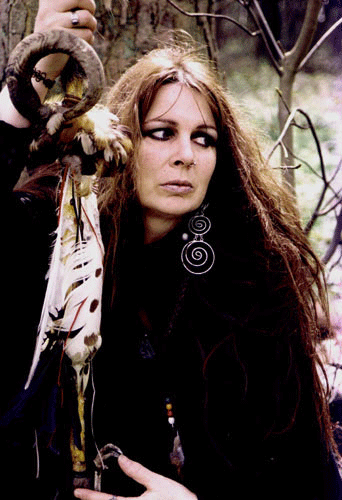
Painter,
sculptor, illustrator, writer, researcher, director, performer, Witch
and Shaman... Eleanor Boyce lives and works in Scarborough (&
Whitby), England: you can watch her intriguing world at http://www.nakthag.com.
A nursery crymes doll by Eleanor
Because her inusual choice I've askedEleanor some few questions:
Why have you selected just"Mosaic" for your virtual show?
"To begin to answer this question I shall quote from the SINGING SERPENT prologue:
'The Song the Serpent Sings is often a hushed and remote whisper in the dark, barely audible, drowned by a cacophony of other sounds. At times it is an urgent calling and, at on occasion, a beauteous melody underscoring our existence. It is carried on the breath of a wind, the dance of a wave upon sand, the flicker of flame, beat of heart and upon the flap of a moth wing. It is everywhere and nowhere in particular, ancient, primal,constant and eternal, a Song that remains forever the same. It is the Soul Song, Spirit Song, Deep Self Song and this Song belongs to us all - we need but only listen, learn and sing along.' My Tarot is designed, and written about, in such a way as to facilitate the opening up of the recipient to the Serpent Song which resides within. When the eye is focused upon an archetypal symbolic image for any length of time, the deeper regions of mind, where intuitive wisdom resides, are stirred. The virtual show of my Tarot images is very short, but does have a touch of the hypnotic and if it were of longer duration it would, no doubt, have effect in moving the mind to a different level. In the light of what has been so far said, it would be of no surprise to hear that the music I should chose for this project was selected with some deliberation. As with specific archetypal visual imagery, certain music, also has the same power to transport the listener, and facilitate the opening of the doors of mind into the same inner space. Third Ear Band created such music. I sat in a darkened room with the show on the screen and dropped a few pieces into the timeline, playing back with the visuals to determine the effect. There was no doubt that 'Mosaic' was the one for it. I guess it is no accident that the musicians who created the piece, and myself, were/are possessed of pagan sensibilities, for it seems to me that our aims, though working in different genres, share a harmony of intent. The result of the marriage of their music and my visuals is a happy and magickal one, and I do not feel any other music would have done".
What are the qualities of 'Mosaic' you feel are so perfect for your project?
"The
piece has an elemental, a pure primal, even raw quality to it, yet at
the same time is highly sophisticated and this, together with the blend
of instruments, imbues it with both a timelessness and a universality.
The repetitions, spaces and rhythms are almost hypnotic as if they are
directly affecting the alpha rhythms of the brain itself, which, indeed,
they may well be doing, for the auditory experience of 'Mosaic' (and
other pieces by the band) are certainly conducive to the entering into
an altered state of consciousness. My drawings, too, are somewhat
elemental and primal, but not lacking sophistication, built upon line,
space and rhythm, stripped of reference to any one time, place or
ideology. Whether or not they hold the same beauty as the Third Ear Band
piece I have chosen to accompany them is not for me to judge, but I
hope, to some degree they do, for someone, somewhere".
How and when did you know the Third Ear Band music?
"Many, many years ago I visited a friend, as I was apt to do often in those days, who had the most phenomenal music collection I had ever seen. It stretched around all the walls of his room, leaving only space in the middle of the room for a mattress and cushions. He was an avid collector, and nothing delighted him more than introducing his friends to musical gems he had acquired. I remember him saying "You will love this, Eleanor ... it is weird enough for even you!" as he slipped Third Ear Band's 'Alchemy' from its sleeve and placed it on the turntable. He was absolutely right!! I sank back into the cushions in ecstasy. I purchased the album the very next day. It was the same time my fascination for the Tarot began to seed, so there is also a personal reason as to just why something from this particular album is so fitting to accompany my own Tarot deck".
[Watch Eleanor Boyce's Tarots deck at http://www.nakthag.com/#/singing-serpent/4570450061] SINGING SERPENT TAROT "There is something very right about the video being uploaded to YouTube and all this occurring at Shamain - the Celtic ending and beginning of the year, when the dead are honored and the 'veil between the worlds' is thin. The Seasons Blessings to you!!" (Eleanor Boyce)
Concept, Artwork, Video, Tarot designs: ELEANOR BOYCE http://www.nakthag.com Music: THIRD EAR BAND Digital re-master of 'Mosaic' from the album ALCHEMY (1969 EMI)
"Someone else who posted here said they've learntmore about TEB in a fewhours here than in 30 years. I'd agree with that except inmy case it would be 44 years. An excellent archive for TEB fans and historians of the era. Thank you!" RACHAEL TYRELL
A TEB BOOK...
CLICK ON THE PICTURE TO BUY THE BOOK.
NEW TEB 3CDs BOX OUT NOW!
Click on the picture to get a copy.
"ALCHEMY" REMASTERED EDITION OUT NOW!
Click on the picture for buying the album.
WRITE TO GHETTORAGA
Search This Archive
New TEB remastered CD on sale!
Click on the picture to purchase the record.
NEW THIRD EAR BAND REMASTERED CD EDITION ON SALE!
Click on the picture to buy the record
Translate
Third Ear Band 1969: Paul Minns, Glen Sweeney and Richard Coff (photo: Ray Stevenson).
Luca Chino Ferrari (b. 1963) is an Italian music writer. Since 1985 he has written and translated books about folk and rock musicians as Third Ear Band, Robyn Hitchcock, Captain Beefheart, Tim Buckley, Nick Drake, Syd Barrett & the Pink Floyd for the main Italian publishers. He met Syd Barrett in 1986 and did contribute to the reunion of the Third Ear Band during the '80s. His latest books was published in 2020 for English ReR November Books, as a collection of stuff about the Third Ear Band, and in 2024 as a collection of writings about Syd Barrett (in Italian). He runs a personal Web site (in Italian/English) at https://chino6339.wixsite.com/gelatoaicorvi
TEB recording at Abbey Road Sudios in February 1971
Click on the picture to watch the video!
"Third Ear Band music is a reflection of the universe as magic play illusion simply because it could not possibly be anything else. Words cannot describe this ecstatic dance of sound, or explain the alchemical repetiton seeking and sometimes finding archetypal formes, elements and rhythms...".
(Glen Sweeney on "Alchemy", Harvest Records 1969)
Paul Buckmaster at Hyde Park (June 7th, 1969).
Total Pageviews
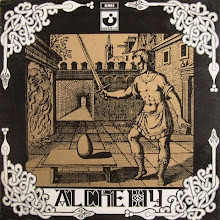
"ALCHEMY"
"Alchemy" (Harvest 1969)
Third Ear Band live at Hyde Park (June 7th,1969)
Click on the picture to watch the video!
Read "Necromancers of the drifting West"!!!
A book on the Third Ear Band edited by Luca Ferrari (published by Stampa Alternativa, Rome 1997). WITH THE FIRST ORIGINAL VERSION OF "ABELARD & HELOISE" SOUNDTRACK!
Third Ear Band at the Roundhouse (London, May 30th 1969).
As alike or unlike as blades of grass or clouds...
"The music is the music of the Druids, released from the unconscious by the alchemical process, orgasmic in its otherness, religious in its oneness communicating beauty and magic via abstract sounds whilst playing without ego enables the musicians to reach a trance-like stage, a "high" in which the music produces itself. Each piece is as alike or unalike as blades of grass or clouds".
(From the 1969 Isle of Wight concert programme)
TEB - "THE LOST BROADCASTS" DVD (Gonzo Multimedia, UK 2011)
Richard Coff at Isle of Wight Festival, August 1969 (photo: Barry Plummer).
Pseudo-mystical...
“The trouble is that you can't be mystical without being called pseudo-mystical, and it's the fault of our previous education. I'm at Glastonbury most of the time, but we're all completely honest about it. We'll even use it honestly to make money, because the ancient Egyptians who were into it all said that you had to be rich because only then can you resist temptation”.
(Glen Sweeney to Richard Williams, “Melody Maker” June 1970)
"Macbeth" by Roman Polanski (Playboy Production, UK 1971)
“I've always felt that music should be pure. If you have lyrics, you are preaching in a way. Somehow words are a block to communication. It's almost impossible for me to explain exactly how I feel about this, that's why I'm a musician. The only way to really understand what I mean, is to firstly listen to a pop group and then listen to us, and then I hope you will know what we're trying to say."
(Glen Sweeney to Muz Murray, 1969)
A Third Ear Band tribute
Roberto Musci - "Mosaic. A tribute to Third Ear Band" (CD - Gonzo Multimedia HST411, 2016)
TEB 1971: Sweeney, Minns, Bridges and Buckmaster (photo: Blackhill Enterprises).
NOTES FROM OVERGROUND
“No announcements, numbers lasting 15 to 20 minutes, art form or con?
This might be valid criticism of (A) Thunderstorm (B) a cricket (C) Third Ear Band.
Their approach to music is different because there is no duality, no conflict between the natural element of chance and the human element of control, did the moon ask to be reflected in the water? If it wasn’t for the trees would the wind know when it was blowing? Paul Minns says there are some very beautiful forests in Hyde Park, trying to put titles to music is rather like trying to answer the question where does my hand when it becomes my fist”.
(From the Al Stewart-Third Ear Band 1970 tour programme)
TEB 1970: Sweeney, Minns, Coff & Smith (photo: Blackhill Enterprises).
"The Centipede was happy, quite, until a Toad in fun said: "Pray, which leg goes after which?". This worked his mind to such a pitch, he lay distracted in a ditch considering how to run". (Third Ear Band, 1970)
TEB at Isle of Wight Festival, August 1969 (photo: Barry Plummer).
"Music from Macbeth" (Harvest 1972)
Third Ear Band - "Experiences" (Harvest 1976)
WEIRD SCENES
“We'd rather people called us a pop group. We do ragas, that aren't really ragas at all, and unless we get a turned on promoter, we get into some weird scenes. At Norwich once, when the promoter saw the audience sitting down and closing their eyes to our music, he accused us of putting them to sleep! Complete paranoia. So I imagine we wouldn't do too well on the Pop Proms”.
(Glen Sweeney interviewed by Chris Welch - “Melody Maker” July 12th, 1969)
Third Ear Band - "Fleance" (Odeon 1972) Japan single edition
Third Ear Band - "Live Ghosts" (Materiali Sonori 1988)
VERY MUCH UNDERGROUND
“It's just a question of advertising. We've stayed very much Underground - no photos - and I think this was necessary so people wouldn't put us in a bag. We'd rather the just came up and heard us without ANY preconceived ideas. I suppose it is a bit shattering to see violins and cellos”.
(Glen Sweeney interviewed by Chris Welch - “Melody Maker” July 12th, 1969)
Third Ear Band at a Druids ceremony in Glastonbury Tor (April 15th, 1970).
OTHER TEB RELEASES/APPEARANCES
"Picnic. A breath of fresh air" (2LPs - Harvest SHSS 1/2, UK 1970) various Harvest artists anthology
"Harvest Heritage. 20 Great" (LP - Harvest , UK 1977) various Harvest artists anthology
"The Harvest Story Vol. 1" (LP - Harvest EG 260097 1, UK 1984) various Harvest artists anthology
"All frontiers" (CD - Materiali Sonori MASO CD 90026, ITA 1991) various artists live compilation
"Sonora 2/91" (CD - Materiali Sonori, ITA 1991) various Materiali Sonori artists compilation
"Radio Session" (CD - Voiceprint VPR017, UK 1994) live album
"Materiali Sonori" (CD - Olis OM 0021, ITA 1996) various Materiali Sonori artists compilation
"Live" (CD - Voiceprint VP157CD, UK 1996) live album
Third Ear Band - "New Forecasts from the Third Ear Almanac" (ADN Records 1989)
90% improvisation...
"I'd say ninety per cent of our music is improvisation. It's not really Indian music, although we use a drone instead of the usual bass line riffs. The music draws from everywhere.
"I think our appeal is that audiences can draw their own thing from us. We make no announcements and none of the numbers have titles. People in colleges we play come up after and say they can get fantastic images in their mind when they listen. We can offer a complete dream. The old Celtic bards used to have the same ability".
(Glen Sweeney interviewed by Chris Welch - “Melody Maker” July 12th, 1969)
“Third Ear Band’s new album “Magic Music” isabout music as pure vibrations, as such it can be linked with colour because colour is vibration. It can even be linked to the music ofthe spheres which states that the vibrations of the planets can be heard with the third ear (silence). The free ragas that we play are modal, each note can be heard as a sound-colour that produces its own mood.Our rhythms come from all overthe world, and we use these ideasand many others to try to make a new world music”.
(Glen Sweeney, notes on the “Magic Music” inner cover, 1990)
SOLOS DISCOGRAPHIES
- GLEN SWEENEY -
Various Artists - "The greetings compact vol. 2" (CD - Materiali Sonori, 1990)
Rolling Stones - "Sticky fingers" (LP/CD - Rolling Stones Records, 1971)
Carly Simon - "Hotcakes" (LP/CD - Elektra, 1974)
Elton John - "Single man" (LP/CD - Rocket, 1978)
- NEIL BLACK (selection) -
UB40 - "Present Arms" (LP/CD - DEP, 1981)
Joan Armatrading - ""Track Record" (LP/CD - A&M, 1983)
Third Ear Band 1969: Minns, Sweeney and Coff at the Kensal Green Cemetery of London (photo: Ray Stevenson).
Third Ear Band - "Brain Waves" (Materiali Sonori 1993)
Eight drunk rugby players
"We once had eight drunk rugby players yelling dirty songs at us. We played quieter and quieter. In the end they seemed ashamed and shut up. But I still don't think they dug the music!".
(Glen Sweeney interviewed by Chris Welch - “Melody Maker” July 12th, 1969)
Third Ear Band, Vinci 1989: Allen, Sweeney, Dobson and Carter (photo: Lucia Baldini).
QUOTATIONS, COVERS, REMIXES, MANIPULATIONS OF THIRD EAR BAND MUSIC
Stone Breath - "A silver thread weave the seasons" (2CDs - Hand/Eye, USA 2008). A 'cover' of "Fleance".
Marco Lucchi - "Baby a" (ITA 1982). A composition with a sampler of "Stone Circle".
Radio Noisz Ensemble - "Yniverze" (CD - Garden of Delights 1982/2009). A 'folky' quotation of "Water".
Fabio Zuffanti - "Third Ear Band demixed" (CD-r - Spirals Records, ITA 2000). The four elements electronically manipulated.
Algarnas Tradgard - "Delayed" (CD - Silence Records, UK 2001). A quotations of "Water" recorded in 1973-1974 (!).
Lady Husk & The Good Ship Neotropic - "A monstrous psychedelic bubble exploding in your mind" (file MP3 - The New Worck, NL 2007). A remake of "No title" (?!).
I Monster - "The Art of Chill vol. 6 - Mixed by I Monster" (2CDs Platipus, UK 2009). A remix of "Fleance".
Vibes and Stuff - guest mix Coby Sey (MP3 - UK, 2010). A remix of "Water".
AA.VV. - "The Fruits de Mer Annual for 2011" (2x7" - Fruits de Mer Records, UK 2011). A cover of "Fleance" by the HI-Fiction Science.