A short piece by Nick Logan published in New Musical Express on July 12, 1969 recounts the Rolling Stones’ legendary performance at Hyde Park in 1969. Also appearing were the Third Ear Band, King Crimson (in their first live performance in open air) and Alexis Korner’s Blues Incorporated. Given the scale of the event – organised by BlackhillEnterprises and having gone down in rock history in a big way – there is no need to say any more.
Every time I discover an old interview with Paul Buckmastersomewhere I'm glad to share it with all the TEB fans because Paul was a clever, smart guy, an extremely talented musician, a genius of creativity... and it always a gift to read his thoughts on paper.
Here we have an interview with Penny Valentine, published in Sounds on 29 May 1971, during a very creative period of his burgeoning career:although he was only 26, he had already produced some of Elton John's albums, arranged the score for Lewis Gilbert's film "Friends" (music by Elton John and lyrics by Bernie Taupin), arranged two tracks for the Rolling Stones' "Sticky Fingers", arranged David Bowie's masterpiece "Space Oddity" ...
Viv Albertine, singer, guitar player, founder of seminal female punk band TheSlits (1977-1982), in 2014 published an autobiography titled "Clothes, Clothes, Clothes. Music, Music, Music. Boys, Boys, Boys" where, at page 41, quite surprisingly, she writes a short memory on the Third Ear Band...
"One of the strangest bands I saw around this time was the Third Ear Band at the Queen Elizabeth Hall. I found out about then through listening to John Peel on the radio. He was always mentioning them. He played on their record Alchemy. The music was over my head, really difficult, but I understood their ideas - experimentation, pushing boundaries and not conforming to musical clichés. I stared at the stage, I couldn't tell if one of the players in the band was male or female, the tall skinny one with long black hair; I stared and stared at this one hoping and hoping that they were female. I left without knowing as she or he had their head down the whole time."
"Me and my friend Zaza went to see Third Ear Band again (even though they were very experimental, they played all over the place and had a big following) in July 1969 when I was fifteen. They opened for the Rolling Stones at the ‘Stones in the Park’ free concert in ‘the cockpit’ — the big dip in the grass in Hyde Park. King Crimson were on too."
Would she be pleased today to know that a woman also played at the Queen Elizabeth Hall... Ursula Smith?
If "Rolling Stones" magazine can omit the Third Ear Band's records in its celebrated "500 Greatest Albums of All Time" (Wenner Media Ltd. 2005); if "Uncut" special issue "Ultimate Record Collection" (December 2017) in the 70's section 'forgets' Glen Sweeney & C.... maybe a reason there is.
I think popular music history might be re-written and I'm very glad that nowadays, in this age of revisionism, some so-called 'cult records' can be mooted; maybe a new age of free minds is coming for fighting nostalgia and commonplaces of culture that are a real damnation for everyone...
The reasons because TEB's music cannot be ignored are first of all related to its musical nature, the peculiar identity of the sound (the instruments played) that advanced world music and all the forms of 'contaminations' of sounds. Their syncretism was so unique and authentic that was just pure sound with no image (fashion), no indulgences on pop star trivial tricks and other kind of banality.
Other reasons can be found in their implicit contents>: I've tried to explain in a past short essay (read HERE) why "Alchemy" is one of the most dangerous records ever played. And it's possible that this is one of the reasons because rock magazines generally don't consider TEB's work in their useless, boring lists of 'essential' albums.
I don't feel any embarrassment into writing that "Alchemy", "Third Ear Band", or "Music for Macbeth" are more important and fundamental records than all the Led Zeppelin's or The Who's discographies. Or i.e. the Shadows of Knight's "Gloria" or that boring Eagles' "Hotel California"...
In terms of evolution of forms, that specific 'arcane' and 'primordial' traits of the sound, TEB's research was never achieved, also if a lot of bands and musicians are going through the same path...
My only problem is that every time I read this kind of list of records with no a TEB's albums in I have a jump. Well, I might wait for all of this and pass beyond!
But Third Ear Band's fate is not so isolated: some intriguing, wonderful stories are hidden somewhere to be discovered and one of the aims of this Archive was to document it.
One of these 'wrong fates', regarding a less-known Italian composer as Romolo Grano, is related in some ways to Third Ear Band's music, the same rare sensibility for the form, the same cultural/musical roots, the same result...
Please, listen to this track titled "Taranta" (go HERE!), composed and recorded by Grano in 1972: Taranta is a folkloric south Italian dance form, precisely diffused in Salento, a territory inside the Puglia. Studied by anthropologist as Ernesto De Martino in the first half of last century and more recently by George Lapassade as a modern experience of trance, is an old dance people uses to dance today as a mere form of entertainment, in the past as a reaction to the spider's bite, even if characterised by a strong metaphorical element of social liberation for the low-class people.
Italian composer Romolo Grano.
As musician and composer Alessandro Monti wrote me (letting me know about Romolo Grano), "maybe taranta or pizzica could be related to some sections of the film, and to some kind of prog music of the time... but its mood is the same of the Third Ear Band, if one considers it is from 1972. For myself, it's quite similar to "Earth"... maybe it's not so strange that the film's synopsis talks about magic and spirituality... Surely this is not a coincidence!"
Reviewing the soundtrack, recently published in a pirate CD edition, Federico Biella told the genesis of the tune: "The movie's most impressive scene, when Bosè in trance is vomiting frogs, is moving with "Taranta", Mediterranean dance for violin and percussion with unusual origins. Around 1965, Giulio Questi was in Macedonia for filming live some folk rituals intended for a docu-film, never finished, by [famous Italian film maker] Gillo Pontecorvo. Visiting the local countryside, he met a violin player who was playing a monotonous folkish tune. He was impressed by it. Years later, planning with Grano "Arcana"'s soundtrack, he remembered that theme who had recorded on a tape. He gave it to the musician for listening to and he was so excited by it that he decided to arrange it." (from http://www.colonnesonore.net/recensioni/cinema/5109-arcana-l-uomo-del-tesoro-di-priamo.html)
So Grano's track was included in the film soundtrack album titled "Arcana", one of the many works composed and produced (often for TV programmes) by this very eclectic artist - spacing through pop, easy-listening, muzak, electronic, avant-guarde music...
But who is Romolo Grano? Friends of Italian avant-garde composer Bruno Maderna, Grano was born in Santa Maria (Cosenza, Italy) in 1929. He was a composer, arranger, and conductor of music used for movies and RAI television programmes from 1964 ("Ca Ira" movie directed by Tinto Brass) to (around) 1978.
After have been at the legendary Studio di Fonologia in Milan, following the experimental works of Luigi Nono, he was composing music for the most popular Italian TV movies of the Seventies - as "Nero Wolf" or "La Baronessa di Carini" - mixing electronic with classical compositions inspired by Romantic Eastern composers, contemporary jazz, folk music and melodic pop songs in an extraordinary melting pot of sounds created for making a comment to the film scenes.
For some critics, just "Arcana" is Grano's masterpiece and "Taranta" the main theme with its catching ritual folk dance structure that reminds to the Third Ear Band.
Originally realized in few vinyl promotional copies, this soundtrack was a very rare album until Italian label Digitmovie edited it officially in 2015 together with another TV film ("L'Uomo del Tesoro di Priamo"). Other exclusive works are i.e. "Musica elettronica", realised in 1973 and available on the Web (listen to it on Soundcloud at https://soundcloud.com/broken-music-au/cp109cd), a sampler of a huge amount of abstract electronic recordings based on delays, bloops, analog drones, hums...
As like its author - a real genius! - many Grano's compositions are so interesting piece of music that can stay with full rights in that same pantheon with giants as Ennio Morricone, Nino Rota, Piero Umiliani, or Gary Hermann.
This interview withPaul Buckmasteredited byGeorge Cole was published on theTheGuardianWeb page on September 30th, 2010. Even if there are no references about Buckmaster's work with the Third Ear Band, it's an interesting excursus about the art of arrangement...
Life's a beach ... Brian Wilson in his studio. Photograph: Rb/Redferns
Elton John, the Beach Boys and the fine art of pop alchemy.
"They are music's unsung heroes, yet their work can turn a great song into a classic, intensify the emotional impact of a heartrending lyric or make a stirring vocal performance even more memorable. Arrangers are often said to have "sweetened" the music by adding strings, horns and other musical elements, but such a description doesn't do justice to how much an arranger's work can transform a piece of music. Think of how the swirling strings and plucked violins on ABC's The Look of Love heighten the song's poignancy, or the drama of the brass interjections on Love's Maybe the People Would Be the Times or Between Clark and Hilldale, and you can hear the impact an inspired arrangement has on a song. Even so, it's easy to be unaware of what an arranger actually does. A good person to answer that question is Paul Buckmaster who, over four decades, has arranged songs for the likes of Elton John, David Bowie, Miles Davis, the Bee Gees, Guns N' Roses and the Rolling Stones. So what is the art of a good arrangement? "Being able to enhance the emotive quality and bring out the intent of the lyric and the artist's performance," says Buckmaster. "Adding orchestral passages and textures should give added depth and dimensionality, physically, psychologically and aurally speaking. I feel I've succeeded when the goose-bump thrill factor kicks in." A good arranger needs lots of skills, Buckmaster says, including a thorough working knowledge of harmony and counterpoint, the ability to sense what is right and proportional in the context of the song being arranged, knowledge of composition, and the art of orchestrating. Buckmaster's work as an arranger has been mainly influenced by classical composers: "However, one cannot deny the influence of arrangers like George Martin, Nelson Riddle and Gil Evans – I particularly love Claus Ogerman's way of writing," he says. There is no set template for how an arranger works. "Sometimes I work with the artist, sometimes with the producer; sometimes both. Often, I'm sent the basic track or demo and am left alone in relative freedom to make my own choices," says Buckmaster. "On the first three Elton John albums, Elton gave [the late producer] Gus Dudgeon and me total freedom; the only part which was never arranged was Elton's piano. One exception was Sixty Years On, where I decided to transcribe Elton's original demo piano part for the harp intro, changing the last three bars. Gus and I sat in his office and went through each song, and worked out the type of orchestration which would suit each track. We effectively designed each song as an individual piece, giving it its own character." An example is on Your Song, where Buckmaster and Dudgeon decided to not bring in the rhythm section until the third verse. "The delayed entry of the rhythm section makes it more dramatic, and serves to lift the piece into a more propulsive mood. One general rule is to hold back as much as possible, to give the listener the chance to let the song grow and unfold, introducing new sonic elements, such as new instruments or sectional groupings. If you use everything from the beginning, you have nowhere to go." In 1969, Buckmaster's manager Tony Hall introduced him to David Bowie at Gus Dudgeon's office. "Gus and Tony thought I should be the arranger for the forthcoming recording session for Space Oddity," Buckmaster says. "Writing the chart for rhythm section and strings was fun – I was still new to this and tried out some unusual effects." The session took place at Trident Studios in London using an eight-track recorder: "It went smoothly," recalls Buckmaster, "we did the basic track first, with David on jumbo guitar [large body acoustic], together with the rest of the rhythm section and Rick Wakeman's Mellotron, then David's vocal and Stylophone [a pocket-sized, stylus-operated electronic keyboard], and finally, strings and flutes." Some song arrangements add so much to the finished product that it raises the issue: where does arranging end and composition begin? And in light of the fact that some session singers and musicians have successfully claimed a share of song-writing royalties for their contribution to the music, shouldn't arrangers also occasionally receive a royalty for their efforts? "It's a very good question, and it opens many cans of worms," says Buckmaster, "In my view, arrangers should be paid their one-time creative fee, but I feel they should also be entitled to some kind of percentage at the back end, especially if the record goes gold. The contribution made by the arranger to the success or memorability of a recording, is in many cases, undeniable." Buckmaster cites the french horn glissando in the introduction to Marvin Gaye's I Heard It Through the Grapevine. "Without the low-register, rhythmic violin/viola answer-phrases, and the rising string counter-lines during the turn-around, would the record be as interesting?" he asks. "There's no doubt that the song is strong in its own right, and I absolutely do not intend any slur on it. But try to imagine the cut without those elements. Jeremy Lubbock's swooping string-phrases on Michael Jackson's Billie Jean is another – the examples are endless."
Five great arrangements Massive Attack: Unfinished Sympathy Arranger: Wil Malone Massive Attack created a song that featured samples, scratching, a strong groove and a superb vocal by Shara Nelson. Wil Malone, renowned for his string arrangements (he did the arrangement for the Verve's Bittersweet Symphony), was given the rhythm track and complete freedom to write an arrangement for it. It took Malone two days to compose the arrangement, which was recorded with a 40-piece string orchestra at Abbey Road Studios. "What you are trying to do is tailor the arrangement to the band or artist. The challenge is to provide an interesting arrangement that doesn't swamp the tune," says Malone. He certainly succeeded. Listen to how the cellos add tension to the song's intro or the way the violins enhance the emotional intensity of Nelson's soulful vocals. Unfinished Sympathy is a song that moves both your feet and your heart.
Glen Campbell: Wichita Lineman Arranger: Al de Lory Composer Jimmy Webb got the inspiration for this song when driving in a remote area of Oklahoma and spotting the solitary figure of a lineman working at the top of a telegraph pole. The result was a mournful country ballad full of yearning. Al de Lory's arrangement uses sweeping violins to evoke a vast empty space and the loneliness of the lineman. A finishing touch was to bring Webb's Gulbransen electronic organ into the studio to create the sound effect of a telephone signal travelling along a telegraph wire.
The Temptations: Papa Was A Rolling Stone Arranger: Paul Riser
This epic track, written by Norman Whitfield and Barrett Strong, is unusual in having no harmonic progression – it sticks rigidly to the B-flat minor chord. The track is dominated by a never-ending bass riff and non-stop hi-hat beat, and on top of this, arranger Paul Riser laid violins, cellos, harp and reverberating trumpet. The result is a 12-minute classic, which earned Riser a Grammy award.
The Beatles: A Day in the Life Arranger: George Martin For what was to be the final track on Sgt Pepper's Lonely Hearts Club Band, the Beatles wanted to include a symphony orchestra, and Paul McCartney wanted a 24-bar gap filled with a spiralling descent of sound, recalls producer/arranger George Martin in his book, Summer of Love. Martin used a half symphony orchestra, instructing each member to start by playing the lowest note on their instrument and end by playing their loudest and highest note. The rest is history.
The Beach Boys: God Only Knows Arranger: Brian Wilson On a song whose beauty can make grown men cry, Brian Wilson used an array of instruments including violin, viola, cello, flute, clarinet and accordion to produce one of the greatest love songs of all time".
Here's another rare and precious contribute to the knowledge of TEB's history due to Beatchapter of London (bless you Mr. Jon Limbert!). This time in his archive he has found for us an old "Beat Instrumental" piece published on September 1969 with an unusual interview with Glen Sweeney and Richard Coff.
Just after the important appearance at Rolling Stones' Hyde Park concert and at Isle of Wight Festival (with the legendary return of Bob Dylan) TEB talks about its music and the reactions of audience...
Beatchapter - 49 Sebert Road, Forest Gate - London UK E70NJ ph.: 020 85194590 e-mail: sales@beatchapter.com
"Someone else who posted here said they've learntmore about TEB in a fewhours here than in 30 years. I'd agree with that except inmy case it would be 44 years. An excellent archive for TEB fans and historians of the era. Thank you!" RACHAEL TYRELL
A TEB BOOK...
CLICK ON THE PICTURE TO BUY THE BOOK.
NEW TEB 3CDs BOX OUT NOW!
Click on the picture to get a copy.
"ALCHEMY" REMASTERED EDITION OUT NOW!
Click on the picture for buying the album.
WRITE TO GHETTORAGA
Search This Archive
New TEB remastered CD on sale!
Click on the picture to purchase the record.
NEW THIRD EAR BAND REMASTERED CD EDITION ON SALE!
Click on the picture to buy the record
Translate
Third Ear Band 1969: Paul Minns, Glen Sweeney and Richard Coff (photo: Ray Stevenson).
Luca Chino Ferrari (b. 1963) is an Italian music writer. Since 1985 he has written and translated books about folk and rock musicians as Third Ear Band, Robyn Hitchcock, Captain Beefheart, Tim Buckley, Nick Drake, Syd Barrett & the Pink Floyd for the main Italian publishers. He met Syd Barrett in 1986 and did contribute to the reunion of the Third Ear Band during the '80s. His latest books was published in 2020 for English ReR November Books, as a collection of stuff about the Third Ear Band, and in 2024 as a collection of writings about Syd Barrett (in Italian). He runs a personal Web site (in Italian/English) at https://chino6339.wixsite.com/gelatoaicorvi
TEB recording at Abbey Road Sudios in February 1971
Click on the picture to watch the video!
"Third Ear Band music is a reflection of the universe as magic play illusion simply because it could not possibly be anything else. Words cannot describe this ecstatic dance of sound, or explain the alchemical repetiton seeking and sometimes finding archetypal formes, elements and rhythms...".
(Glen Sweeney on "Alchemy", Harvest Records 1969)
Paul Buckmaster at Hyde Park (June 7th, 1969).
Total Pageviews
"ALCHEMY"
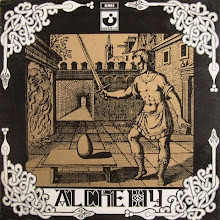
"Alchemy" (Harvest 1969)
Third Ear Band live at Hyde Park (June 7th,1969)
Click on the picture to watch the video!
Read "Necromancers of the drifting West"!!!
A book on the Third Ear Band edited by Luca Ferrari (published by Stampa Alternativa, Rome 1997). WITH THE FIRST ORIGINAL VERSION OF "ABELARD & HELOISE" SOUNDTRACK!
Third Ear Band at the Roundhouse (London, May 30th 1969).
As alike or unlike as blades of grass or clouds...
"The music is the music of the Druids, released from the unconscious by the alchemical process, orgasmic in its otherness, religious in its oneness communicating beauty and magic via abstract sounds whilst playing without ego enables the musicians to reach a trance-like stage, a "high" in which the music produces itself. Each piece is as alike or unalike as blades of grass or clouds".
(From the 1969 Isle of Wight concert programme)
TEB - "THE LOST BROADCASTS" DVD (Gonzo Multimedia, UK 2011)
Richard Coff at Isle of Wight Festival, August 1969 (photo: Barry Plummer).
Pseudo-mystical...
“The trouble is that you can't be mystical without being called pseudo-mystical, and it's the fault of our previous education. I'm at Glastonbury most of the time, but we're all completely honest about it. We'll even use it honestly to make money, because the ancient Egyptians who were into it all said that you had to be rich because only then can you resist temptation”.
(Glen Sweeney to Richard Williams, “Melody Maker” June 1970)
"Macbeth" by Roman Polanski (Playboy Production, UK 1971)
“I've always felt that music should be pure. If you have lyrics, you are preaching in a way. Somehow words are a block to communication. It's almost impossible for me to explain exactly how I feel about this, that's why I'm a musician. The only way to really understand what I mean, is to firstly listen to a pop group and then listen to us, and then I hope you will know what we're trying to say."
(Glen Sweeney to Muz Murray, 1969)
A Third Ear Band tribute
Roberto Musci - "Mosaic. A tribute to Third Ear Band" (CD - Gonzo Multimedia HST411, 2016)
TEB 1971: Sweeney, Minns, Bridges and Buckmaster (photo: Blackhill Enterprises).
NOTES FROM OVERGROUND
“No announcements, numbers lasting 15 to 20 minutes, art form or con?
This might be valid criticism of (A) Thunderstorm (B) a cricket (C) Third Ear Band.
Their approach to music is different because there is no duality, no conflict between the natural element of chance and the human element of control, did the moon ask to be reflected in the water? If it wasn’t for the trees would the wind know when it was blowing? Paul Minns says there are some very beautiful forests in Hyde Park, trying to put titles to music is rather like trying to answer the question where does my hand when it becomes my fist”.
(From the Al Stewart-Third Ear Band 1970 tour programme)
TEB 1970: Sweeney, Minns, Coff & Smith (photo: Blackhill Enterprises).
"The Centipede was happy, quite, until a Toad in fun said: "Pray, which leg goes after which?". This worked his mind to such a pitch, he lay distracted in a ditch considering how to run". (Third Ear Band, 1970)
TEB at Isle of Wight Festival, August 1969 (photo: Barry Plummer).
"Music from Macbeth" (Harvest 1972)
Third Ear Band - "Experiences" (Harvest 1976)
WEIRD SCENES
“We'd rather people called us a pop group. We do ragas, that aren't really ragas at all, and unless we get a turned on promoter, we get into some weird scenes. At Norwich once, when the promoter saw the audience sitting down and closing their eyes to our music, he accused us of putting them to sleep! Complete paranoia. So I imagine we wouldn't do too well on the Pop Proms”.
(Glen Sweeney interviewed by Chris Welch - “Melody Maker” July 12th, 1969)
Third Ear Band - "Fleance" (Odeon 1972) Japan single edition
Third Ear Band - "Live Ghosts" (Materiali Sonori 1988)
VERY MUCH UNDERGROUND
“It's just a question of advertising. We've stayed very much Underground - no photos - and I think this was necessary so people wouldn't put us in a bag. We'd rather the just came up and heard us without ANY preconceived ideas. I suppose it is a bit shattering to see violins and cellos”.
(Glen Sweeney interviewed by Chris Welch - “Melody Maker” July 12th, 1969)
Third Ear Band at a Druids ceremony in Glastonbury Tor (April 15th, 1970).
OTHER TEB RELEASES/APPEARANCES
"Picnic. A breath of fresh air" (2LPs - Harvest SHSS 1/2, UK 1970) various Harvest artists anthology
"Harvest Heritage. 20 Great" (LP - Harvest , UK 1977) various Harvest artists anthology
"The Harvest Story Vol. 1" (LP - Harvest EG 260097 1, UK 1984) various Harvest artists anthology
"All frontiers" (CD - Materiali Sonori MASO CD 90026, ITA 1991) various artists live compilation
"Sonora 2/91" (CD - Materiali Sonori, ITA 1991) various Materiali Sonori artists compilation
"Radio Session" (CD - Voiceprint VPR017, UK 1994) live album
"Materiali Sonori" (CD - Olis OM 0021, ITA 1996) various Materiali Sonori artists compilation
"Live" (CD - Voiceprint VP157CD, UK 1996) live album
Third Ear Band - "New Forecasts from the Third Ear Almanac" (ADN Records 1989)
90% improvisation...
"I'd say ninety per cent of our music is improvisation. It's not really Indian music, although we use a drone instead of the usual bass line riffs. The music draws from everywhere.
"I think our appeal is that audiences can draw their own thing from us. We make no announcements and none of the numbers have titles. People in colleges we play come up after and say they can get fantastic images in their mind when they listen. We can offer a complete dream. The old Celtic bards used to have the same ability".
(Glen Sweeney interviewed by Chris Welch - “Melody Maker” July 12th, 1969)
“Third Ear Band’s new album “Magic Music” isabout music as pure vibrations, as such it can be linked with colour because colour is vibration. It can even be linked to the music ofthe spheres which states that the vibrations of the planets can be heard with the third ear (silence). The free ragas that we play are modal, each note can be heard as a sound-colour that produces its own mood.Our rhythms come from all overthe world, and we use these ideasand many others to try to make a new world music”.
(Glen Sweeney, notes on the “Magic Music” inner cover, 1990)
SOLOS DISCOGRAPHIES
- GLEN SWEENEY -
Various Artists - "The greetings compact vol. 2" (CD - Materiali Sonori, 1990)
Rolling Stones - "Sticky fingers" (LP/CD - Rolling Stones Records, 1971)
Carly Simon - "Hotcakes" (LP/CD - Elektra, 1974)
Elton John - "Single man" (LP/CD - Rocket, 1978)
- NEIL BLACK (selection) -
UB40 - "Present Arms" (LP/CD - DEP, 1981)
Joan Armatrading - ""Track Record" (LP/CD - A&M, 1983)
Third Ear Band 1969: Minns, Sweeney and Coff at the Kensal Green Cemetery of London (photo: Ray Stevenson).
Third Ear Band - "Brain Waves" (Materiali Sonori 1993)
Eight drunk rugby players
"We once had eight drunk rugby players yelling dirty songs at us. We played quieter and quieter. In the end they seemed ashamed and shut up. But I still don't think they dug the music!".
(Glen Sweeney interviewed by Chris Welch - “Melody Maker” July 12th, 1969)
Third Ear Band, Vinci 1989: Allen, Sweeney, Dobson and Carter (photo: Lucia Baldini).
QUOTATIONS, COVERS, REMIXES, MANIPULATIONS OF THIRD EAR BAND MUSIC
Stone Breath - "A silver thread weave the seasons" (2CDs - Hand/Eye, USA 2008). A 'cover' of "Fleance".
Marco Lucchi - "Baby a" (ITA 1982). A composition with a sampler of "Stone Circle".
Radio Noisz Ensemble - "Yniverze" (CD - Garden of Delights 1982/2009). A 'folky' quotation of "Water".
Fabio Zuffanti - "Third Ear Band demixed" (CD-r - Spirals Records, ITA 2000). The four elements electronically manipulated.
Algarnas Tradgard - "Delayed" (CD - Silence Records, UK 2001). A quotations of "Water" recorded in 1973-1974 (!).
Lady Husk & The Good Ship Neotropic - "A monstrous psychedelic bubble exploding in your mind" (file MP3 - The New Worck, NL 2007). A remake of "No title" (?!).
I Monster - "The Art of Chill vol. 6 - Mixed by I Monster" (2CDs Platipus, UK 2009). A remix of "Fleance".
Vibes and Stuff - guest mix Coby Sey (MP3 - UK, 2010). A remix of "Water".
AA.VV. - "The Fruits de Mer Annual for 2011" (2x7" - Fruits de Mer Records, UK 2011). A cover of "Fleance" by the HI-Fiction Science.
 no©2026LucaChinoFerrari (unless you intend to make a profit. In which case, ask first).