Showing posts with label Harry Fainlight. Show all posts

November 09, 2024

Dave Tomlin, a giant of British counterculture.


From the video interview "Radical Elders" (2019).

Multi-instrumentalist, lyricist, writer and poet, David John Tomlin (1934-2024) was a seminal figure of the British underground. A founder of Giant Sun Trolley with Glen Sweeney in 1967, a collaborator with the Third Ear Band on “Alchemy” (1969), he was a cultural and political agitator since the second half of the 1960s, after a militancy in trad jazz from the late 1950s with Bob Wallis' band. From 1976 to 1991 he directed a commune experience in the occupied Cambodian Embassy in London, rejuvenating the countercultural model of the legendary London Free University of the 60s (from where Syd Barrett's Pink Floyd, for example, became known). 

Dave Tomlin (right) with Joe Gannon (left) announcing the Notting Hill Carnival, 1966.

From the early 1990s he began a prolific writing activity, mainly in the online pages of the reborn International Times (read here), publishing several books of an autobiographical nature (e.g., on his experiences in India or chronicling his years at the occupied embassy), poetic, non-fiction with strong political and social characterization (such as the essay "Power Lines").

He acquainted me with the dramatic story of Mike Taylor, helping me with research (with his brother Tony) and the writing of his biography, with suggestions and revision of the text. In 2020 he collaborated on the book I wrote about Glen and the Third Ear Band by sending his memories and giving me this unpublished poem of his from 1967, I decided to use as the epigraph of the book:

"The Giant Sun Trolley is coming

League transversing it globally encircuits

Beneath the eversun  

Where lances of pain

Become rays of warmth

Emanating mindwards and on

Till, reaching the epiphany

Of space and time 

Flash in ozonic  splendour

For Cosmic Man."

A true giant of the British counterculture and underground. Intelligent, sharp, witty, always on the right side of those who claim, especially today, the right to a better world.

From the video interview "Radical Elders" (2019).
 

Since very little can be found about him on the internet, I repost here, updated, Dave's bibliography and discography already posted on this archive, willing to supplement or modify it if suggestions are received from you readers.


DISCOGRAPHY

. Mike Taylor Quartet – “Pendulum” (LP - Columbia SX6042, UK 1965) Recorded at Lansdowne Studios, London, October 1965. Dave plays soprano saxophone. A 2007 CD reissue by Sunbeam Records also exist, but now very rare.

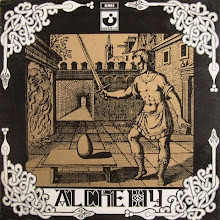
. Third Ear Band – “Alchemy” (LP/CD – Harvest Records, UK 1969) Recorded at EMI Studios in 1969. Dave plays violin in one track composed by him, “Lark Rise”.

. Hazchem - "Strange Attractor" (CD – Worldwide Records SPM-WWR-CD-0011 7703, 1990) Dave plays violin, keyboards and bass on three tracks, co-composing six tracks of the album and all the lyrics.

. High Tide – “Ancient Gates” (CD - World Wide Records SPM-WWR-CD-0007, Germany 1990) Dave plays violin and keyboard on all the six album tracks.

. Hazchem – “Star Map Excursion” (CD - World Wide Records, Germany 1991) Dave composed two tracks for the album.

. Third Ear Band – “The Magus” (CD – Angel Air Records SJPCD173, UK 2004) Recorded in 1972. Dave plays bass guitar. He writes also the liner notes. A limited edition of 500 copies of 180 gr. vinyl was published in 2019 by Tiger Bay.

 . The Bob Wallis & His New Storyville Jazzmen - (CD – GHB BCD-262, 2006) Dave plays clarinet on three tracks recorded in London, 1959.

 . The Bob Wallis & His New Storyville Jazzmen - "Vintage" (CD – Lake Records LACD280, 2010) Dave plays clarinet on some tracks recorded in London, in the Fifties.

 . Various Artists – “Trad Dads, Dirty Boppers and Free Fusioneers: British Jazz 1960-1975” (CD – Reel Recordings RR026, UK 2012) Dave plays tenor saxophone on one track, “Phrygie”, recorded at Herne Bay Jazz Club in 1961 by the Mike Taylor Quintet.

. Mike Taylor Quartet – “Mandala” (CD/LP – Jazz in Britan, UK 2021) Limited to 500 copies worldwide. Recorded live by Jon Hiseman on 8th January 1965 at the Studio Club, Westcliff-On-Sea, Southend (UK). Dave plays soprano saxophone.

. Mike Taylor Quartet – “Preparation” (CD/LP – Sunbeam Records, UK 2021) Recorded at 19 The Common, Ealing (Mike Taylor’s home) in September 1965. Dave plays soprano saxophone.


BIBLIOGRAPHY

"Tales from the Embassy" vol. 1 (Iconoclast Press, London 2002)

"Bluebirds" (Iconoclast Press, London 2004)

"Howling at the Moon" (Iconoclast Press, London 2004)

"India Song" (Iconoclast Press, London 2005)

"Tales from the Embassy" vol. 2 (Iconoclast Press, London 2006)

"The Collected Mister" (Iconoclast Press, London 2006)

"Into the Holy Land" (Iconoclast Press, London 2007) with Tony Jackson

"Tales from the Embassy" vol. 3 (Iconoclast Press, London 2008)

"A Hole in the Wind" (Iconoclast Press, London 2008)

"Harry Fainlight. From the notebooks. Posthumous pieces" (Iconoclast Press, London 2008) 

"Harry Fainlight. Fragments of a lost voice" (Iconoclast Press, London 2008) 

"Power Lines" (Iconoclast Press, UK 2012)

Dave in 1967.

no©2024 LucaChinoFerrari (unless you intend to make a profit. In which case, ask first)

November 07, 2024

Dave Tomlin passed away on 2 November 2024. R.I.P. dear friend!


Dave Tomlin (left) and Steve Pank in London, Summer 2010 (photo: Luca Chino Ferrari)   

This is a very sad news for all of us!

Sadly Dave passed away today, age 90.
One of a kind will be missed by all who knew him.

With these few words, Dave's brother Tony gave us the sad news in a page of IT-International Times.

I got to know Dave years ago through Steve Pank (cellist Ursula Smith's husband)  and I met him in London for some interviews published in this archive. He was a cultured, clever, funny, brilliant person, an inexhaustible source about a lot of countercultural events in the 60's and 70's. His books are unique, fundamental documents for any researchers and lovers of the British underground scene. 

"Tales from the Embassy," published from 2002 in three different volumes, was probably his greatest effort to tell the story of his life in the Cambodian embassy occupied by him and a group of friends to create a kind of free university on the legendary model of the London Free School. Thanks to Dave, in 1987 at the Cambodian Embassy Glen Sweeney brought together for rehearsals the first nucleus of the reborn Third Ear Band with Dave's protégé Allen Samuel on violin.
 

Author of countless articles, mainly on the IT web site,  he wrote many books. Among them, I love particularly that one he edited on his friend Harry Fainlight, an underrated poet (1935-1982): this book ("Fragments of a Lost Voice," Iconoclast Press, London 2010) is a genial philological-creative reconstruction of two lost fragments of poetry found by chance. Also his autobiographical novel "India Song", published by Iconoclast press in 2005, is a masterpiece of sensitivity and intelligence.

It was Dave who introduced me to the controversial story of piano player Mike Taylor, prompting me to write what to date is the only existing biography ("Out of Nowhere," published by Gonzo Multimedia in 2015). It was only thanks to him and his brother Tony that I succeeded, and I will be forever grateful to them  for this extraordinary opportunity. 

I will miss him a lot!

Here below the main pages of this archive where Dave is mentioned: 

https://ghettoraga.blogspot.com/2012/08/new-edition-of-book-on-poet-harry.html

https://ghettoraga.blogspot.com/2012/01/dave-tomlins-lark-rise-origins-cultural.html

https://ghettoraga.blogspot.com/2012/07/dave-tomlins-pendulum-real-cameo-in-his.html

https://ghettoraga.blogspot.com/2012/02/dave-tomlins-new-book-out.html

https://ghettoraga.blogspot.com/2013/03/dave-tomlin-analyzes-for-us-two-his.html

https://ghettoraga.blogspot.com/2019/04/radical-elders-dave-tomlin.html

https://ghettoraga.blogspot.com/2010/02/thanks-to-journalist-andy-roberts-i.html

https://ghettoraga.blogspot.com/2017/05/dave-tomlins-forthcoming-new-book.html

https://ghettoraga.blogspot.com/2012/06/ive-left-my-heart-in-new-orleans-dawn.html

Me and Dave in London, 2010 (photo: Steve Pank).

no©2024 LucaChinoFerrari (unless you intend to make a profit. In which case, ask first)

May 21, 2015

"The Scene". Rab Wilkie's memories from the past (part one)...


After a first contact by mail, I asked Rab if he could tell something about his meeting with our Holy Band.
Even if with some wrong memories (for example, Dave Tomlin never played a trumpet or a tambourine...), this is a very interesting personal recollection of the climax lived in the end of Sixties/beginning of Seventies. A precious little contribution to the Third Ear Band's story... 

"Hi Luca,
What a pleasant surprise to hear from you! (One never knows what to expect when leaving a message on the internet). I'm not sure I can help you much more with 3rd Band info, but I'll add a few things here, just in case they're
of interest. (I'm more a writer than a talker).
I met the band around August 1967. I was age 21. And hung out with them for several months until April 1968. In May 1971, on a flying visit, I popped in to see them during a recording session for MacBeth. That's about it, as far as in-person interactions go with the main members of the band. But it was a big scene overall, with all sorts of people, artists & musicians, coming & going, and things going on.
I first made the connection to this scene in Toronto, Canada, in 1965 when I roomed in a house in the Yorkville Village area - Toronto's hip version of the East Village in Manhattan. Barry Pilcher was staying in the same house.
He had recently arrived from London where he had played sax with the Hydrogen Jukebox & Dave Tomlin, also with Glen and others. 
 

The following summer I lined up a job for him as a forest ranger on a fire lookout tower in northern Ontario. We each manned a tower (May-September) in the same area, about 20 miles apart; and would chat by radio-phone some evenings. (One night he was almost struck by an incoming meteorite).
That autumn he returned to London, and I flew over to visit relatives in Plymouth, Devon.

In January 1967 I moved to London and met up with Barry again. He was the only person I knew in the city at that time. But a couple of months later I decided to become a monk and spent six months in a Thai Buddhist monastic centre near Richmond. I moved back into the hub of things in mid August where I reconnected with Barry and some of his musician friends, including Glen, Carolyn, and Clive Kingsley who was playing guitar with the band. Barry played sax with them. 
This was just before they decided to call themselves the Third Ear Band, and the band itself had not quite formed. Various musicians came and went, and Barry & Clive apparently did not quite fit. Glen of course was the mainstay, with Carolyn. (Barry & Clive eventually went off to do their own things. Clive ended up in small coastal village in Cornwall; Barry got married and moved to Ireland but continued to play gigs here & there).
On one occasion I joined the Third Ear on stage at a venue in Covent Garden at a "happening". The only instrument I owned then was a bagpipe chanter, so that's what I played. The other attraction was a dance troop, Exploding Galaxy. (My main instrument was alto sax, but it was a while before I could afford even to rent one.. and then I left, returning to Toronto). 


Pilcher and Glen in 1991
So, aside from the meeting at Glen's & Carolyn's flat - which I described previously in my first message to you - where the idea of a name for the band was discussed and more or less decided, I can't say that my influence or interplay amounted to much. And with so many people & things always happening, on the periphery, I'm not surprised that to Glen & Carolyn I've become a forgotten footnote. But at the time, amidst the chaos, they helped many of us - including myself - stay focused. They were always very open and friendly, sharing their enthusiasm and experience with the scene; and
music was at the heart of it.
"The scene" of course involved much more than music, and I became more involved with the literary & mystical side of it. With crazy poets & publishers of the "Underground press". I was involved with Steve Pank and Muz Murray as they planned to start a "mystical scene magazine". The result was two different magazines, Muz with "Gandalf''s Garden" and Steve with "Albion".
I co-edited Albion with Steve, but it did not survive beyond the first issue. (I left a month before it hit the streets).
Meanwhile, poets such as Neil Oram & Harry Fainlight were roaming around Notting Hill and Westbourne Park doing poetry, Ginsberg parachuting in to dance and bop balloons at Chalk Farm, etc; and John Michell was re-writing "The View Over Atlantis" after his first manuscript had gone up in flames. (There had been a fire in his flat when he was out).
But at least we managed to publish in "Albion" John's Caxton Hall talk on Stonehenge & Flying Saucers.
John has been in a slump about the fire. When Barry and I dropped in at a friend's flat on Westbourne Park Grove one Saturday morning in November, John was there, staring into space, sitting on the floor, his back against the wall. It was chilly and the room was unheated... no shillings left for the gas meter. But he seemed not to notice even though coatless.
One of the women offered him a hot mug of tea, which he absently took with a slight nod of his head, and held tightly, warming his hands.
It was a long time before he took his first sip. The mood was morose.
Everyone seemed sluggish. Then Dave Tomlin rattled a tambourine, drums were revealed, and from my pocket I pulled out my chanter.

A moment later, the whole crew had formed a procession and were heading out the door towards Portobello Market, Dave in the lead like the Pied Piper of Hamelin. (Except I had the pipe and he was Tambourine Man).
As we were about to march into the open-air market, a horse in front of us bolted, scared by our loud Janissarian arrival. But disaster was narrowly averted as Dave rushed forward and grabbed the horses reins, calming him almost instantly. (Scientology had worked for Dave. His presence of mind was legendary).
But that wake-up incident pretty well ended our event. It was time to get on with the day and the 'happeners' scattered, going our separate ways.
Barry and I headed back towards Notting Hill Gate.
"Where's John?" I asked. "Did he come with us to the Market?"
Barry was silent, thoughtful. His eyes skewed upward as if looking for a bird in the clouds...". 

(end of part one - to be continued) 

no©2015 Luca Ferrari (unless you intend to make a profit. In which case, ask first)   

August 19, 2012

New edition of the book on poet Harry Fainlight edited by Dave Tomlin.


A new edition of the book on the English poet Harry Fainlight originally edited by Dave Tomlin in 2008 is out now thanks Iconoclast  Press of London.

Harry Fainlight
Titled "Fragments of a lost voice" (67 pp.), it's dedicated to the eccentric iconoclast poet Harry Fainlight, dead in 1982 after a 47 years very troubled life (http://en.wikipedia.org/wiki/Harry_Fainlight).
The book can be obtained making a cheque of 6 pounds to Dave Tomlin at:   1a, Princess Court, 68, Pilgrim's Lane, London NW3 ISP.

Phil Baker on a recent review of it published by "Times Literary Suppliment", the most prestigious literary newspaper in England: "One of the best minds of a generation destroyed by madness, Harry Fainlight was also the finest poet to emerge from the 1960s underground scene in Britain, transcending it and being much admired by Ted Hughes as well as Allen Ginsberg. For the present, however, he seems doomed to be remembered largely for his performance at the International Poetry Incarnation, a poetry happening with Ginsberg that packed the Albert Hall in 1965. It was filmed as Wholly Communion, in which Fainlight can be seen reading poetry that is too serious for his audience and becoming distressed when they begin to heckle. It was a characteristically troubled moment in a life spent in and out of psychiatric hospitals; at one point Faber and Faber offered to publish him, at Ted Hughes’s suggestion, and he responded by putting a petrol-soaked rag through the firm’s letterbox".


"In 2008, twenty-years after Fainlight's dead in a field from hypothermia, a suitcase was found in a Welsh barn that contained writings in his hand, notably the unfinished drafts of two poems, "City I" and "City II". Difficult to decipher, they are preserved in Fragments of a Lost Voice, in which twenty-two poets attempt to offer transcriptions and write short pieces of their own in response. The writers, all of whom have some personal link with Fainlight, are mostly unknown... 
The poems are concerned with air and earth: a warm evening (planes descending like "brinking brain seeds") and the underground ("thro' the transparent mirror/prehistoric strata flicker"). Fainlight is one of the few poet who could make "ripe overcooked radios" something more than word salad, and amid the unresolved ambiguities the peculiar finesse of his work shines through, with its distinctive spatial qualities and co-extention of mind and environment.
The transcriptions, with their many variants, have the fascination of Chinese whispers ("the first delicate weight" or "the first deluxe night"?) and the form of this little book is probably unique. It has been admirably put together by Dave Tomlin, who describes himself not as "editor" but "curator", reflecting the "archaelogical" nature of the project".

Between the 26 poets, apart the same Tomlin, give their contribution also Steve Pank, Ursula Smith and Allen Samuel, as we know very involved into TEB's story.

A great underrated visionary poet, Harry Fainlight, I have to admit it. Enough to read this fragment, taken from "From the notebooks", a transcription of a 1979 reading edited in 2006 by Tomlin:


"39

This is about cemeteries and death... about the philosophy of death as it presents itself today:

The miniature housing estates of nothing but tiny stone doors; as if everyone’s relatives had done some kind of Alice on them that nobody had ever really written up, and there was nothing else to show for it but these funny little stone doors indicating somewhere they had gone. For certainly the vast majority of the population had now gone over to the ‘little stone door theory’, and the cross idea had become some kind of minority cult. To adopt the cockney saying: ‘Put your religion where your monument is’, something with which any respectable archaeologist would concur; or were we only entitled to adopt the viewpoint of archaeology having reached the final means of these nowhere doors." 

London, early June, 1965. In town for International Poetry Congress at Royal Albert Hall. Poets sit on steps of Albert Memorial. Top Left: Barbara Rubiin. Back row L-R: Adrian Mitchell, Anselm Hollo, Marcus Field, Michael Horovitz, Ernst Jandl. Front row: Harry Fainlight, Alex Troicchi, Allen Ginsberg, John Esam, Dan Richter (photo: John 'Hoppy' Hopkins).

"Wholly Communion"(parts 1-4), the 1965 Pete Whitehead short documentary: in the very first sequences you can see Harry Fainlight reading his poem... Then, at 9.36, you can see Fainlight makes the integral reading with some interjections by the audience...).


A DAVE TOMLIN BIBLIOGRAPHY 

"Tales from the Embassy" vol. 1 (Iconoclast Press, London 2002)
"Bluebirds"  (Iconoclast Press, London 2004)
"Howling at the Moon" (Iconoclast Press, London 2004)
"India Song"  (Iconoclast Press, London 2005)
"Tales from the Embassy" vol. 2 (Iconoclast Press, London 2006)
"The Collected Mister" (Iconoclast Press, London 2006)
"Into the Holy Land"  (Iconoclast Press, London 2007) with Tony Jackson
"Tales from the Embassy" vol. 3 (Iconoclast Press, London 2008)
"A hole in the Wind" (Iconoclast Press, London 2008) 
"Harry Fainlight. From the notebooks. Posthumous pieces" (Iconoclast Press, London 2008) edited by Tomlin
"Harry Fainlight. Fragments of a lost voice"  (Iconoclast Press, London 2008) edited by Tomlin
"Power Lines" (Iconoclast Press, London 2011)


A DAVE TOMLIN DISCOGRAPHY

The Bob Wallis and His New Storyville Jazzmen (UK 1959) Played soprano sax "Pendulum" - Mike Taylor Quartet (EMI, UK 1966) Played soprano sax and designed the album sleeve "Alchemy" - Third Ear Band (Harvest, UK 1969) played violin on a track ("Lark rise") composed by him  "Ancient Gates" - High Tide (World Wide Records, Germany 1990) Played violin, keyboards and bass "Strange Attractor" - Hazchem (World Wide Records, Germany 1990) Played violin, bass, keyboards and guitar in some tracks "Star Map Excursion" - Hazchem (World Wide Records, Germany 1991) Composed two tracks for the album "Magus" - Third Ear Band (Angel Heart, UK 2005) Played bass and edited the CD booklet liner notes

             August 2010: Dave Tomlin (on left) with Steve Pank in London (photo: L. Ferrari)

Follow Dave Tomlin on International Times Web site at: http://internationaltimes.it/

no©2012 Luca Ferrari (unless you intend to make a profit. In which case, ask first)