Few days ago TEB fan and reader of this Archive Spirito Bono has written me about an important discover he made surfin' on the Web:
"TEB seems to have been featured on the french tv show PopDeuxon May, 28 1970 as stated here :
Descriptive Information Ina Number: CPF86653646 Programme Title: KEVIN AYERS Collection Title: POP DEUX Credits: Blanc Francard, Patrice; Ayers, Kevin; Third Ear Band; Grumbach, Rémy; Dumay, Maurice First broadcast Date: 28/05/1970 Running-time: 002930 Summary: Patrice BLANC FRANCARD presents this third edition (publishing) of the POP program (emission) 2. - The BEATLES sings let it be (purchase). - Clips (extracts) of Kevin AYERS's concert given to the Inn of the Olympia. - Service (performance) scènique of THIRD EAR BAND. Category Information Type of Archive: non theme-based archive Type of Collection: Production Type of Documentary Note: Isolated note Genre: Magazine Themes: Variety shows Production Information Type of Production: Production propre Broadcasting Information First broadcast Date: 28/05/1970 Time of First Broadcast: 225200 Channel: 2nd channel Channel Name: Office Radio Télévision France Technical Information Status of Equipment: digitised
Unfortunately, it is not available on INA.fr.
But maybe there's a way to ask for it if duly authorised : "The service is intended for audiovisual professionals working on projects that incorporate Ina documents, and potential buyers or prescribers of operating rights. These professionals include: researchers, producers, journalists, authors, directors, broadcasters, programmers, and exhibition designers..."
So I have contacted the Inamedia site trying to register me with the aim to get the video, but they answered me this:
"Dear Luca Ferrari, We are sorry to inform you that we cannot register you to use Inamediapro, as the website is reserved for professionals working in the audiovisual sector. You may, however, register on our website designed for public use: www.ina.fr. If you are a student, a researcher or teacher working on French radio and audiovisual heritage, and can show that your research project requires you to consult documents under French legal radio and television deposit, we would suggest you get in touch with Inathèque. Best regards. The Ina team"
Thus I've jumped to the ina.fr site (http://www.ina.fr/) to register me and verify if that programme is available, but unfortunately it's not. Probably it's non available anymore or it's never been available...
Could I give up to it and risk to leave this treasure buried there?
Keep in touch and you'll see it in the second part of this new Web adventure...
Again available in the Net for free download (in the teeth of F.B.I.!) the great Roger Bunn's solo record "Piece of Mind" recorded in 1969 (Major Minor SMLP70, UK 1970). "A wonderful album", as famous DJ Pete Drummond said. "It's too musical and intelligent to succeed".
As everyone knows, Roger Bunn (1942-2005) was one of the three GiantSun Trolley in 1966-1967, with founder Dave Tomlin and Glen Sweeney, but - as well documented at http://www.mensch.net/rogerbunn/ - he was much more: an intellectual, an agitator, a creative, original mind.
We like here to remember him.
One of the last photo of Roger Bunn.
You can download his record (in the good CD edition pubblished by Roller Coaster Records in 2005 with some bonus tracks) at the kaleidoscopic web site Plixid.com at:
A new edition of the book on the English poet Harry Fainlight originally edited by Dave Tomlin in 2008 is out now thanks Iconoclast Press of London.
Harry Fainlight
Titled "Fragments of a lost voice" (67 pp.), it's dedicated to the eccentric iconoclast poet Harry Fainlight, dead in 1982 after a 47 years very troubled life (http://en.wikipedia.org/wiki/Harry_Fainlight).
The book can be obtained making a cheque of 6 pounds to Dave Tomlin at:1a, Princess Court, 68, Pilgrim's Lane, London NW3 ISP.
Phil Baker on a recent review of it published by "Times Literary Suppliment", the most prestigious literary newspaper in England:"One of the best minds of a generation destroyed by madness, Harry Fainlight was also the finest poet to emerge from the 1960s underground scene in Britain, transcending it and being much admired by Ted Hughes as well as Allen Ginsberg. For the present, however, he seems doomed to be remembered largely for his performance at the International Poetry Incarnation, a poetry happening with Ginsberg that packed the Albert Hall in 1965. It was filmed as Wholly Communion, in which Fainlight can be seen reading poetry that is too serious for his audience and becoming distressed when they begin to heckle. It was a characteristically troubled moment in a life spent in and out of psychiatric hospitals; at one point Faber and Faber offered to publish him, at Ted Hughes’s suggestion, and he responded by putting a petrol-soaked rag through the firm’s letterbox".
"In 2008, twenty-years after Fainlight's dead in a field from hypothermia, a suitcase was found in a Welsh barn that contained writings in his hand, notably the unfinished drafts of two poems, "City I" and "City II". Difficult to decipher, they are preserved in Fragments of a Lost Voice, in which twenty-two poets attempt to offer transcriptions and write short pieces of their own in response. The writers, all of whom have some personal link with Fainlight, are mostly unknown... The poems are concerned with air and earth: a warm evening (planes descending like "brinking brain seeds") and the underground ("thro' the transparent mirror/prehistoric strata flicker"). Fainlight is one of the few poet who could make "ripe overcooked radios" something more than word salad, and amid the unresolved ambiguities the peculiar finesse of his work shines through, with its distinctive spatial qualities and co-extention of mind and environment. The transcriptions, with their many variants, have the fascination of Chinese whispers ("the first delicate weight" or "the first deluxe night"?) and the form of this little book is probably unique. It has been admirably put together by Dave Tomlin, who describes himself not as "editor" but "curator", reflecting the "archaelogical" nature of the project".
Between the 26 poets, apart the same Tomlin, give their contribution also Steve Pank, Ursula Smith and Allen Samuel, as we know very involved into TEB's story. A great underrated visionary poet, Harry Fainlight, I have to admit it. Enough to read this fragment, taken from "From the notebooks", a transcription of a 1979 reading edited in 2006 by Tomlin:
"39
This is about cemeteries and death... about the philosophy of death as it presents itself today:
The miniature housing estates of nothing but tiny stone doors; as if everyone’s relatives had done some kind of Alice on them that nobody had ever really written up, and there was nothing else to show for it but these funny little stone doors indicating somewhere they had gone. For certainly the vast majority of the population had now gone over to the ‘little stone door theory’, and the cross idea had become some kind of minority cult. To adopt the cockney saying: ‘Put your religion where your monument is’, something with which any respectable archaeologist would concur; or were we only entitled to adopt the viewpoint of archaeology having reached the final means of these nowhere doors."
London, early June, 1965. In town for International Poetry Congress at Royal Albert Hall. Poets sit on steps of Albert Memorial. Top Left: Barbara Rubiin. Back row L-R: Adrian Mitchell, Anselm Hollo, Marcus Field, Michael Horovitz, Ernst Jandl. Front row: HarryFainlight, Alex Troicchi, Allen Ginsberg, John Esam, Dan Richter (photo: John 'Hoppy' Hopkins).
"Wholly Communion"(parts 1-4), the 1965 Pete Whitehead short documentary: in the very first sequences you can see Harry Fainlight reading his poem... Then, at 9.36, you can see Fainlight makes the integral reading with some interjections by the audience...).
A DAVE TOMLIN BIBLIOGRAPHY
"Tales from the Embassy" vol. 1 (Iconoclast Press, London 2002)
"Bluebirds"(Iconoclast Press, London 2004)
"Howling at the Moon" (Iconoclast Press, London 2004)
"India Song"(Iconoclast Press, London 2005)
"Tales from the Embassy" vol. 2 (Iconoclast Press, London 2006)
"The Collected Mister"(Iconoclast Press, London 2006)
"Into the Holy Land" (Iconoclast Press, London 2007)with Tony Jackson
"Tales from the Embassy" vol. 3(Iconoclast Press, London 2008)
"A hole in the Wind" (Iconoclast Press, London 2008)
"Harry Fainlight. From the notebooks. Posthumous pieces"(Iconoclast Press, London 2008) edited by Tomlin
"Harry Fainlight. Fragments of a lost voice"(Iconoclast Press, London 2008)edited by Tomlin
"Power Lines"(Iconoclast Press, London 2011)
A DAVE TOMLIN DISCOGRAPHY
The Bob Wallis and His New Storyville Jazzmen (UK 1959)Played soprano sax"Pendulum" - Mike Taylor Quartet (EMI, UK 1966) Played soprano sax and designed the album sleeve "Alchemy" - Third Ear Band (Harvest, UK 1969) played violin on a track ("Lark rise") composed by him "Ancient Gates" - High Tide (World Wide Records, Germany 1990)Played violin, keyboards and bass"Strange Attractor" - Hazchem(World Wide Records, Germany 1990) Played violin, bass, keyboards and guitar in some tracks "Star Map Excursion" - Hazchem (World Wide Records, Germany 1991) Composed two tracks for the album "Magus" - Third Ear Band (Angel Heart, UK 2005) Played bass and edited the CD booklet liner notes
August 2010: Dave Tomlin (on left) with Steve Pank in London (photo: L. Ferrari)
Sometimes an obscure name from the past emerges on TEB's biography: Brian Meredith.
Who was/is him?
In the past weeks I've asked my TEB-related friends (DaveTomlin & Steve Pank) but none knows about him...
Steve wrote a laconic: "I don't remember a cellist with that name..."; Dave told me sardonically: "No, never heard of him. Hemaybe an alien".
Then, provoked by Steve, Carolyn Looker has got a sort of flash of inspiration saying she remembers him playing with the band in the early days, at Middle Earth.
This is confirmed by Clive Kingsley, the original TEB electric guitarist, that in exclusive old interview of this archive (read at http://ghettoraga.blogspot.it/2010/01/electric-raga-guitarist-interview-with.html) told me: "Glen also found someone to play cello, a chap called Graham (I don't remember his last name). He wasn't really a musician, but was quite keen! He was also rather nervous playing for people, but picked up the idea of being a bit like an Indian tampura quite well.
A recent shot of Clive Kingsley.
We played a lot of gigs Middle Earth, UFO Club. Many other small clubs and a couple of concerts. There were people around with a lot of jealousy of the band and as well as of myself... I think Paul Minns did play quite a lot better later one when he just had a violin to duet with. I went to see them in concert at the Queen Elizabeth Hall on one occasion about a year after I had left. I don't know what circumstances why he left the band, but did hear about 5-10 years ago that he had committed suicide. Graham, the original cello player, left when I think his cello went along with my guitar and amplifier".
Surfin' on the Net I've discovered a site of an English musician called John Green (http://www.skylinesongs.com/music_journey.htm), he played in some bands with various players. In 1973 he formed Sugarcane and such BrianMeredith played drums with him. He remembers about that days: "I desperately need to make music again so I place an ad in the local paper to find players, and Tony Lloyd responds. He has a similar guitar playing style to mine, is keen to get a band together and we get on well together. We find a bass player, Bob Sharp, and a drummer, Brian Meredith, and we start practicing and gigging".
He has put this b/w photo of the band in the site:
Bob Sharpe, Tony Lloyd, Brian Meredith and John Green in 1974.
Brian Meredith is the guy with the white jacket. John writes about him: "A very competent, metronomic drummer, Brian joined when I put Sugarcane together in late 1973. Although a superb natural player I don't think he was as addicted to this band thing as the rest of us. He left abruptly in Spring 1974 when he met a girl at a gig, fell in love, and got married, all in a short space of time. The rest of Sugarcane weren't invited".
Contacted John Green for having other infos, he was direct about this Brian: "Sorry, no. Brian played drums, not the cello". But are we sure he played drums even in the early gigs with Sweeney? Does anyone know something more?
As reported two years ago during a brief interview with Dave Tomlin, just before to found the Giant Sun TrolleyDave played avantgarde jazz with some English musicians.
Tomlin was the soprano saxophone player of the quartet that recorded in October 1965 at the London's Lansdowne Studios the wonderful "Pendulum" (EMI Columbia SX6042), a rare example of great English jazz - "some of the most challenging music in the annals of British jazz, a busting-open of group interplay in a standard setting and some of the most interesting pianism in the modern canon", as Clifford Allen writes in All About Jazz site (http://www.allaboutjazz.com/php/article.php?id=28473).
The vinyl, that become soon very hard to find (recently a copy of it was sold by eBay at around 2.000 dollars!), was published on May 1966 with a simple cover designed by the same Tomlin (just in 2007 it was released also on CD format by Sunbean Records thanks to Richard Morton Jack but Universal ask him to withdraw it with the declared proposal to reissue it. Nothing happened, the CD is now really rare too...).
As musician and jazz critic Ian Carr stated about the music of "Pendulum": "This is something of landmark in British jazz. It is one of the first recordings, perhaps the very first, made by the new generation of musicians who grew up when the 'hard-bop' or 'funky' school of playing was already losing vogue and prophetic voices were learning to pronounce more elegant slogans such as 'The New Thing'".
Mike Taylor in 1967 (photo Jak Kilby).
Asking Dave Tomlin to share with us his memories about the meeting with the talented Mike Taylor, he has written me:"In 1966 I was living and teaching music at the London Free School in Notting Hill Gate as I described in my book 'Tales from the Embassy". I hadn't see Mike for around a couple of years. One day there was a ring at the bell and when I opened the door there was a ragged and bearded man standing there, he was carrying a small drum. I invited him in for a cup of tea but he said nothing. We sat down at the fireplace and I looked at him and he glared back at me with much hostility. Then I suddenly realized it was Mike Taylor, up until that point I had not recognised him. He stayed for a few days during which time we went into the street. We passed a woman with a young child in a pram, the child was crying and the woman was shouting and screaming at it. Mike walked over and began banging his drum at her and glaring aggressively at her and that is when I realized where he was at. The acid he had taken had caused him to see the world as a nightmare, a woman screaming at a child like that was to him, demonic, and of course he was absolutely right. Everywhere he looked he saw hell, but of course we are all so used to it that we no longer see it. Being brought up in a middle-class family he had not seen it either but the acid took away his delusions and he really couldn't take it. That I believe is why he walked into the sea, he was in such terrible despair".
The Mick Taylor gravestone (first from left) at Southend cimetery: "Incidentally it was my brother Tony who searched all over the southeast for and found Mike Taylor's grave since no one knew where it was. It was he who put it up on wikipedia", has told me Dave (photo courtesy by Tony Tomlin).
And what about the recording sessions of that extraordinary album? "There's not much I can say about the recording of 'Pendulum' except that there where no second takes as there probably are nowdays, we just went in and played the set once through and left. This was a pity for if we had been able to warm up and play each one a couple of times it would have been a better LP. Still we still seem to have got away with it".
Anyway now you can download all the tracks below at Rapidshare and appreciate the mastery of Taylor as composer (three original tracks - one, "Leeway", inspired/dedicated to Dave's daughter) and arranger (i.e. the classic "A Night in Tunisia"): as you'll realize, this is a downright Dave Tomlin's cameo, he showing us his talent with the soprano.
Mike Taylor - piano
Dave Tomlin - soprano saxophone
Tony Reeves - bass
John Hiseman - drums
Producer: Denis Preston
On January 2008 "Jazzwise" magazine reporter DuncanHeining wrote a long article about Mike Taylor with some quotations by Dave Tomlin and an old photograph of him playing sax - maybe in the first Sixties. You can read the stuffs here below (courtesy the same Dave).
Thanks to Denny Bridges we've got a contact with musician/producer/sound engineer Paul Buckmaster. Soon we'll have an exclusive interview with him here.
Who is interested to ask him some specific questions, please contact me through my personal e-mail.
Paul Buckmaster on electric bass playing with Bridges and Minns in September 1970.
In the meanwhile, watch this interesting video from YouTube where Paul talks about his orchestral arrangements for the Grand Illusion song "Gates of Fire" realised in 2011.
At the beginning of his career, just some years before to form the Giant Sun Trolley and meet Glen Sweeney, Dave Tomlinworked as a session man playing the clarinet for some jazz bands.
Bob Wallis
One of them was leaded by trumpeter Bob Wallis(1934-1991), "a feisty British jazzman who had a handful of chart successes in the early 1960s, during the “trad” boom that directly preceded the coming of the Beatles and all the other Merseyside groups that decimated the number of UK jazz bands at that time".
"Wallis was a trumpeter with real drive and energy - one of his heroes was Henry Red Allen - as well as being full of life, remarkable for someone who suffered from ill health for most of his years. He played with his own band for much of that time, the Storyville Jazzmen, though earlier and later in his career he played with other bands as well. Wallis was born in Bridlington, East Riding of Yorkshire, in 1934, where his father eventually became harbour master. At an early age he joined the local Salvation Army Band with his local friend, Keith Avison, who was to play trombone with Wallis for a number of years. By the age of 20 he had discovered the world of jazz and set up his own band in Bridlington which also played in nearby Hull.
"He went to Denmark for a short spell and made his first couple of records there - as vocalist with the “Washboard Beaters”. The skiffle craze was rampant at the time and the Wallis singing style was some of the most idiosyncratic ever heard. Once you grew used to the gravelly-voiced style, however, it became clear that the singing was essentially melodious and that Wallis could certainly carry a tune.
"Back in the UK, he went to London and played for a short time with Ken Colyer's Omega Brass as well as joining Acker Bilk. These bands were recording mainly for the specialist 77 Records label. Ultimately he joined up with Hugh Rainey's All Stars (Ginger Baker was their drummer at the time) and shortly afterwards the band changed its name to The Storyville Jazzmen, fronted by Wallis. In 1959 the band recorded an LP for Top Rank, “Everybody Loves Saturday Night” which entered the top ten album charts. A single followed and then the band moved to the more jazz-oriented Pye label where they made three albums and a number of singles which also had modest chart success.
" (...) When the trad boom ended in 1963, Wallis and the band, who had been TV regulars as well as having a long summer season at the London Palladium, effectively broke up. Wallis played with one or two other bands before moving to the Continent where he spent most of his remaining years, still blowing up a storm with reconstituted versions of the Storyville Jazzmen. Occasionally these bands included former colleagues, such as Keith Avison and Pete Gresham. Drummer Alan Poston was still playing with the band when it made its final recordings in the mid eighties. Clarinettist Forrie Cairns was also with the band for much of this time.
"Ultimately Bob settled in Zurich with a residency at the Casa Bar, where he finally found his spiritual home, much appreciated by residents and visitors alike. He continued to make records for European labels such as Storyville, WAM and Pebe, but the chart appearances were long gone. Nevertheless the band remained true to the Wallis ideals, with a driving style that owed much to his energy and fine sense of humour. Phil Kent, who was the bass-player with Bobs band during their residency in Zurich, is one of the few remaining members of the Storyville Jazzmen. He is still playing bass, and lives in Lydeard St Lawrence, near Taunton, Somerset.
"When it became clear in 1990 that his ill health was not going to improve, he returned to England with his wife, Joyce, where he died in hospital in 1991. His long battle with illness was over but his records attest to the fact that Wallis was one of the great British jazzmen of his time. His son, Jay, carries on the family tradition of playing trumpet" ("All about jazz" Web site, http://www.allaboutjazz.com/php/musician.php?id=11743).
The CD cover where the tracks are taken.
From one of the rare Bob Wallis' sessions survived, here we have three tracks recorded in London on May 20th and June 1st, 1959withDave Tomlinon clarinet, Avo Avison (trombone), Pete Gresham (piano), Hugh Rainey (banjo), Brian 'Drag' Kirby, Kenny Buckner (drums) and Bob Wallis on trumpet.
Funny to know that Dave had forgotten these jolly recordings and it's been a pleasure for him to listen to them...
Download the tracks at Rapidshare: "Maryland, my Maryland" (4:35) 11.00MB
It's the same old story, here, in Italy, when the so-called music journalists try to write something of significant about rock music: they are able just to write obviousness, commonplaces, repeating supposed legends taken from the same overused rotten sources...
All in all, as they say, nothing of new under the sun, dear expert & brave Third Ear Band's fans!
This time, but just if you can read Italian, you can have a lot of assorted trite amenities - totally free!!! - at http://www.ondarock.it/rockedintorni/thirdearband.htm. Sorry, but this is the standard we can have here, in Italy...
Lyn Dobson, the last winds player of the TEB, among his countless projects, in July 2005 recorded his personal vision of the four archetipal elements - musical landscapes inspired by his eccentric theatrical vocalist jazzy/folky/ethnic soul.
He asked me to help him to get a deal in Italy, but I had bad luck and nothing happened (but if someone's interested please contact me...).
Lyn and Ursula Smith playing on stage at Genova's Psycho Club (January 1990)
So you have now the chance to listen to three of these very fascinanting tunes and have an idea of Lyn's soundscape ideas of it. Not just the TEB's 1970 legendary four elements, of course, but a sort of catching ragamelodic thing...
It's so rare to read something of new & deep about that wonderful, gloomy music...
"Full of sound and fury: the Tragedy of Macbeth
Back in the early 70s, the Third Ear Band were the festival band. Wherever there was mud, cider and an outdoor PA system, there would be Glenn Sweeney’s merry band with their strings and their hand drums, wigging out on some epic jam which somehow managed to blend together the collective folk music of half the world. Curiously, only when they were asked to provide an explicitly period soundtrack did they find it necessary to add an electronic synthesizer to their line-up. Simon House, later of Hawkwind, joined the group for the Macbeth soundtrack and left shortly after. He played a VCS-3, a keyboard-free analogue synth beloved of Brian Hodgson and Delia Derbyshire (not to mention Karlheinz Stockhausen), and designed in London by the composers Tristram Cary and Peter Zinovieff (with engineer David Cockerell).
This sudden addition of electricity to the previously acoustic group seems to suggest an understanding that the sheer macabre weirdness of Shakespeare’s play – especially as interpreted by Roman Polanski and Kenneth Tynan – demanded something other, some element of fantasy that went beyond what could be notated on manuscript paper.
For a group whose previous compositions averaged close to 10 minutes in length, the Third Ear Band are here remarkably restrained. The extended prog-rock ragas of Alchemy and its eponymous sequel are here compressed to clips of but a few seconds’ length. And for most of the play’s first act, they stick to a fairly straight medievalism, the pentatonic melismas of Paul Minns’s oboe doing a serviceable imitation of a twelfth-century shawm. The only note of something sinister – and obviously anachronistic – comes from the bass playing of Paul Buckmaster: one minute plunging into psych head music, the next evoking the drones of the tambura in Hindustani classical music. This soundtrack was Buckmaster’s only recording with the Third Ear Band, a performance turned in between arrangement work on Leonard Cohen’s Songs of Love and Hate and Miles Davis’s On the Corner.
As Shakespeare’s story grows darker and weirder, so too does the music. While Macbeth contemplates murdering Duncan, a fizzling hum of shuddering VCS-3 and scraping guitar noise underscores the famous ‘Is this a dagger I see before me?’ soliloquy. Upon the deed itself, a wild dervish of free improvisation. As the film draws towards its conclusion, with the army approaching upon the hill and mist engulfing the screen, a thick fog of dissonance drifts in likewise, seemingly emerging directly from precisely the kind of snaking modal oboe line which had once seemed to speak of happier times. As Macbeth finally meets his end, high tremolando violin merges with more VCS-3 in a pitch of piercing tinnitus.
Interesting the connections with Ligeti's music and, above all, Masaru Sato's soundtrack for the Kurosawa "Throne of Blood", a 1957 transposition of the Shakespeare's tragedy.
You can watch & listen a very significative excerpt from YouTube here:
"Someone else who posted here said they've learntmore about TEB in a fewhours here than in 30 years. I'd agree with that except inmy case it would be 44 years. An excellent archive for TEB fans and historians of the era. Thank you!" RACHAEL TYRELL
A TEB BOOK...
CLICK ON THE PICTURE TO BUY THE BOOK.
NEW TEB 3CDs BOX OUT NOW!
Click on the picture to get a copy.
"ALCHEMY" REMASTERED EDITION OUT NOW!
Click on the picture for buying the album.
WRITE TO GHETTORAGA
Search This Archive
New TEB remastered CD on sale!
Click on the picture to purchase the record.
NEW THIRD EAR BAND REMASTERED CD EDITION ON SALE!
Click on the picture to buy the record
Translate
Third Ear Band 1969: Paul Minns, Glen Sweeney and Richard Coff (photo: Ray Stevenson).
Luca Chino Ferrari (b. 1963) is an Italian music writer. Since 1985 he has written and translated books about folk and rock musicians as Third Ear Band, Robyn Hitchcock, Captain Beefheart, Tim Buckley, Nick Drake, Syd Barrett & the Pink Floyd for the main Italian publishers. He met Syd Barrett in 1986 and did contribute to the reunion of the Third Ear Band during the '80s. His latest books was published in 2020 for English ReR November Books, as a collection of stuff about the Third Ear Band, and in 2024 as a collection of writings about Syd Barrett (in Italian). He runs a personal Web site (in Italian/English) at https://chino6339.wixsite.com/gelatoaicorvi
TEB recording at Abbey Road Sudios in February 1971
Click on the picture to watch the video!
"Third Ear Band music is a reflection of the universe as magic play illusion simply because it could not possibly be anything else. Words cannot describe this ecstatic dance of sound, or explain the alchemical repetiton seeking and sometimes finding archetypal formes, elements and rhythms...".
(Glen Sweeney on "Alchemy", Harvest Records 1969)
Paul Buckmaster at Hyde Park (June 7th, 1969).
Total Pageviews
"ALCHEMY"
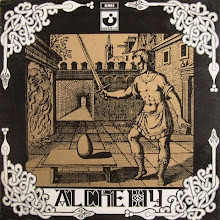
"Alchemy" (Harvest 1969)
Third Ear Band live at Hyde Park (June 7th,1969)
Click on the picture to watch the video!
Read "Necromancers of the drifting West"!!!
A book on the Third Ear Band edited by Luca Ferrari (published by Stampa Alternativa, Rome 1997). WITH THE FIRST ORIGINAL VERSION OF "ABELARD & HELOISE" SOUNDTRACK!
Third Ear Band at the Roundhouse (London, May 30th 1969).
As alike or unlike as blades of grass or clouds...
"The music is the music of the Druids, released from the unconscious by the alchemical process, orgasmic in its otherness, religious in its oneness communicating beauty and magic via abstract sounds whilst playing without ego enables the musicians to reach a trance-like stage, a "high" in which the music produces itself. Each piece is as alike or unalike as blades of grass or clouds".
(From the 1969 Isle of Wight concert programme)
TEB - "THE LOST BROADCASTS" DVD (Gonzo Multimedia, UK 2011)
Richard Coff at Isle of Wight Festival, August 1969 (photo: Barry Plummer).
Pseudo-mystical...
“The trouble is that you can't be mystical without being called pseudo-mystical, and it's the fault of our previous education. I'm at Glastonbury most of the time, but we're all completely honest about it. We'll even use it honestly to make money, because the ancient Egyptians who were into it all said that you had to be rich because only then can you resist temptation”.
(Glen Sweeney to Richard Williams, “Melody Maker” June 1970)
"Macbeth" by Roman Polanski (Playboy Production, UK 1971)
“I've always felt that music should be pure. If you have lyrics, you are preaching in a way. Somehow words are a block to communication. It's almost impossible for me to explain exactly how I feel about this, that's why I'm a musician. The only way to really understand what I mean, is to firstly listen to a pop group and then listen to us, and then I hope you will know what we're trying to say."
(Glen Sweeney to Muz Murray, 1969)
A Third Ear Band tribute
Roberto Musci - "Mosaic. A tribute to Third Ear Band" (CD - Gonzo Multimedia HST411, 2016)
TEB 1971: Sweeney, Minns, Bridges and Buckmaster (photo: Blackhill Enterprises).
NOTES FROM OVERGROUND
“No announcements, numbers lasting 15 to 20 minutes, art form or con?
This might be valid criticism of (A) Thunderstorm (B) a cricket (C) Third Ear Band.
Their approach to music is different because there is no duality, no conflict between the natural element of chance and the human element of control, did the moon ask to be reflected in the water? If it wasn’t for the trees would the wind know when it was blowing? Paul Minns says there are some very beautiful forests in Hyde Park, trying to put titles to music is rather like trying to answer the question where does my hand when it becomes my fist”.
(From the Al Stewart-Third Ear Band 1970 tour programme)
TEB 1970: Sweeney, Minns, Coff & Smith (photo: Blackhill Enterprises).
"The Centipede was happy, quite, until a Toad in fun said: "Pray, which leg goes after which?". This worked his mind to such a pitch, he lay distracted in a ditch considering how to run". (Third Ear Band, 1970)
TEB at Isle of Wight Festival, August 1969 (photo: Barry Plummer).
"Music from Macbeth" (Harvest 1972)
Third Ear Band - "Experiences" (Harvest 1976)
WEIRD SCENES
“We'd rather people called us a pop group. We do ragas, that aren't really ragas at all, and unless we get a turned on promoter, we get into some weird scenes. At Norwich once, when the promoter saw the audience sitting down and closing their eyes to our music, he accused us of putting them to sleep! Complete paranoia. So I imagine we wouldn't do too well on the Pop Proms”.
(Glen Sweeney interviewed by Chris Welch - “Melody Maker” July 12th, 1969)
Third Ear Band - "Fleance" (Odeon 1972) Japan single edition
Third Ear Band - "Live Ghosts" (Materiali Sonori 1988)
VERY MUCH UNDERGROUND
“It's just a question of advertising. We've stayed very much Underground - no photos - and I think this was necessary so people wouldn't put us in a bag. We'd rather the just came up and heard us without ANY preconceived ideas. I suppose it is a bit shattering to see violins and cellos”.
(Glen Sweeney interviewed by Chris Welch - “Melody Maker” July 12th, 1969)
Third Ear Band at a Druids ceremony in Glastonbury Tor (April 15th, 1970).
OTHER TEB RELEASES/APPEARANCES
"Picnic. A breath of fresh air" (2LPs - Harvest SHSS 1/2, UK 1970) various Harvest artists anthology
"Harvest Heritage. 20 Great" (LP - Harvest , UK 1977) various Harvest artists anthology
"The Harvest Story Vol. 1" (LP - Harvest EG 260097 1, UK 1984) various Harvest artists anthology
"All frontiers" (CD - Materiali Sonori MASO CD 90026, ITA 1991) various artists live compilation
"Sonora 2/91" (CD - Materiali Sonori, ITA 1991) various Materiali Sonori artists compilation
"Radio Session" (CD - Voiceprint VPR017, UK 1994) live album
"Materiali Sonori" (CD - Olis OM 0021, ITA 1996) various Materiali Sonori artists compilation
"Live" (CD - Voiceprint VP157CD, UK 1996) live album
Third Ear Band - "New Forecasts from the Third Ear Almanac" (ADN Records 1989)
90% improvisation...
"I'd say ninety per cent of our music is improvisation. It's not really Indian music, although we use a drone instead of the usual bass line riffs. The music draws from everywhere.
"I think our appeal is that audiences can draw their own thing from us. We make no announcements and none of the numbers have titles. People in colleges we play come up after and say they can get fantastic images in their mind when they listen. We can offer a complete dream. The old Celtic bards used to have the same ability".
(Glen Sweeney interviewed by Chris Welch - “Melody Maker” July 12th, 1969)
“Third Ear Band’s new album “Magic Music” isabout music as pure vibrations, as such it can be linked with colour because colour is vibration. It can even be linked to the music ofthe spheres which states that the vibrations of the planets can be heard with the third ear (silence). The free ragas that we play are modal, each note can be heard as a sound-colour that produces its own mood.Our rhythms come from all overthe world, and we use these ideasand many others to try to make a new world music”.
(Glen Sweeney, notes on the “Magic Music” inner cover, 1990)
SOLOS DISCOGRAPHIES
- GLEN SWEENEY -
Various Artists - "The greetings compact vol. 2" (CD - Materiali Sonori, 1990)
Rolling Stones - "Sticky fingers" (LP/CD - Rolling Stones Records, 1971)
Carly Simon - "Hotcakes" (LP/CD - Elektra, 1974)
Elton John - "Single man" (LP/CD - Rocket, 1978)
- NEIL BLACK (selection) -
UB40 - "Present Arms" (LP/CD - DEP, 1981)
Joan Armatrading - ""Track Record" (LP/CD - A&M, 1983)
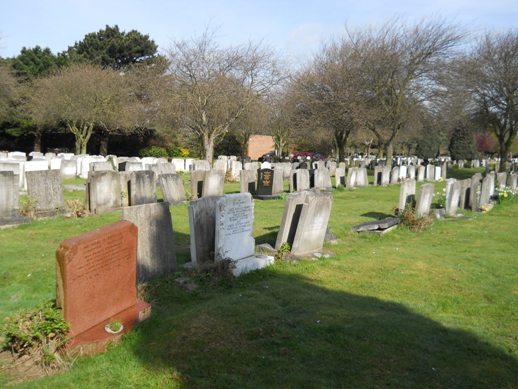
Third Ear Band 1969: Minns, Sweeney and Coff at the Kensal Green Cemetery of London (photo: Ray Stevenson).
Third Ear Band - "Brain Waves" (Materiali Sonori 1993)
Eight drunk rugby players
"We once had eight drunk rugby players yelling dirty songs at us. We played quieter and quieter. In the end they seemed ashamed and shut up. But I still don't think they dug the music!".
(Glen Sweeney interviewed by Chris Welch - “Melody Maker” July 12th, 1969)
Third Ear Band, Vinci 1989: Allen, Sweeney, Dobson and Carter (photo: Lucia Baldini).
QUOTATIONS, COVERS, REMIXES, MANIPULATIONS OF THIRD EAR BAND MUSIC
Stone Breath - "A silver thread weave the seasons" (2CDs - Hand/Eye, USA 2008). A 'cover' of "Fleance".
Marco Lucchi - "Baby a" (ITA 1982). A composition with a sampler of "Stone Circle".
Radio Noisz Ensemble - "Yniverze" (CD - Garden of Delights 1982/2009). A 'folky' quotation of "Water".
Fabio Zuffanti - "Third Ear Band demixed" (CD-r - Spirals Records, ITA 2000). The four elements electronically manipulated.
Algarnas Tradgard - "Delayed" (CD - Silence Records, UK 2001). A quotations of "Water" recorded in 1973-1974 (!).
Lady Husk & The Good Ship Neotropic - "A monstrous psychedelic bubble exploding in your mind" (file MP3 - The New Worck, NL 2007). A remake of "No title" (?!).
I Monster - "The Art of Chill vol. 6 - Mixed by I Monster" (2CDs Platipus, UK 2009). A remix of "Fleance".
Vibes and Stuff - guest mix Coby Sey (MP3 - UK, 2010). A remix of "Water".
AA.VV. - "The Fruits de Mer Annual for 2011" (2x7" - Fruits de Mer Records, UK 2011). A cover of "Fleance" by the HI-Fiction Science.